Your foyer is more than just a passageway—it’s the prologue to your home’s story. In neo-classical terraced houses, where space is often at a premium yet architectural dignity remains paramount, mastering neo-classical foyer styling tips becomes essential. This entrance hall deserves the same reverence as any grand estate, even when square footage demands creative solutions. Today’s discerning homeowners are rediscovering the timeless appeal of symmetry, classical proportions, and refined materials that define neo-classical design. Whether you’re working with a compact vestibule or a more generous entry, these ten curated strategies will help you create a foyer that commands attention while honoring the elegance of classical antiquity. Let’s transform your entrance into a space that welcomes guests with sophistication and sets the tone for the refined interiors beyond.
Statement Lighting Fixtures That Command Attention Upon Entry
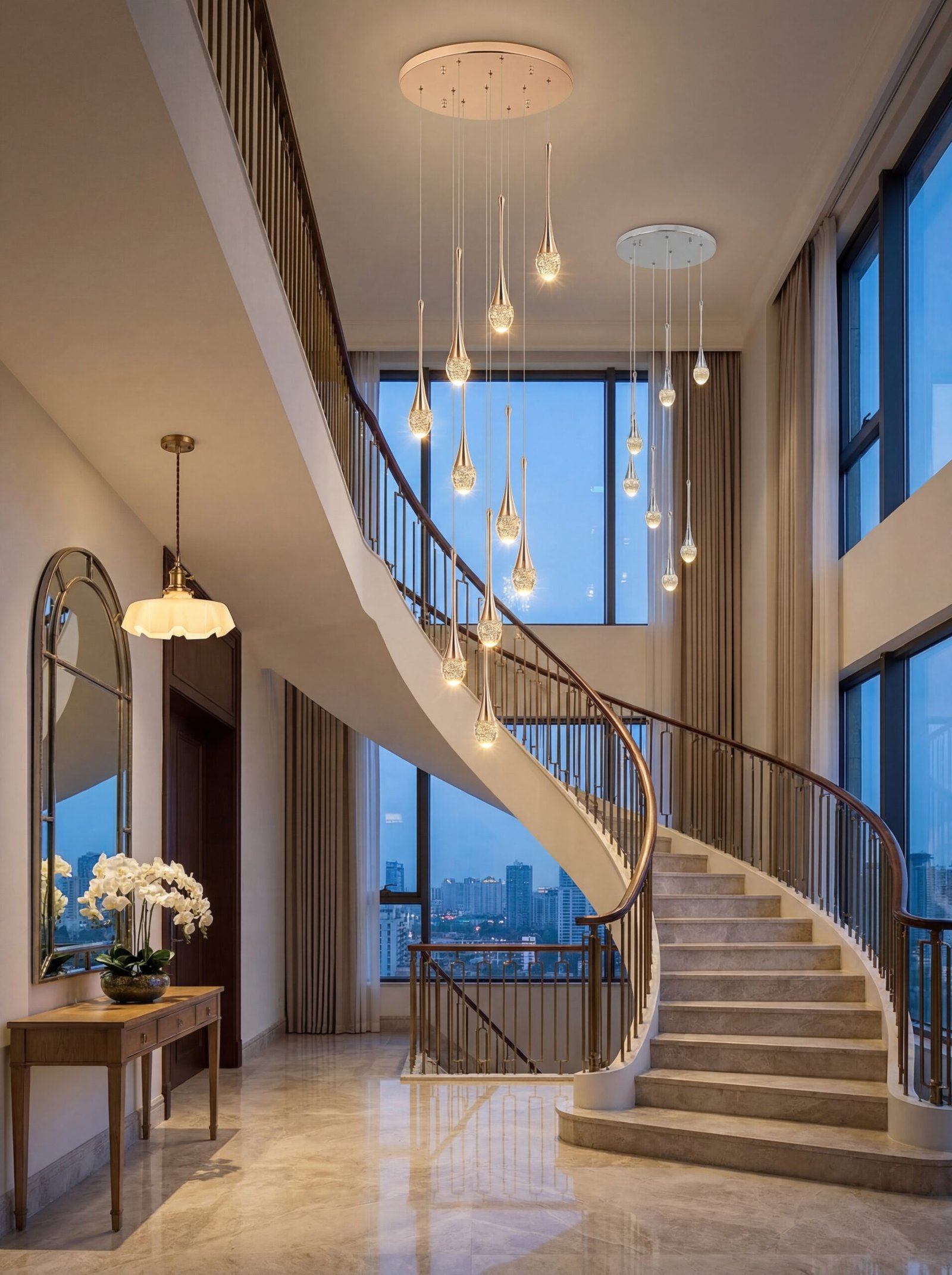
Nothing announces your design sensibility quite like a show-stopping chandelier suspended from your foyer ceiling. In neo-classical spaces, lighting transcends mere functionality—it becomes sculptural drama. Consider a modern crystal chandelier with spiral bubble design that draws the eye upward, creating vertical interest essential in terraced house entries where ceiling height may be the only dimension you can truly manipulate. The interplay of light through crystal spheres evokes the grandeur of Versailles while maintaining contemporary relevance.
For those blessed with soaring ceilings, a dimmable LED crystal spiral fixture offers both adjustable ambiance and energy efficiency—a thoroughly modern luxury in classical dress. The key is selecting fixtures with substantial visual weight; delicate pendants disappear in neo-classical contexts where architectural gravitas reigns. Gold or chrome finishes bridge historical and contemporary sensibilities, while the ability to adjust color temperature allows you to shift from warm, inviting glow for evening gatherings to bright, clarifying light for daytime functionality. Your chandelier shouldn’t merely illuminate—it should announce arrival.
Symmetry and Balance: The Foundation of Neo-Classical Foyer Design
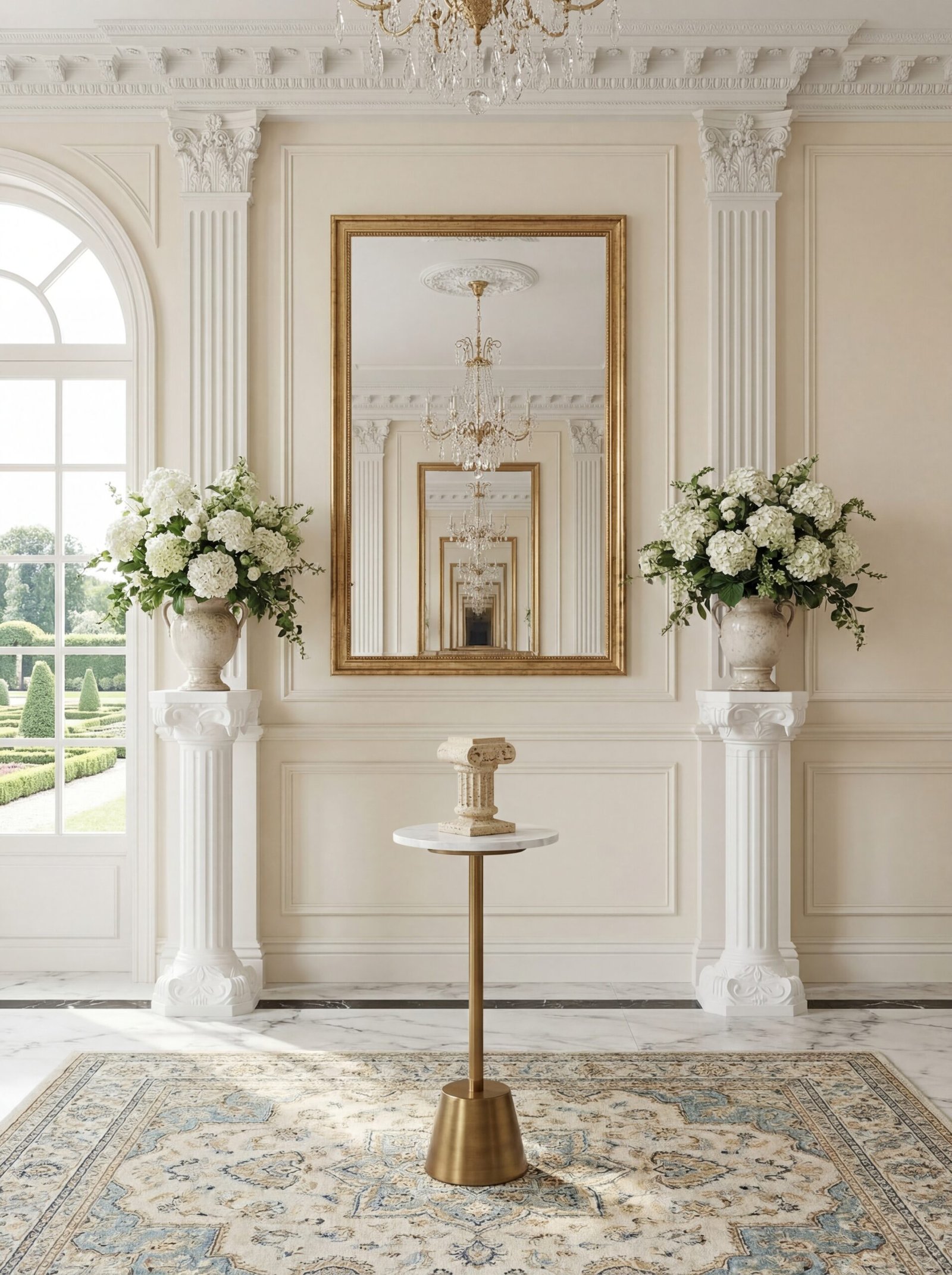
The ancient Greeks understood what neuroscience now confirms: the human brain finds profound satisfaction in symmetrical arrangements. In your neo-classical foyer, this principle becomes your strongest design ally. Begin by establishing a central axis—typically the entrance itself—and build outward with mirrored elements. Travertine Roman pillar statues placed on matching console tables flanking your doorway create immediate classical gravitas, their compact 5.3-inch height making them accessible for most terraced house proportions.
Symmetry doesn’t demand identical twins on either side; rather, it seeks visual equivalence. If budget or space constraints limit your options, a single marble pedestal side table centered beneath your mirror achieves axial balance through singular focus. The philosophy extends beyond furniture: matching wall sconces, paired botanical prints, or even coordinated umbrella stands all reinforce the harmonious order that distinguishes neo-classical design from more casual contemporary approaches. This isn’t about rigidity—it’s about creating a sense of intentional composition that makes guests feel they’ve entered a thoughtfully curated space.
Marble and Stone: Choosing the Perfect Flooring for Timeless Appeal
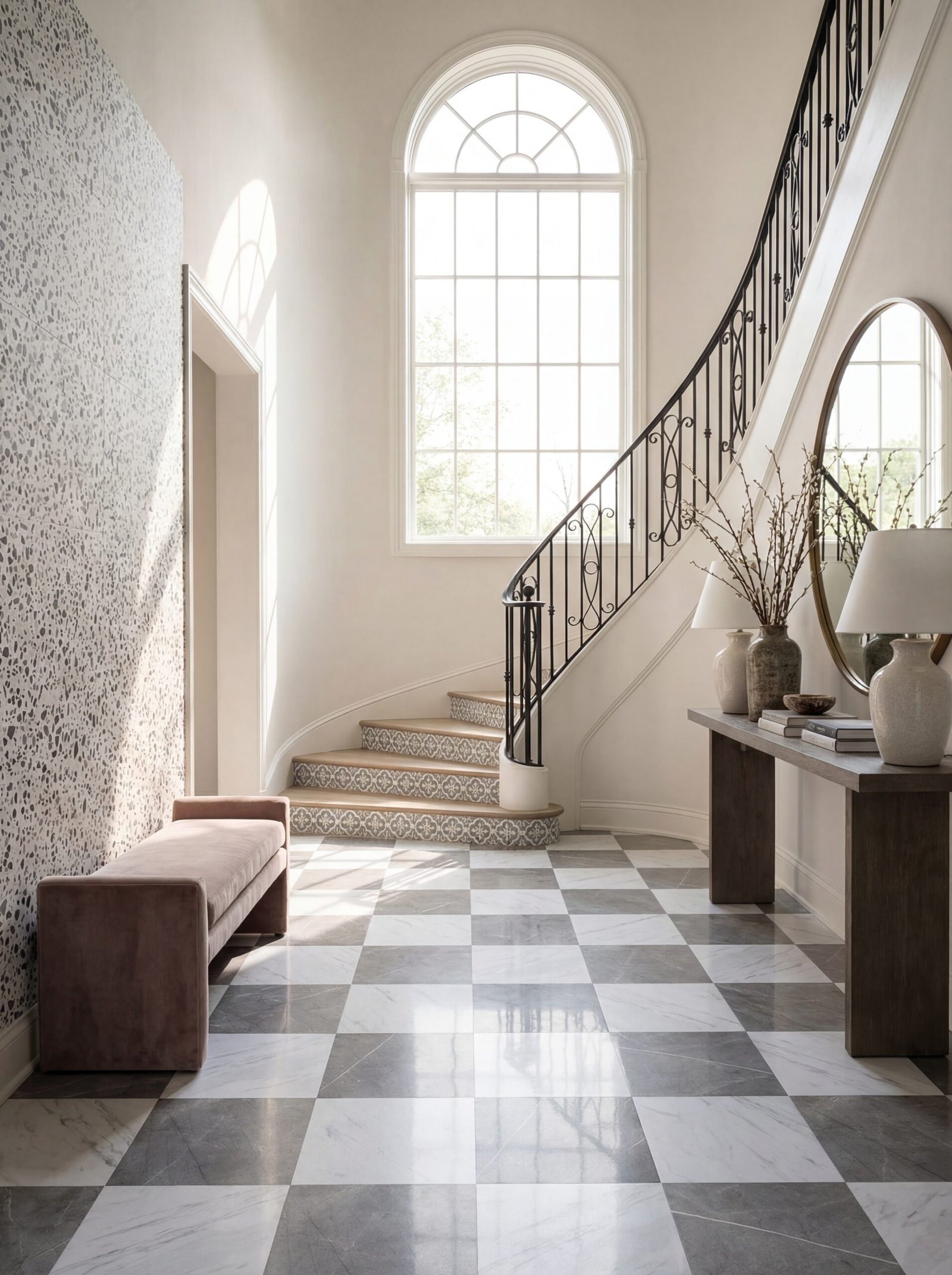
Underfoot is where neo-classical foyers truly distinguish themselves from pedestrian entryways. Authentic marble and stone flooring remains the gold standard, but contemporary alternatives now deliver comparable aesthetic impact at accessible price points. Grey and white marble peel-and-stick floor tiles with checkerboard styling offer an ingenious solution for renters or budget-conscious renovators, providing water resistance and that coveted geometric pattern synonymous with classical estates.
The checkerboard motif itself carries profound historical weight—it graced the Palace of Versailles and countless Georgian townhouses, making it an authentic choice for neo-classical terraced homes. For those seeking texture beyond flat patterns, handmade Moroccan cement tiles introduce artisanal irregularity that paradoxically feels more genuine than machine-perfect reproductions. The slight variations in shade and texture speak to centuries-old tile-making traditions. Remember: in neo-classical design, flooring isn’t background—it’s architectural foundation. Choose materials that will gracefully weather daily traffic while maintaining their visual authority for decades to come.
Console Tables as Functional Art in Narrow Entrance Spaces
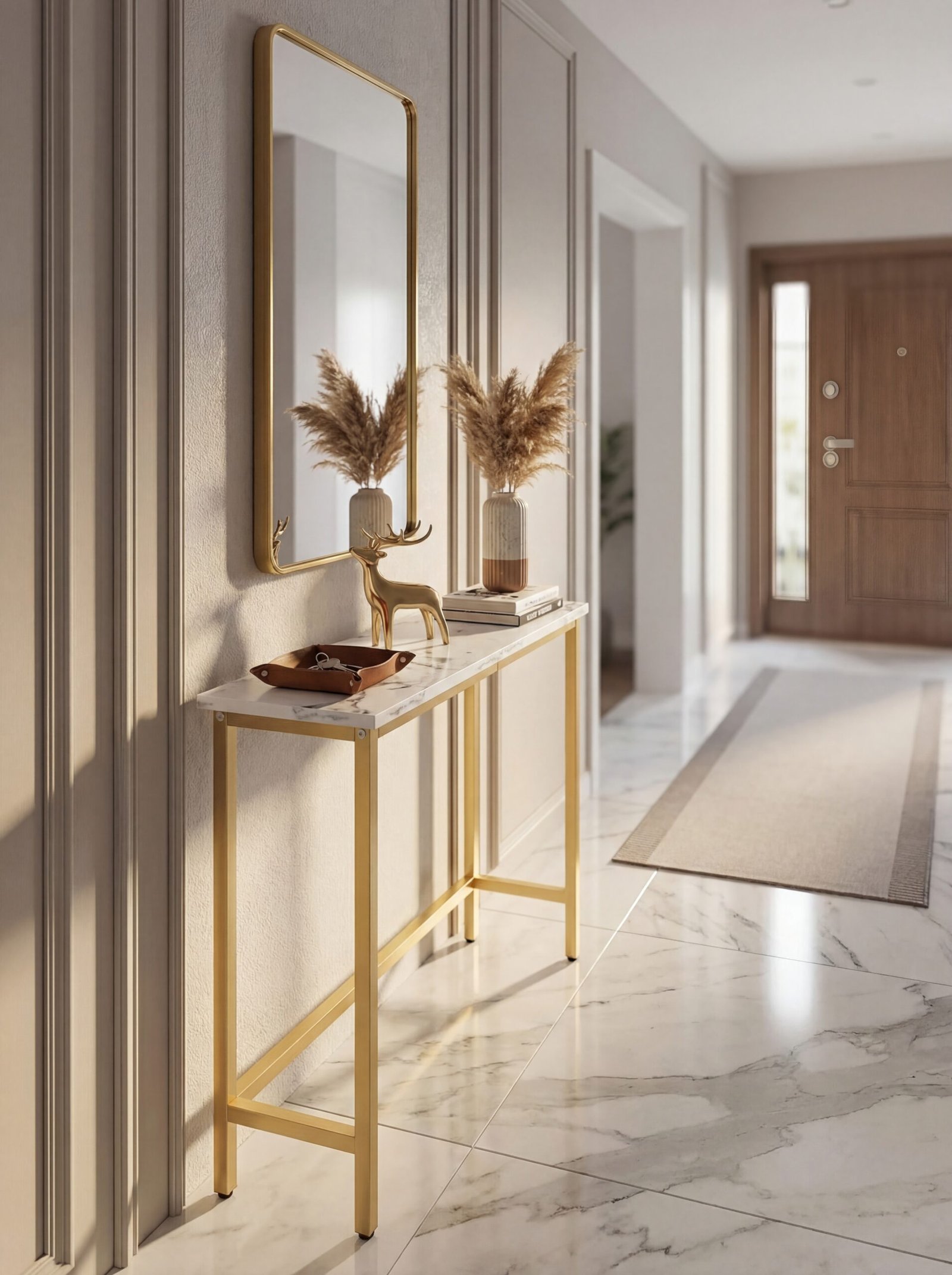
In the constrained dimensions of terraced house foyers, the console table performs remarkable multitasking: catch-all for keys and mail, display surface for objets d’art, and visual anchor that defines the space’s character. The narrow hallway console with marble texture finish exemplifies how contemporary manufacturing can deliver classical aesthetics in space-saving silhouettes—at just 29.5 inches, it provides presence without overwhelming tight quarters.
Material selection here is crucial. Marble or marble-effect tops immediately signal classical refinement, while gold or brass-toned metal bases reference the gilt furniture of neo-classical interiors without the maintenance headaches of actual gold leaf. Consider a faux marble console with gold metal base that combines durability with visual luxury—the narrow profile ensures visitors can pass comfortably while the elevated design keeps sightlines clean. Beyond aesthetics, functionality matters: a console that can hold your favorite decorative bowl, a table lamp for ambient lighting, and perhaps a small drawer for essentials transforms your foyer from mere transition space into genuinely livable architecture. The console table is where daily life meets classical aspiration.
Mirror Placement Strategies for Amplifying Light and Space
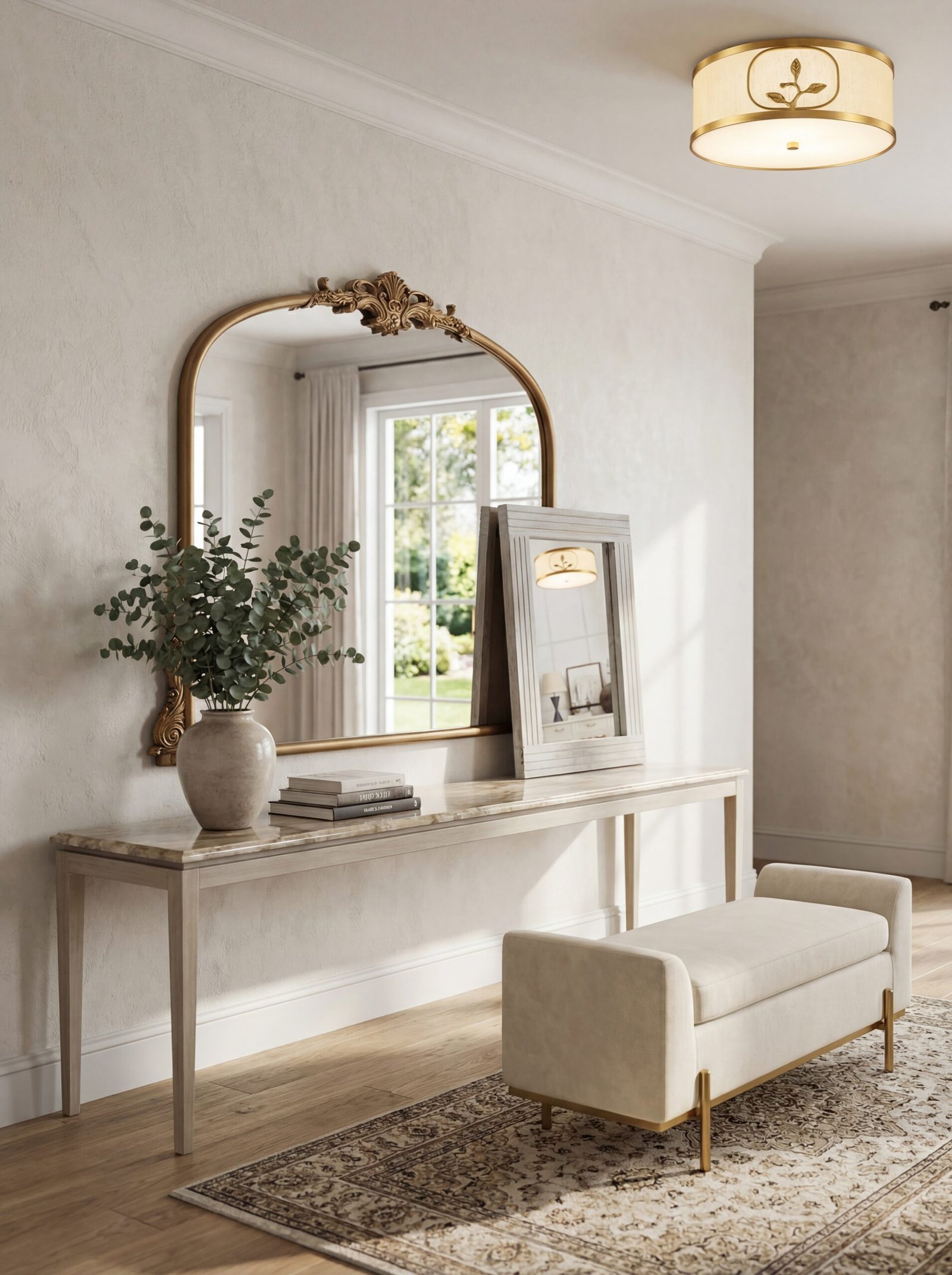
Mirrors possess almost magical properties in neo-classical design—they multiply light, expand perceived dimensions, and introduce reflective glamour that elevates everyday moments into cinematic experiences. The strategic placement above your console table creates the classic foyer vignette, but mirror selection requires discernment. A vintage arched gold mirror in baroque style brings ornate sophistication that honors historical precedent while its arched silhouette softens the geometric rigidity of rectangular architecture.
For those whose aesthetic leans more restrained, a rustic rectangular mirror with wooden frame in light gray delivers neo-classical refinement through understatement rather than opulence. The frame’s subtle indentations reference classical molding profiles without overwhelming. Consider mirror positioning relative to natural light sources: placed opposite windows or glass-paneled doors, mirrors become light multipliers, bouncing daylight throughout the space and reducing reliance on artificial illumination. Size matters tremendously—too small and the mirror reads as decorative afterthought; too large and it overwhelms the wall architecture. Aim for a mirror that occupies roughly two-thirds of your console table’s width, creating harmonious proportional relationships that satisfy both eye and instinct.
Curating a Gallery Wall That Honors Classical Proportions
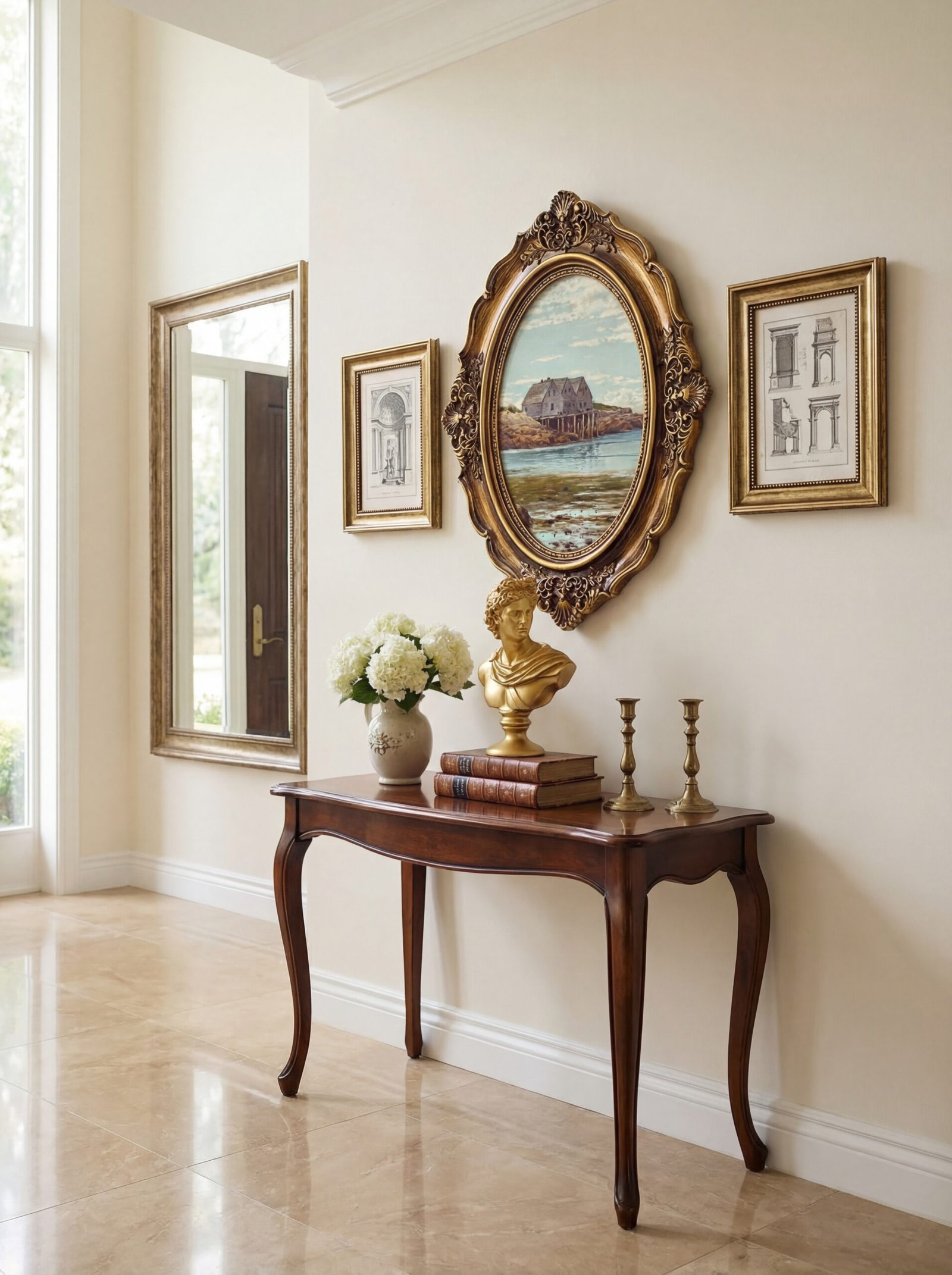
Gallery walls walk a delicate line in neo-classical spaces—executed thoughtfully, they add intellectual depth and personal narrative; done carelessly, they undermine the disciplined elegance that defines the style. The key lies in maintaining organizational principles that echo classical order. Vintage canvas wall art with classical portraits in gold frames provides an excellent starting point, offering pre-coordinated pieces that share tonal consistency and framing style.
Rather than the organic, asymmetrical clustering popular in bohemian interiors, neo-classical gallery walls favor grid-based arrangements or symmetrical compositions that could be bisected along a central axis. Consider using 4×6 ornate vintage picture frames in antique gold to create a collection of coordinated smaller works—botanical prints, architectural etchings, or family portraits in sepia tones all contribute appropriate subject matter. The reusable frame design allows you to rotate imagery seasonally while maintaining consistent visual grammar. Spacing between frames should be uniform, typically 2-3 inches, creating visual “breathing room” that prevents the arrangement from feeling cluttered. This isn’t a spontaneous mood board—it’s a carefully orchestrated composition that rewards contemplative viewing.
Fresh Florals and Greenery: Bringing Life to Formal Entryways
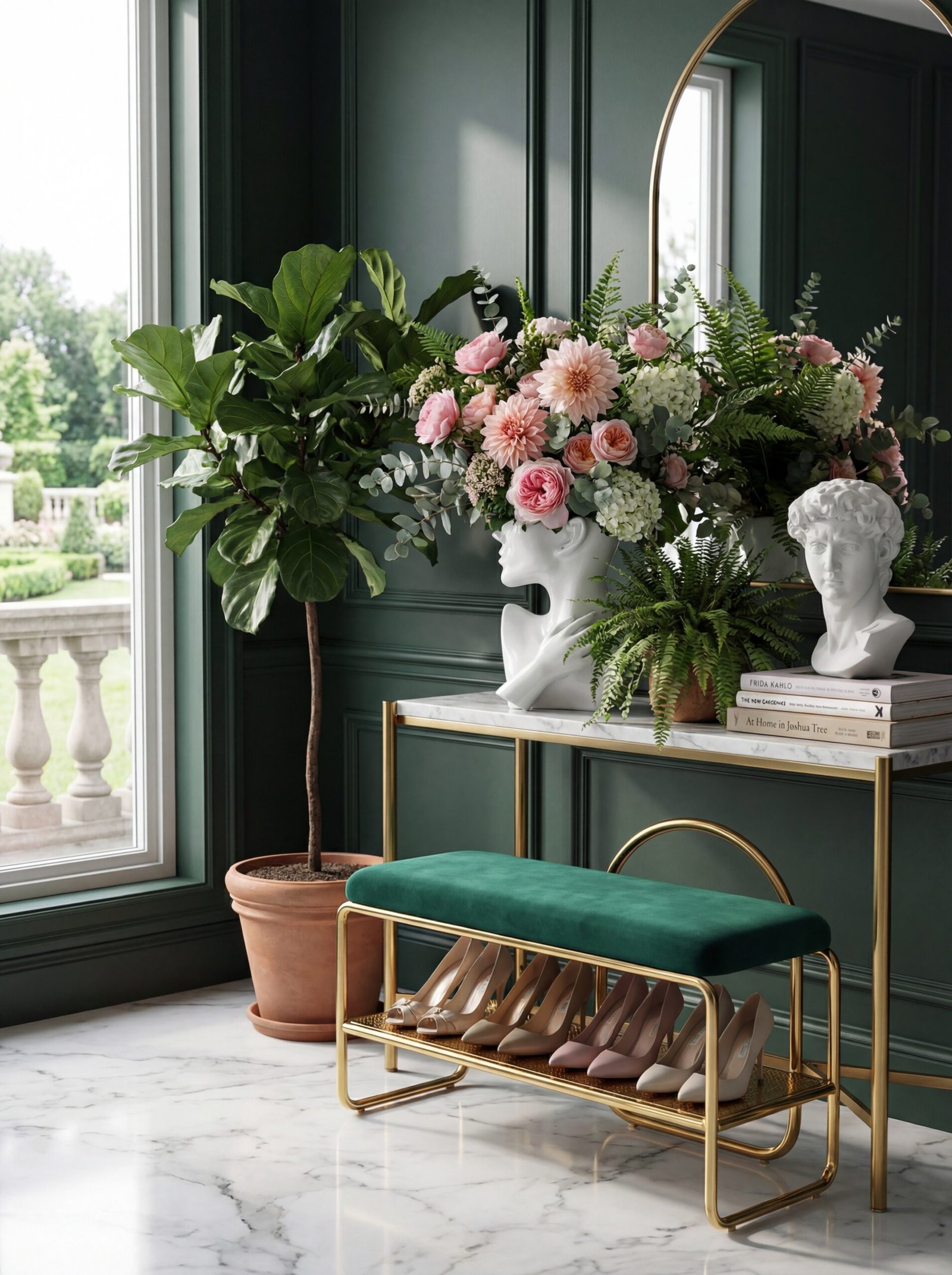
Even the most impeccably designed neo-classical foyer risks feeling museum-like without the animating presence of living botanicals. Fresh florals introduce color, fragrance, and that irreplaceable quality of life into formal spaces. The vessel matters as much as the arrangement—a modern head vase statue planter in Greek bust design brilliantly fuses neo-classical sculptural references with functional horticultural display, creating conversation-starting focal points that honor both aesthetic traditions.
For those who prefer more traditional approaches, consider tall arrangements of white hydrangeas or roses in crystal vases—their monochromatic palette prevents competition with your carefully composed color scheme while their sculptural forms echo the organic curves found in classical architecture. Alternatively, a white resin David statue paired with trailing ivy or eucalyptus creates a romantic tableau that suggests ancient ruins reclaimed by nature. The botanical element needn’t be literal cut flowers: potted topiaries in matching urns flanking your entrance door extend the classical symmetry principle while requiring less maintenance than weekly fresh arrangements. Whatever you choose, ensure adequate natural light reaches your botanicals, or select low-light tolerant varieties that can thrive in the often sun-starved conditions of interior foyers.
Wall Panelling Techniques to Elevate Your Foyer’s Architectural Character
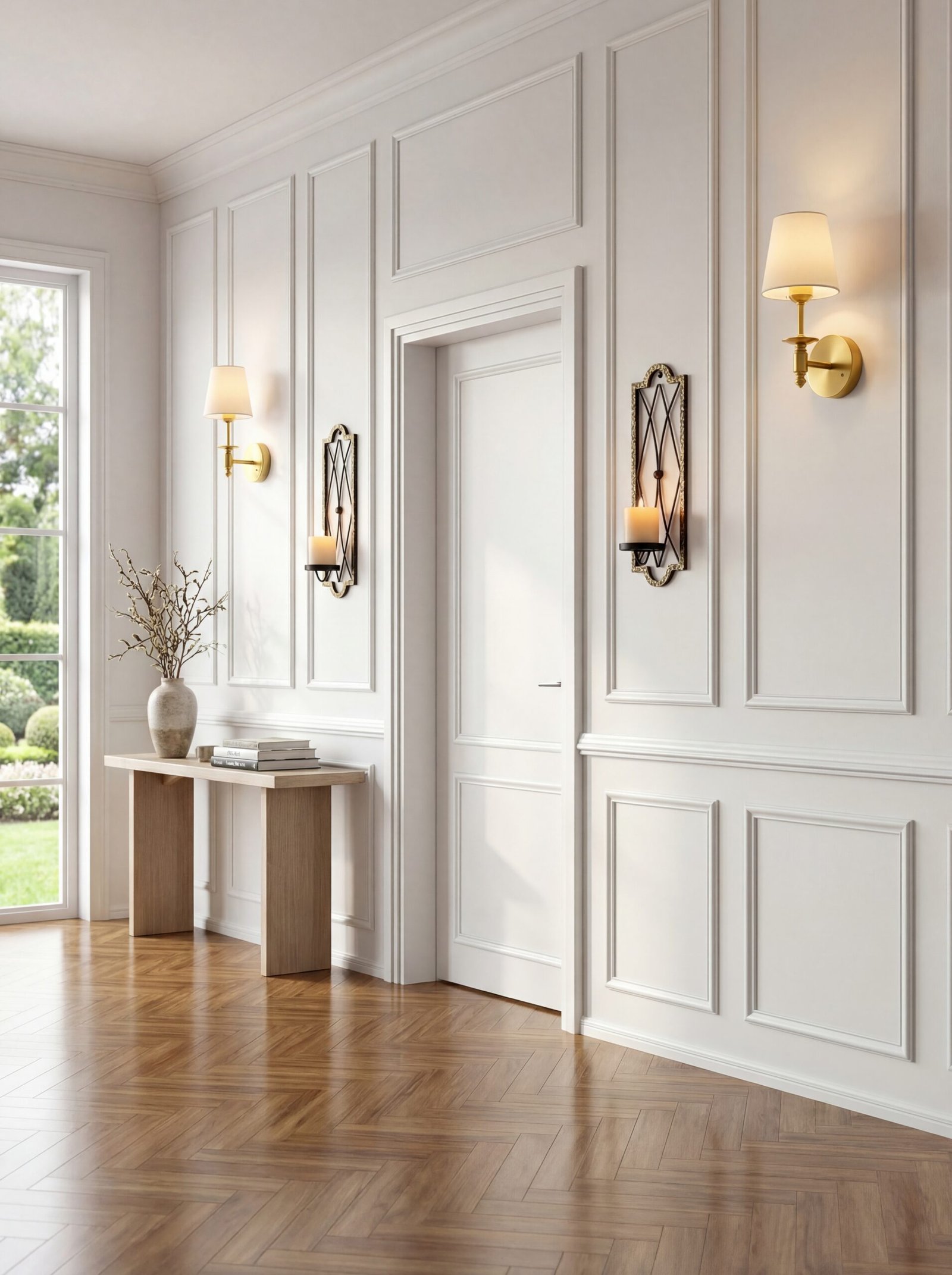
Wall panelling represents perhaps the most transformative architectural intervention you can introduce to a neo-classical foyer. Where modern construction often delivers flat, characterless drywall, thoughtfully applied moulding creates the dimensional depth and shadow play that defined grand 18th-century interiors. Contemporary solutions like peel-and-stick door moulding trim kits democratize this formerly labor-intensive upgrade, offering renter-friendly applications that require no carpentry skills.
Classic wainscoting—panels extending roughly one-third up the wall height—protects high-traffic areas while establishing horizontal banding that makes ceilings appear loftier. For more dramatic impact, consider full-height panel treatments divided into rectangular sections that reference the proportional systems underlying classical architecture. These panels create natural frameworks for displaying artwork or mirrors. To enhance the neo-classical atmosphere further, incorporate gold and black wall sconces centered within panel sections, their vintage design complementing the architectural detailing while providing ambient lighting that grazes the moulding profiles, emphasizing dimensionality. The interplay of light and shadow across panelled walls adds visual complexity that evolves throughout the day, ensuring your foyer never feels static or one-dimensional.
Color Psychology: Selecting Paint Tones for Welcoming First Impressions
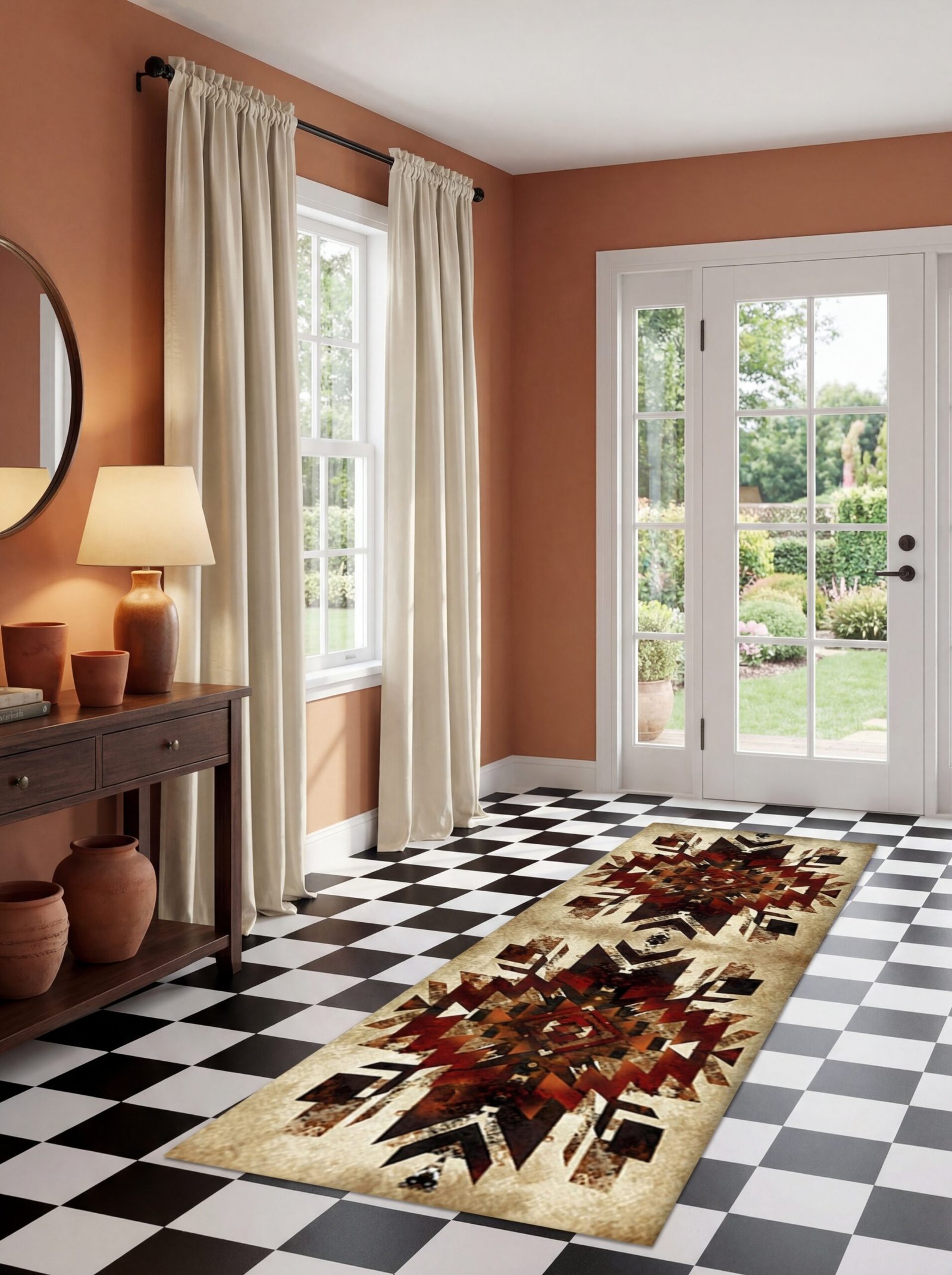
Color selection in neo-classical foyers demands nuanced understanding of both historical precedent and contemporary psychology. While pure white might seem the obvious choice, it often reads as sterile rather than sophisticated. Instead, consider warm ivories and creams—tones like ivory faux silk curtain panels exemplify—that introduce subtle warmth while maintaining the light-reflective properties essential in potentially dim entrance halls.
Historically accurate neo-classical palettes included soft grays, sage greens, and dusty blues—colors derived from natural pigments that aged gracefully and complemented gilded accents. These muted tones create serene backdrops that allow your architectural details and furnishings to command attention without competing. For dramatic contrast, consider darker hues like charcoal or deep forest green on lower wainscoting panels, paired with lighter tones above the chair rail—this two-tone approach adds visual interest while grounding the space. The psychological impact matters: warm neutrals convey hospitality and approachability, essential for entrance halls, while cooler tones project sophistication and calm. Your foyer isn’t a bedroom requiring restful tranquility, nor a kitchen demanding energizing brightness—it occupies a unique threshold position requiring balanced tones that transition gracefully between exterior and interior realms.
Vintage Finds on a Budget: Sourcing Authentic Neo-Classical Accents
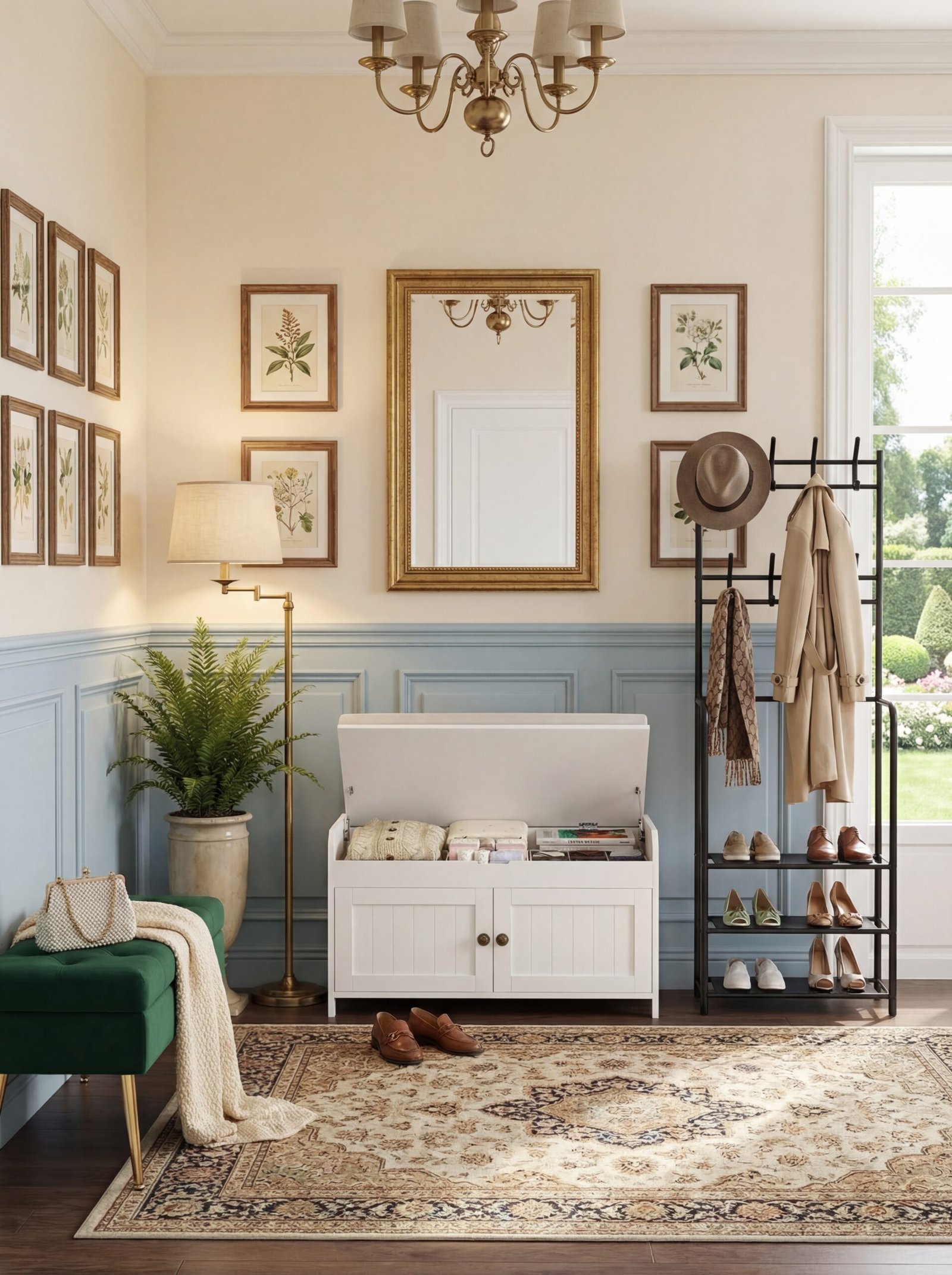
Achieving authentic neo-classical style needn’t require antiquing expeditions to European flea markets or inheritance of family heirlooms. Strategic budget-conscious choices can deliver sophisticated results that honor the style’s essence. A white shoe bench with lift-top storage provides the dual functionality essential in compact foyers—seating for removing footwear plus hidden storage—while its clean-lined design and white finish complement rather than compete with more ornate elements.
Layering is where budget magic happens: pair affordable foundational pieces with carefully selected accent items that carry greater visual weight. A velvet storage bench with golden metal legs introduces luxurious tactile quality and metallic detailing at accessible price points, its dark green upholstery suggesting the jewel tones favored in neo-classical interiors. Don’t overlook unconventional sources: architectural salvage yards often stock authentic period mouldings, marble fragments, or vintage hardware at fraction-of-retail prices. Online marketplaces reward patient searching with genuine antique mirrors, brass candlesticks, or porcelain vessels that inject authentic patina into your composition. The neo-classical approach values quality over quantity—better to invest in one exceptional piece that anchors your design than scatter numerous mediocre items that dilute visual impact. Edit ruthlessly, choose purposefully, and remember that timeless style transcends price tags.
Frequently Asked Questions About Neo-Classical Foyer Design
What makes a foyer specifically “neo-classical” rather than just “classic”?
Neo-classical design draws specifically from Greek and Roman antiquity, emphasizing symmetry, mathematical proportions, and restrained ornamentation. Unlike broader “classic” styles that might include Victorian or Arts and Crafts influences, neo-classical foyers feature classical architectural elements like columns, pediments, and Greek key patterns. The “neo” prefix indicates revival—these are modern interpretations of ancient principles rather than authentic period reproductions. Key identifiers include balanced compositions, marble or stone references, and a color palette dominated by whites, creams, and muted earth tones with metallic accents.
How can I incorporate neo-classical elements in a very small terraced house foyer?
Small spaces benefit from neo-classical principles even more than grand halls. Focus on vertical elements like tall mirrors and wall panelling to create height perception. Choose one statement piece—perhaps an ornate mirror or elegant console table—rather than multiple competing elements. Use symmetry to create order: matching wall sconces, paired botanical prints, or mirrored accessories flanking your entrance. Light colors and reflective surfaces maximize perceived space. Remember: neo-classical design values restraint and proportion, making it ideally suited to compact dimensions where every element must earn its place.
Are neo-classical foyers practical for families with children and pets?
Absolutely, with thoughtful material selections. Opt for durable marble-look vinyl flooring instead of fragile authentic stone. Choose washable paint finishes in muted tones that won’t show scuffs. Incorporate hidden storage benches for corralling shoes and bags. Modern reproductions of classical furniture often feature more durable construction than antiques. The key is honoring neo-classical aesthetics through design principles—symmetry, proportion, classical references—while selecting family-friendly implementations. Many contemporary manufacturers offer sophisticated finishes with stain-resistant treatments and easy-clean surfaces that maintain elegant appearances despite daily wear.
Conclusion: Crafting Your Neo-Classical Welcome
Your foyer represents more than square footage—it’s the architectural handshake that introduces your home’s character to everyone who crosses the threshold. These ten neo-classical foyer styling tips offer a framework for creating entrances that honor timeless design principles while accommodating contemporary lifestyles. From the drama of statement lighting to the subtle sophistication of wall panelling, from the optical expansion of strategic mirror placement to the life-affirming presence of fresh botanicals, each element contributes to a cohesive whole greater than its individual parts.
Remember that neo-classical design rewards thoughtful curation over impulsive accumulation. Start with foundational elements—flooring, paint color, lighting—then layer in furnishings and accessories that support your vision. Embrace symmetry as your guiding principle, seek proportional harmony in every placement decision, and never underestimate the transformative power of quality materials, even when budgets demand creative solutions. Your terraced house foyer may be compact, but it need never feel compromised. With these strategies, you’re equipped to create an entrance that commands respect, welcomes warmly, and sets an elegant tone for all the beautiful rooms that follow. The neo-classical tradition has endured centuries for good reason—its principles of balance, beauty, and architectural integrity remain as relevant today as they were in ancient Athens. Now go create an entrance worthy of your home’s story.
