You know that feeling when you walk into a hotel lobby or a designer showroom and everything just feels expensive? The kind of space where you’re afraid to sit down because surely, everything costs more than your rent? Here’s the secret: it’s not about how much was spent—it’s about what was chosen and where it was placed.
After years of studying high-end living spaces and dissecting what makes them work, I’ve identified the exact pieces that create that “I hired a designer” effect. These aren’t trendy items that’ll look dated next season. They’re timeless investments that signal sophistication the moment someone crosses your threshold.
The living room is where first impressions are made and last. It’s the space that sets the tone for your entire home. Whether you’re working with a generous budget or shopping strategically, these ten elements will transform your living room from “nice” to “is this featured in Architectural Digest?”
Let’s break down exactly what makes spaces look expensive—and more importantly, how to achieve it in your own home.
Statement Lighting That Commands Attention
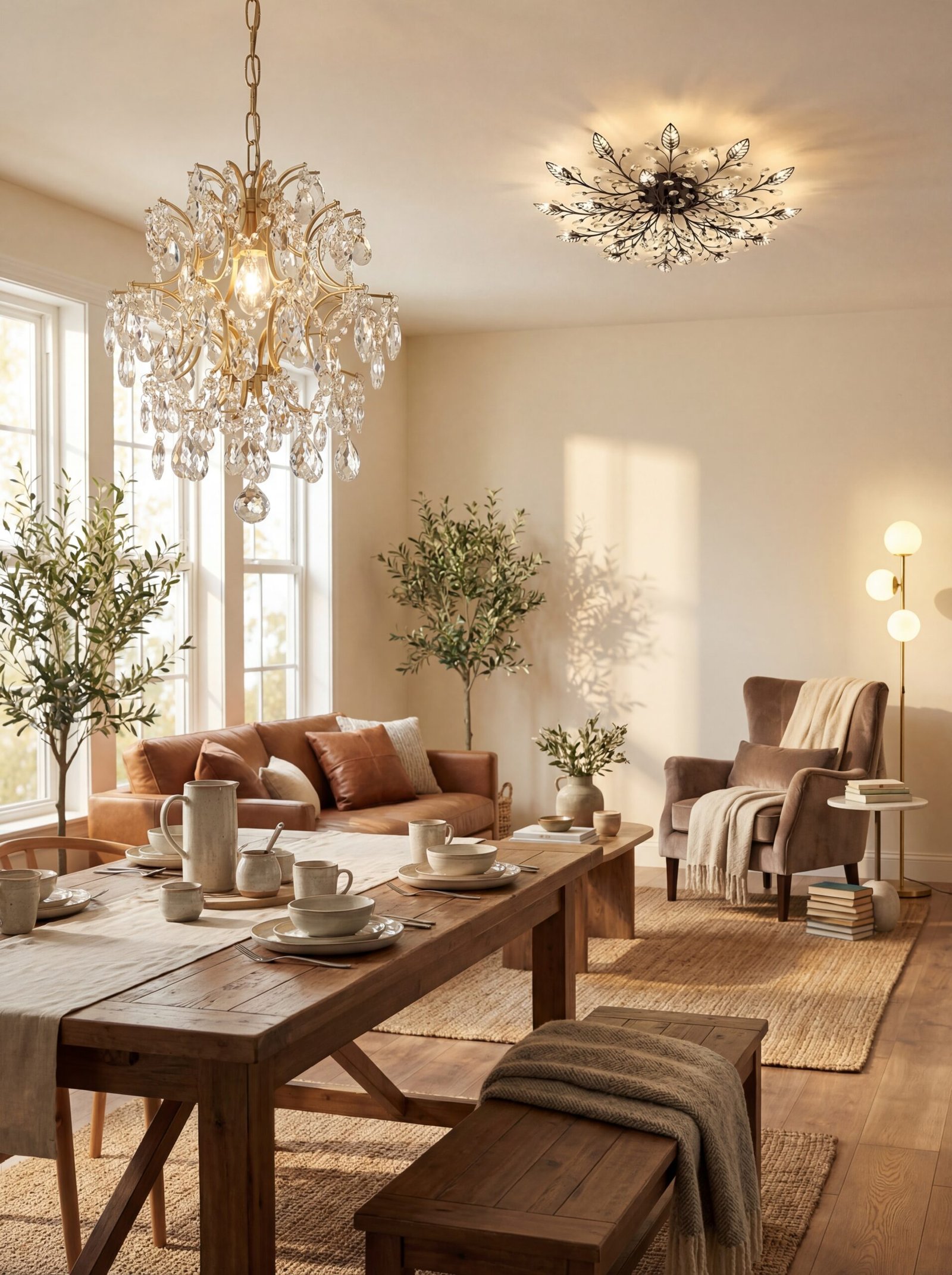
Walk into any luxury space and the first thing that catches your eye isn’t the furniture—it’s the lighting. A sculptural chandelier or an oversized pendant immediately draws the eye upward, making ceilings feel taller and spaces more dramatic.
The psychology is simple: expensive spaces invest in fixtures that become conversation pieces. Think of lighting as jewelry for your room. A crystal chandelier with cascading raindrop details creates instant glamour, while a modern crystal leaf design in matte black offers contemporary edge.
What separates designer lighting from builder-grade fixtures? Scale and finish quality. Your chandelier should be substantial enough to anchor the room—roughly one-third the width of your coffee table is a good rule. And here’s what most people miss: the finish matters more than the price tag. A brushed gold floor lamp with globe details in the corner adds a second layer of intentional lighting that whispers luxury.
The best part? Statement lighting works in rooms of any size. In fact, an oversized fixture in a smaller living room creates the illusion of grandeur by forcing the eye to focus on vertical space rather than square footage.
The Power of Oversized Art in Small Spaces
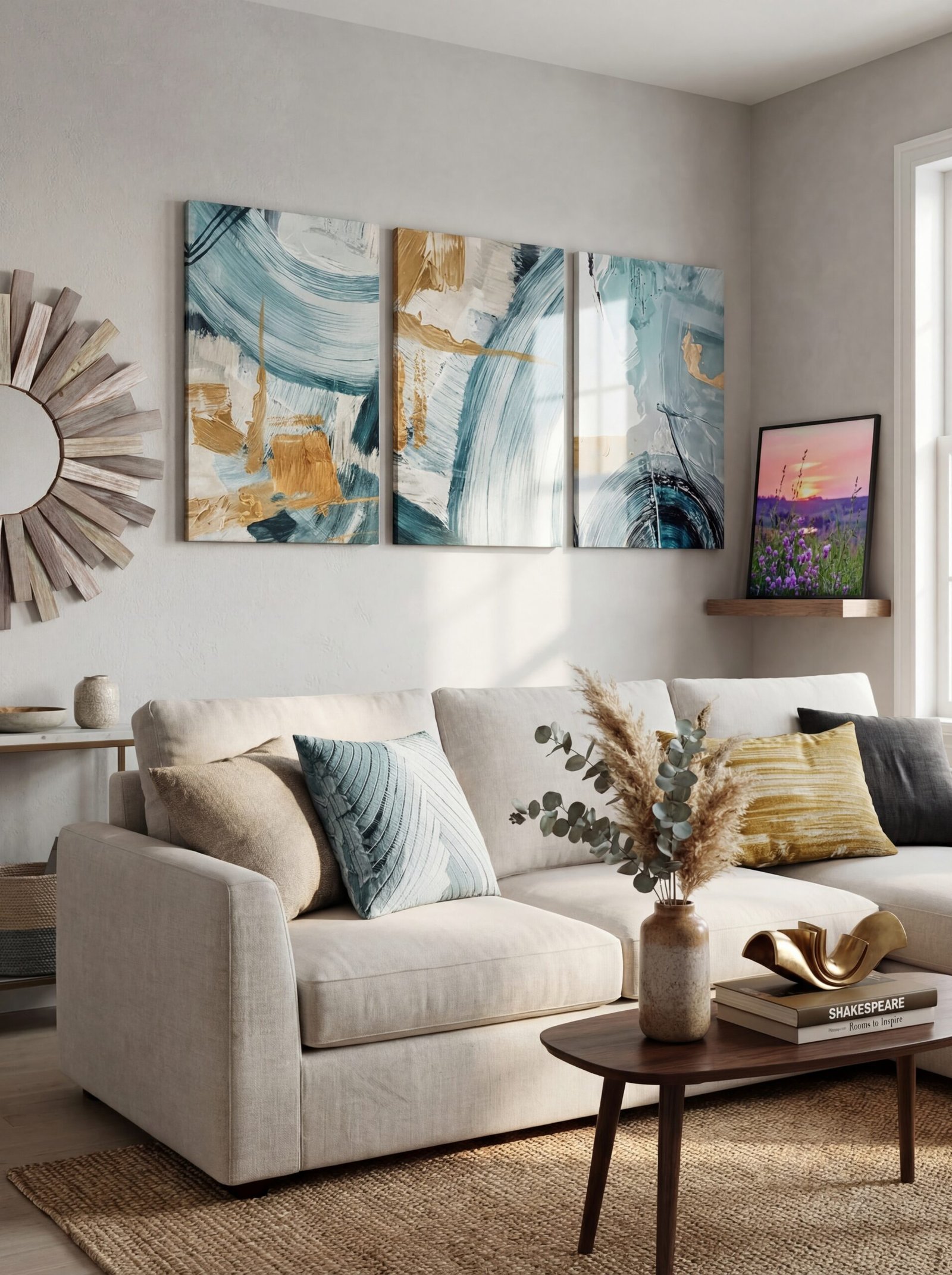
Here’s the counterintuitive truth that interior designers swear by: oversized art makes small rooms feel larger, not smaller. It’s about creating a focal point that commands such presence, everything else falls into a curated supporting role.
When you hang multiple small pieces, you fragment the wall and draw attention to the limited space. One large-scale piece creates visual continuity and sophistication. A three-panel abstract in blue and gold metallics spanning 72 inches creates museum-gallery energy that elevates everything around it.
The secret is in the framing and subject matter. High-end spaces avoid overly literal imagery. Instead, opt for abstract compositions, oversized botanicals, or landscape photography. A sunset wildflower scene at 36×24 inches brings nature’s luxury indoors without reading as “cottage core.”
Don’t sleep on dimensional art either. A 32-inch wooden sunburst mirror functions as both art and reflective surface, bouncing light while serving as a sculptural element. This dual purpose is exactly how designers maximize impact without cluttering.
Remember: your art should be hung at eye level, which is typically 57-60 inches from the floor to the center of the piece. This subtle detail separates amateur arrangements from professional installations.
Velvet Furniture: The Fabric That Never Goes Out of Style
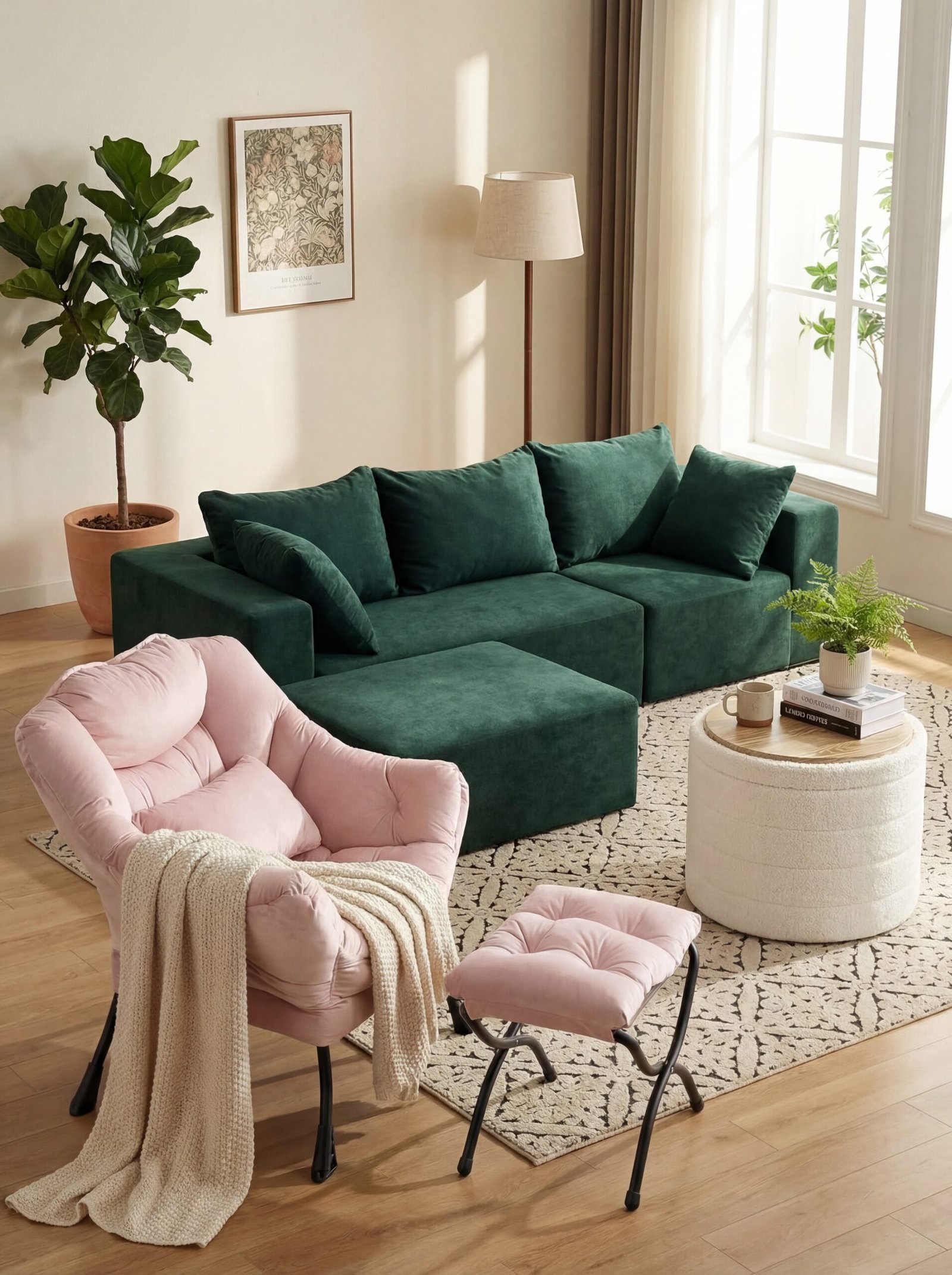
Velvet has been the fabric of royalty for centuries, and there’s a reason it never loses its appeal. The way it catches and reflects light creates depth that flat fabrics simply cannot achieve. It’s tactile luxury that photographs beautifully and feels even better in person.
The key is choosing the right pieces and colors. A blush pink velvet chair with matching ottoman becomes the room’s elegant anchor, while a white teddy velvet ottoman with storage tray offers textural contrast that feels fresh and contemporary.
What makes velvet appear expensive isn’t just the sheen—it’s the way it adds perceived weight and substance to furniture. A simple silhouette in velvet reads as far more luxurious than an ornate piece in basic linen. Consider a emerald green modular sectional that brings jewel-tone richness without requiring professional assembly.
Here’s the maintenance reality: modern performance velvets are far more durable than their historical counterparts. Look for pieces with tight weaves and consider having a professional fabric protector applied. The investment in upkeep is minimal compared to the visual return.
Pro tip: Mix velvet with other textures rather than going full velvet everything. One or two statement pieces create intentional luxury; too much reads as costume-y.
Why Interior Designers Swear by Marble Accents
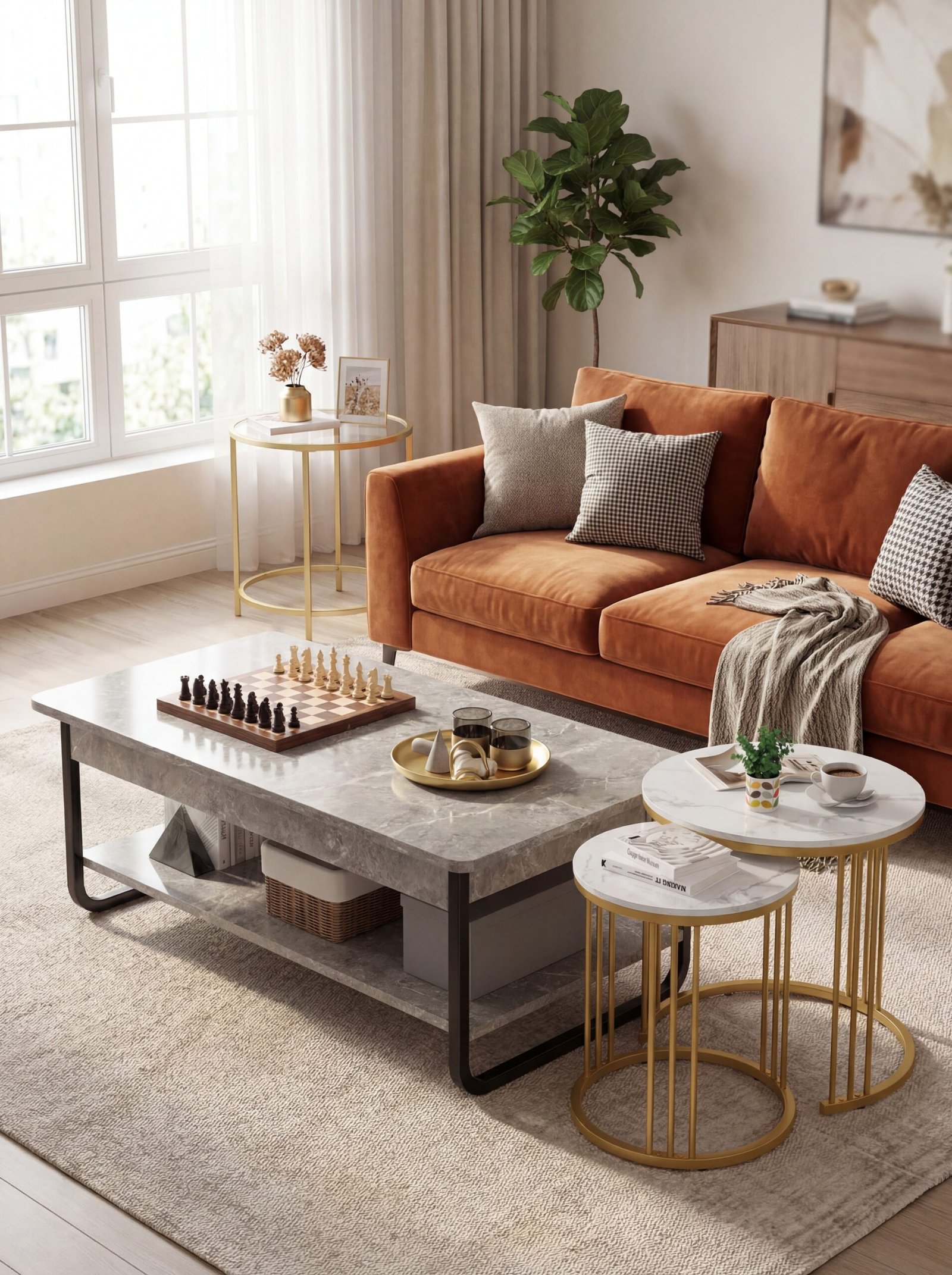
Marble is the ultimate material signifier of luxury—it’s literally stone that’s been prized since ancient Rome. But you don’t need Carrara slabs throughout your home to achieve the effect. Strategic marble accents deliver maximum impact with manageable investment.
The genius of marble in living rooms is its versatility. A grey marble two-tier coffee table with black metal frame grounds your seating area with substantial presence, while white marble nesting tables with gold bases offer flexibility and glamour in spaces that need to multitask.
What separates thoughtful marble use from overdone? It’s about contrast and scale. Marble should be your statement neutral—the element that allows other design choices to shine. Pair it with warm woods, soft textiles, or metallic accents. A round glass and gold side table creates the illusion of marble’s elegance through reflective surfaces and precise geometry.
Real talk: high-quality faux marble has come so far that even designers use it strategically. The key is in the veining pattern—look for irregular, organic patterns rather than repetitive prints. Natural stone varies; your faux marble should too.
Maintenance is simpler than you think: coasters are your friend, and a pH-neutral cleaner keeps surfaces pristine. The psychological value of marble—that instant “this is expensive” recognition—far outweighs the minimal upkeep.
Architectural Mirrors That Double as Sculptures

Mirrors are the designer’s secret weapon—they multiply light, expand perceived space, and when chosen correctly, function as three-dimensional art. The difference between a basic mirror and an architectural one is shape, frame, and intentional placement.
Floor mirrors with dramatic silhouettes change the entire energy of a room. A 57-inch arched mirror in gold aluminum creates a portal effect that makes ceilings soar, while a similar scale in brushed gold with a standing frame can be positioned to capture and reflect your statement chandelier, doubling its impact.
The magic happens when mirrors reflect something beautiful—not just your ceiling fan. Position them opposite windows to bounce natural light, or angle them to capture your most stylish furniture arrangements. This strategic reflection creates depth and dimension that photographs incredibly well.
Beyond floor mirrors, consider unexpected reflective elements. A crystal table lamp that plays with light refraction adds sculptural interest while serving a functional purpose. The best luxury spaces layer reflective surfaces at multiple heights and in various forms.
Frame finish matters enormously. Brass, gold, and black metal read as contemporary and intentional. Avoid ornate carved wood frames unless your entire aesthetic leans traditional—they can look dated quickly.
Brass Hardware and Fixtures That Elevate Everything

Details make or break luxury spaces, and nothing elevates faster than warm metallic finishes. Brass and gold hardware create visual continuity that ties disparate elements together into a cohesive, expensive-looking whole.
Start with lighting and work your way down. A dimmable arc floor lamp with linen shade in black creates dramatic contrast, but it’s the subtle brass accents that create warmth. The finish you choose for major pieces should repeat in at least two other elements—this is designer rule number one for creating cohesion.
But here’s where most people stop too soon: hardware extends beyond lighting. Consider how metallics appear in your soft furnishings. An emerald velvet chair cover with gold undertones picks up on brass fixtures, creating a deliberate color story. Even your window treatments matter—ivory blackout curtains with brass hardware frame your windows like artwork.
The temperature of your metallics matters. Warm brass and gold have more staying power than trendy rose gold or copper, which can date quickly. If you’re mixing metals, stick to a 70/30 rule: one dominant finish (brass) and one accent (matte black or brushed nickel).
This is also about the quality of finish. Cheap brass lacquer chips and tarnishes; look for solid brass or high-quality plating. The longevity of the finish is what separates investment pieces from temporary solutions.
Layered Textiles for a Curated, Collected Look
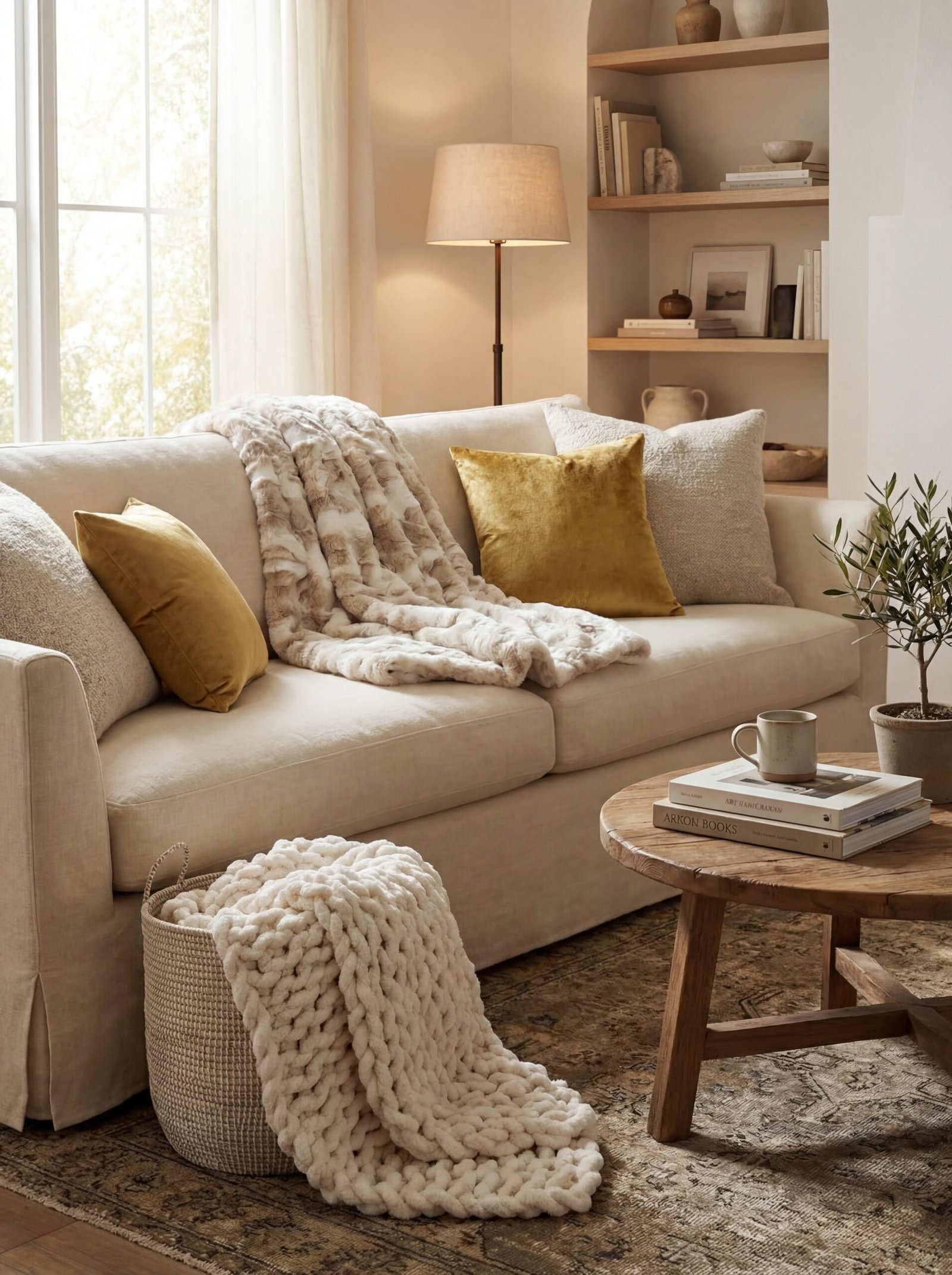
Expensive rooms don’t look precious—they look lived-in and layered. The art of textile layering is what separates a staged showroom from a space that feels genuinely luxurious and inviting. It’s controlled coziness.
Start with a foundation of quality materials in neutral tones, then build complexity. An oversized marbled ivory faux fur throw draped casually over your sofa adds instant texture and visual weight. Layer it with a chunky hand-knit chenille blanket in cream for dimensional contrast that photographs beautifully.
Pillows are where you can inject personality and color without commitment. But here’s the formula: odd numbers, varied sizes, and at least three different textures. Gold velvet cushion covers in 18×18 provide jewel-tone richness that elevates neutral foundations. Mix them with linen, silk, and textured weaves.
The mistake most people make is matching everything too perfectly. Real luxury looks collected over time—that means mixing patterns, playing with scale, and embracing slight color variations within the same tonal family. Your ivory throw doesn’t need to match your cream pillows exactly; the variation creates depth.
Texture is also about what’s underfoot. Layer a smaller, plush rug over a larger sisal or jute base. This creates dimension and defines different zones within your living space—a technique used in every high-end design.
Coffee Table Books as Luxury Décor Elements
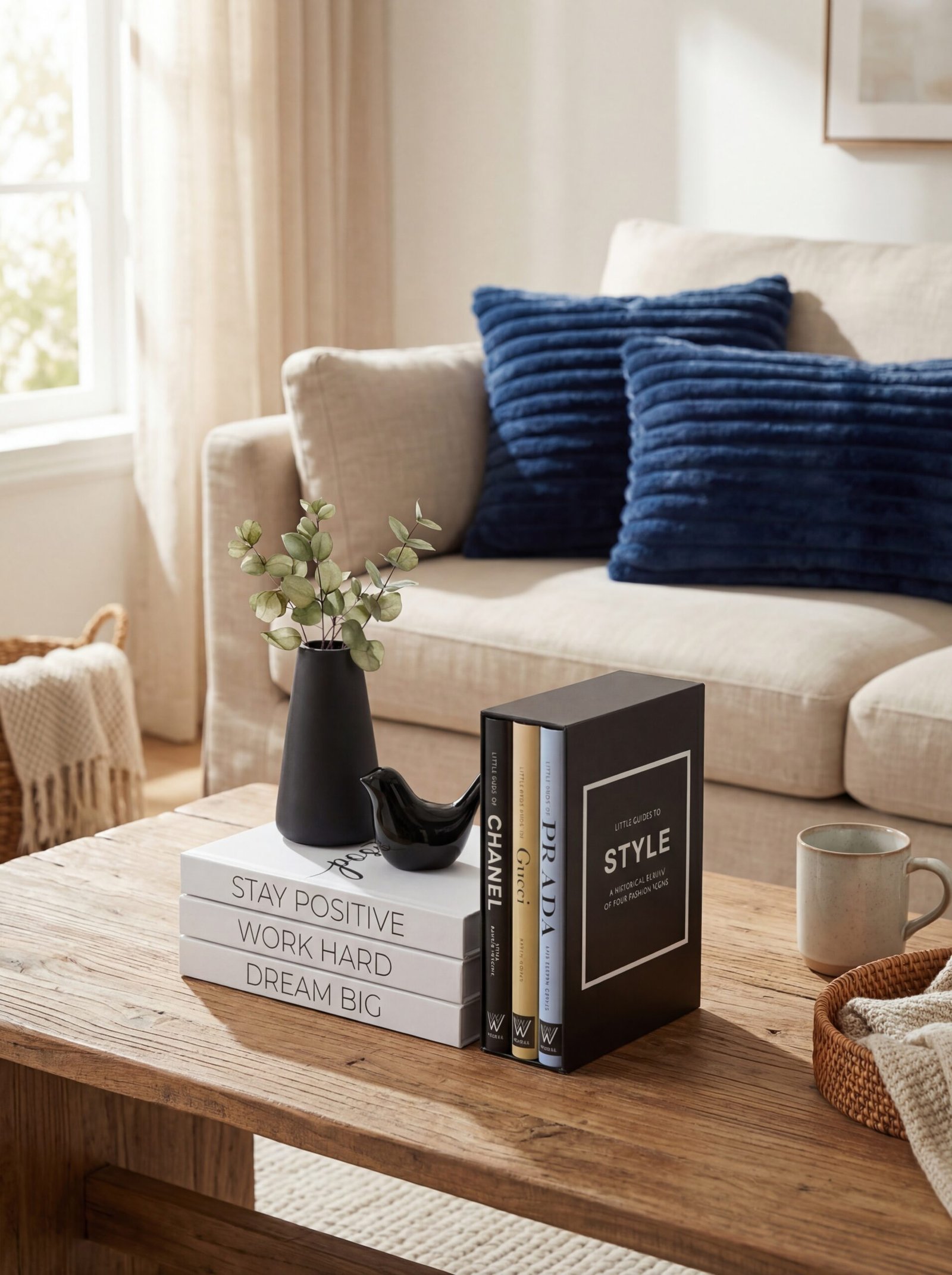
Coffee table books aren’t just reading material—they’re cultural signifiers and sculptural objects that communicate taste and sophistication. The right stack immediately elevates a surface from functional to curated.
Choose books that reflect genuine interests, not just pretty spines. A fashion icon gift set with hardcover editions signals an appreciation for style history and design evolution. The investment in quality publishing—with heavy paper stock and superior photography—is immediately apparent to anyone who picks them up.
But here’s the styling secret: books should be grouped in odd-numbered stacks of varying heights. Create a base of two or three larger format books, top with a smaller volume, and finish with an object like a small sculpture or decorative box. If you prefer the look without the reading, decorative faux books in designer colorways provide the aesthetic without the weight.
The subjects you display matter. Fashion, architecture, travel, and art photography are universally sophisticated. Avoid anything too niche or humor-based unless it’s truly representative of your personal brand—your coffee table is prime real estate for making an impression.
Don’t forget supporting elements. A navy blue faux fur lumbar pillow on your seating echoes the rich tones of leather-bound books, creating visual dialogue between surfaces.
The Strategic Greenery Placement That Costs Almost Nothing
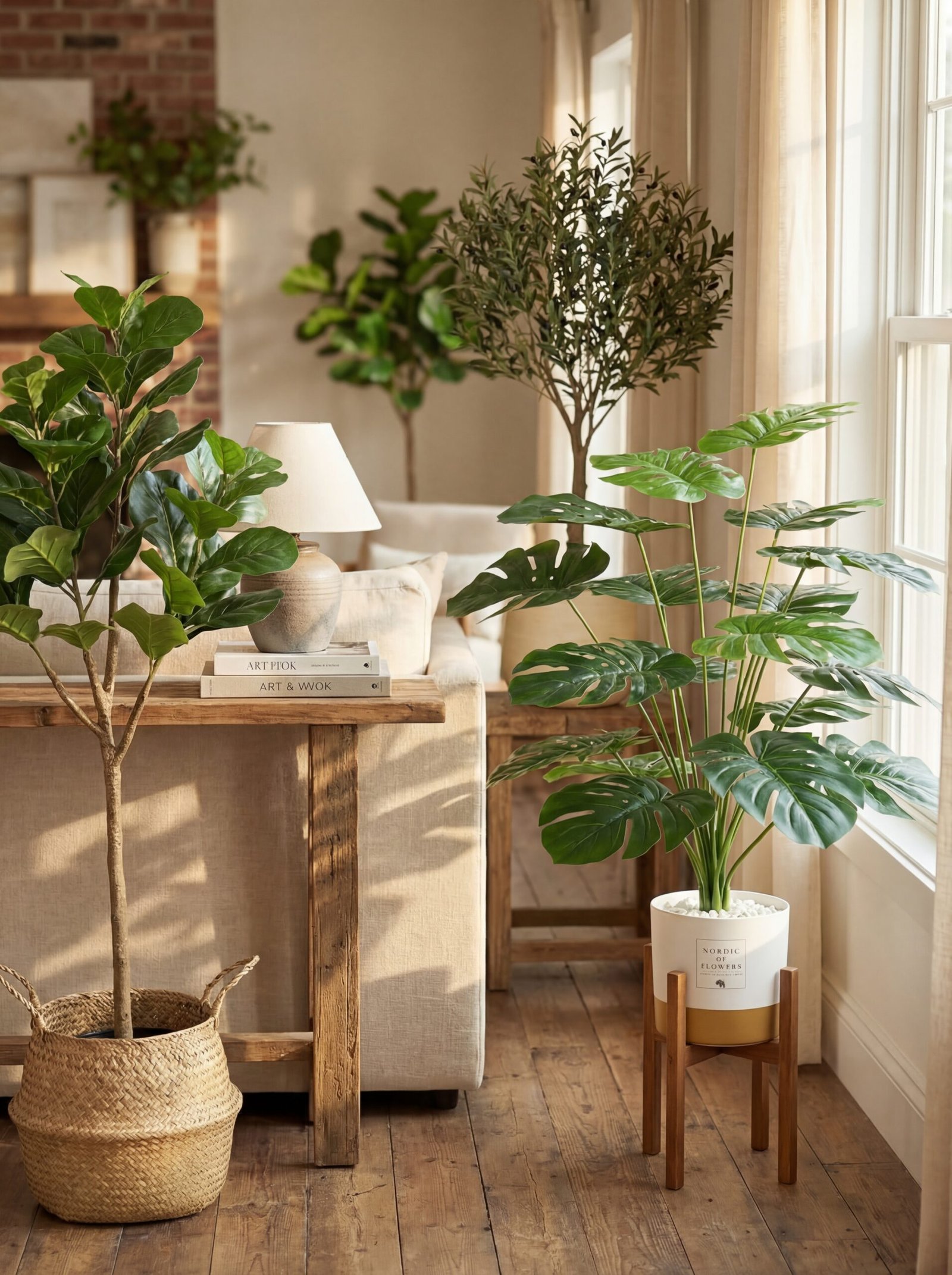
Plants are the ultimate luxury accessory that actually improves air quality while signaling that you have your life together. But the placement and scale separate DIY from designer—and it has nothing to do with whether they’re real or faux.
Go big or go home with your floor plants. A 26-inch tropical monstera in a coordinating pot fills vertical space in corners that would otherwise feel dead. The key is choosing plants with architectural leaves—fiddle leaf figs, monsteras, and palms read as more sophisticated than bushy varieties.
If you’re nervous about maintenance, high-quality artificial plants have become indistinguishable from real ones. A pair of 6-foot fiddle leaf fig trees in white pots creates symmetry in larger spaces, while a 5-foot UV-resistant olive tree brings Mediterranean elegance to sunny corners.
The strategic part is about odd numbers and triangulation. Place one large plant, then create balance with two smaller plants or objects at different heights across the room. This creates visual movement and prevents the “showroom” feeling of too-perfect symmetry.
Planters matter as much as the plants themselves. Invest in quality pots—ceramic, stone, or metal in neutral tones. A beautiful planter elevates even a modest plant, while a cheap plastic pot undermines even the most exotic specimen.
Custom Built-Ins That Make Any Space Look Designer

True custom built-ins require construction, but you can achieve the same tailored, permanent look with strategic furniture placement and architectural pieces that mimic the effect. It’s about creating the illusion of intentional, immovable design.
Start with statement seating that has architectural presence. A boucle accent chair with geometric metal cube frame reads as custom-designed furniture art, while a mid-century cream chenille armchair brings the kind of timeless silhouette that looks expensive regardless of actual price.
The “built-in” effect comes from creating zones that feel permanent. Use your largest furniture pieces to define areas—place your sofa perpendicular to walls rather than against them. Float furniture to create pathways and conversation areas. This technique makes spaces feel designed for how you live, not just arranged around the perimeter.
Slipcovers are your secret weapon for achieving the custom upholstered look. A perfectly fitted velvet slipcover in dark grey transforms builder-grade seating into pieces that look intentionally selected and unified. The key is choosing slipcovers with enough structure to maintain clean lines.
Finally, create the illusion of architectural detail through symmetry and repetition. Matching side tables flanking your sofa, identical lamps at equal heights, and coordinated accessories create the kind of deliberate balance that looks professionally designed.
The difference between a room that looks decorated and one that looks designed is cohesion. Every element should feel like it was chosen to work with everything else—not just purchased and placed randomly.
Frequently Asked Questions
How can I make my living room look expensive on a budget?
Focus on three high-impact areas: lighting, one statement piece of furniture, and quality textiles. A dramatic light fixture, a velvet accent chair, and layered throws will transform your space more effectively than multiple mediocre purchases. Edit ruthlessly—fewer, better pieces always read as more expensive than a crowded room.
What’s the biggest mistake people make trying to create luxury living rooms?
Matching everything too perfectly. Real luxury looks collected and curated over time. Mix textures, vary your metallics slightly, and embrace items from different eras or styles. Also, overcrowding—expensive spaces have breathing room. Remove 20% of what you think you need.
Are faux materials acceptable in high-end design?
Absolutely. Professional designers use quality faux marble, performance velvets, and artificial plants strategically. The key is selecting high-quality versions that mimic natural variations. A well-made faux marble table often performs better than real marble in high-use spaces.
How do I choose the right size statement lighting?
Your chandelier or pendant should be approximately one-third the width of your coffee table or dining table beneath it. For room sizing, add your room’s length and width in feet—that number in inches is your ideal chandelier diameter. Don’t be afraid to go larger in rooms with high ceilings.
What colors make living rooms look most expensive?
Sophisticated neutrals—ivory, greige, charcoal, and warm whites—create a luxury foundation. Add depth with jewel tones in velvet (emerald, sapphire, or deep burgundy) and warm metallics (brass, gold, or bronze). Avoid stark white and cool grays which can feel sterile rather than expensive.
How many throw pillows should be on a sofa?
For a standard three-seat sofa: 5-7 pillows in varying sizes. Start with two 22-inch pillows at the ends, add two 20-inch in front of those, and place one to three smaller lumbar or accent pillows in the center. Always use odd numbers and at least three different textures.
Final Thoughts: Investment vs. Instant Gratification
Creating a living room that looks genuinely expensive isn’t about buying the most costly items—it’s about making strategic choices that layer visual richness, texture, and intentionality. Each element we’ve discussed works because it serves multiple purposes: aesthetic impact, functional value, and psychological signaling.
The real secret is understanding that luxury is a feeling, not a price point. A room that feels expensive is one where every element appears deliberately chosen, where quality materials are evident in their finish and weight, and where there’s a clear point of view guiding the design.
Start with one category that speaks to you most—perhaps it’s that statement chandelier that will transform your ceiling into a fifth wall, or the oversized art that will anchor your entire space. Build from there, letting each addition inform the next. Give yourself permission to take time with this process. The most convincing luxury spaces feel collected, not purchased all at once.
Remember: trends fade, but quality endures. Invest in pieces that will serve you for years, that can be restyled as your taste evolves, and that bring you genuine joy every time you walk into your living room. That’s the real luxury—creating a space that feels as good as it looks, that welcomes both you and your guests with equal sophistication.
Your living room is the heart of your home. It deserves the same thought and intention you’d give to any important relationship. These ten elements are your foundation—now make them your own.
