Victorian dressing room accents bring warmth to homes where grandparents, parents, and children share space. These pieces work because they combine history with everyday function—a mirror that everyone can use, seating that supports different needs, hardware that feels solid under any hand.
The following accents fit real life. They’re chosen for durability, accessibility, and the quiet elegance that makes a dressing room feel like it belongs to the whole family, not just one generation.
Ornate Gilded Mirrors That Reflect Generations of Style
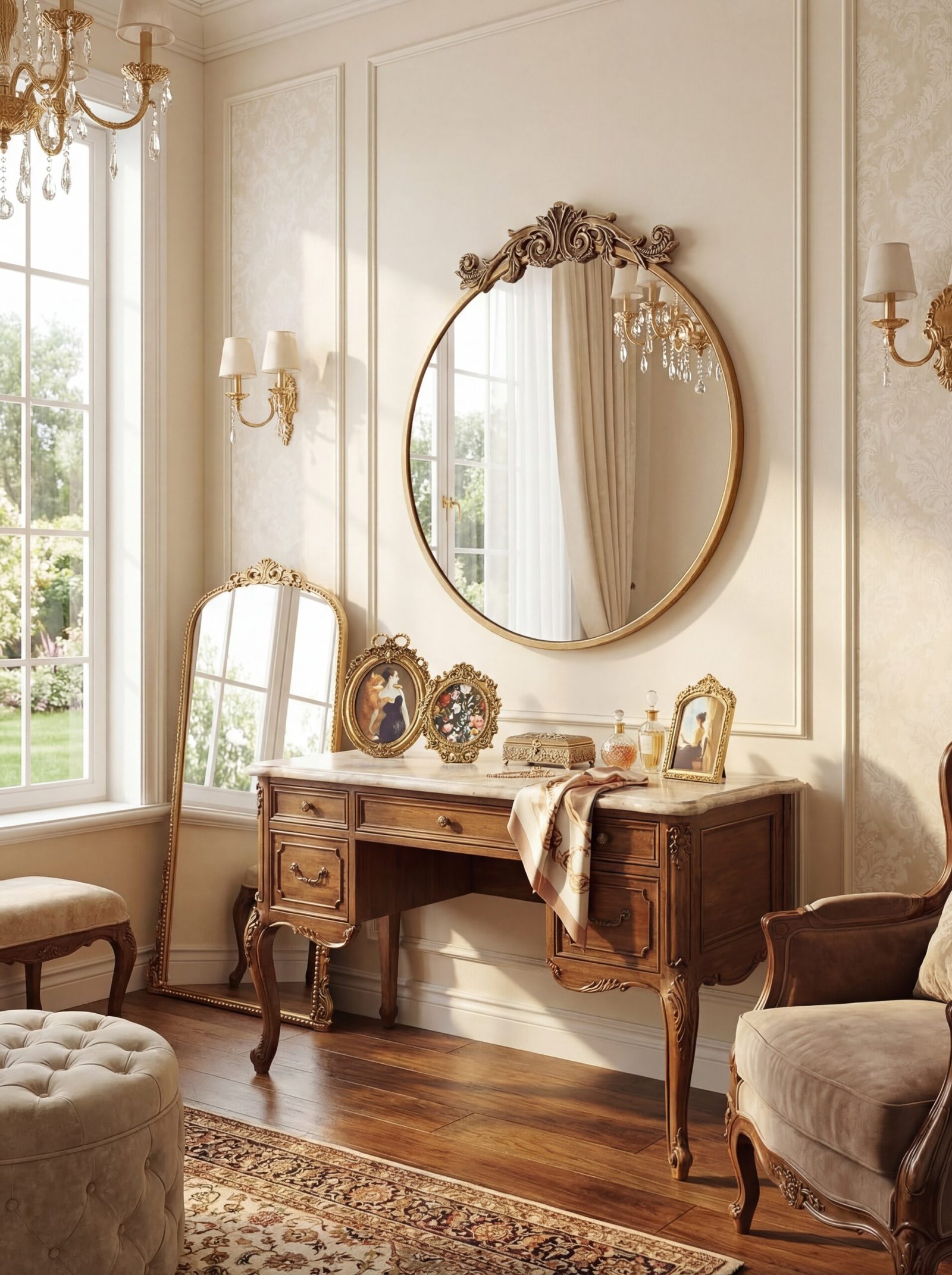
A gilded mirror hangs at a height where a grandmother adjusts her scarf and a teenager checks their outfit. The frame’s carved details catch light differently throughout the day, creating small moments of beauty that everyone notices.
These mirrors work in tight quarters or spacious rooms. A 26-inch round design fits above a narrow console, while larger arched versions anchor wider walls. The gold finish warms up modern paint colors without clashing.
Placement matters more than size. Mount it where natural light hits the glass, not the frame. Leave enough clearance below so shorter family members don’t strain, and taller ones don’t stoop.
Does your current mirror actually serve everyone in the house, or just the person who hung it?
Velvet Tufted Seating for Comfort Across All Ages
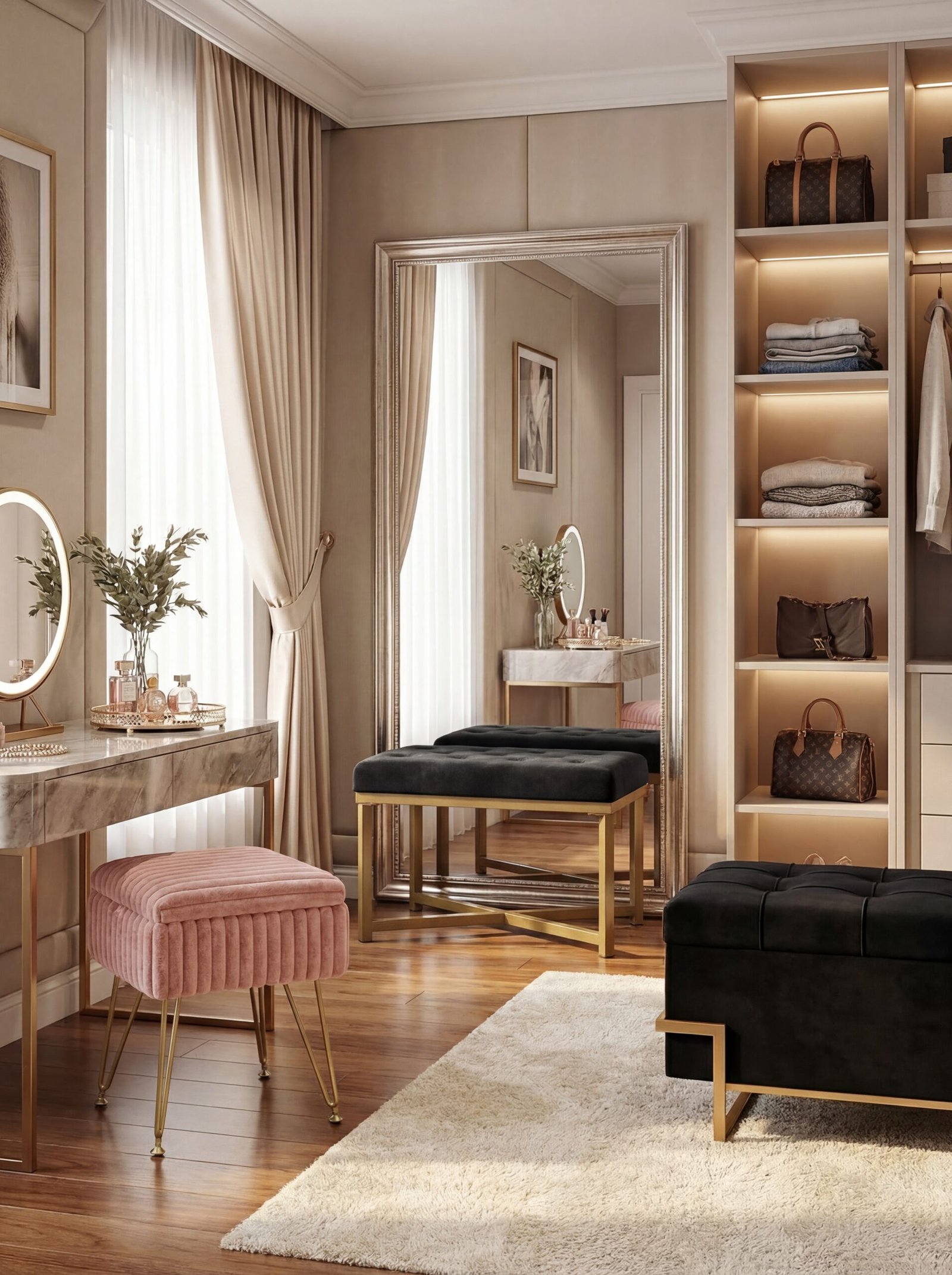
A velvet ottoman provides a stable place to sit while pulling on shoes or resting tired legs. The tufted surface gives just enough grip to prevent sliding, and the firm padding supports joints that need extra care.
Look for pieces with metal legs, not wood. Metal distributes weight evenly and won’t wobble when a child climbs on or an adult sits heavily. Compact benches tuck under vanities, while storage ottomans hold extra blankets or out-of-season accessories.
Standard seat height (around 17-18 inches) works for most adults. If you have younger children, place a small stool nearby instead of searching for lower seating that won’t work as they grow.
Antique Jewelry Armoires with Modern Organizational Features
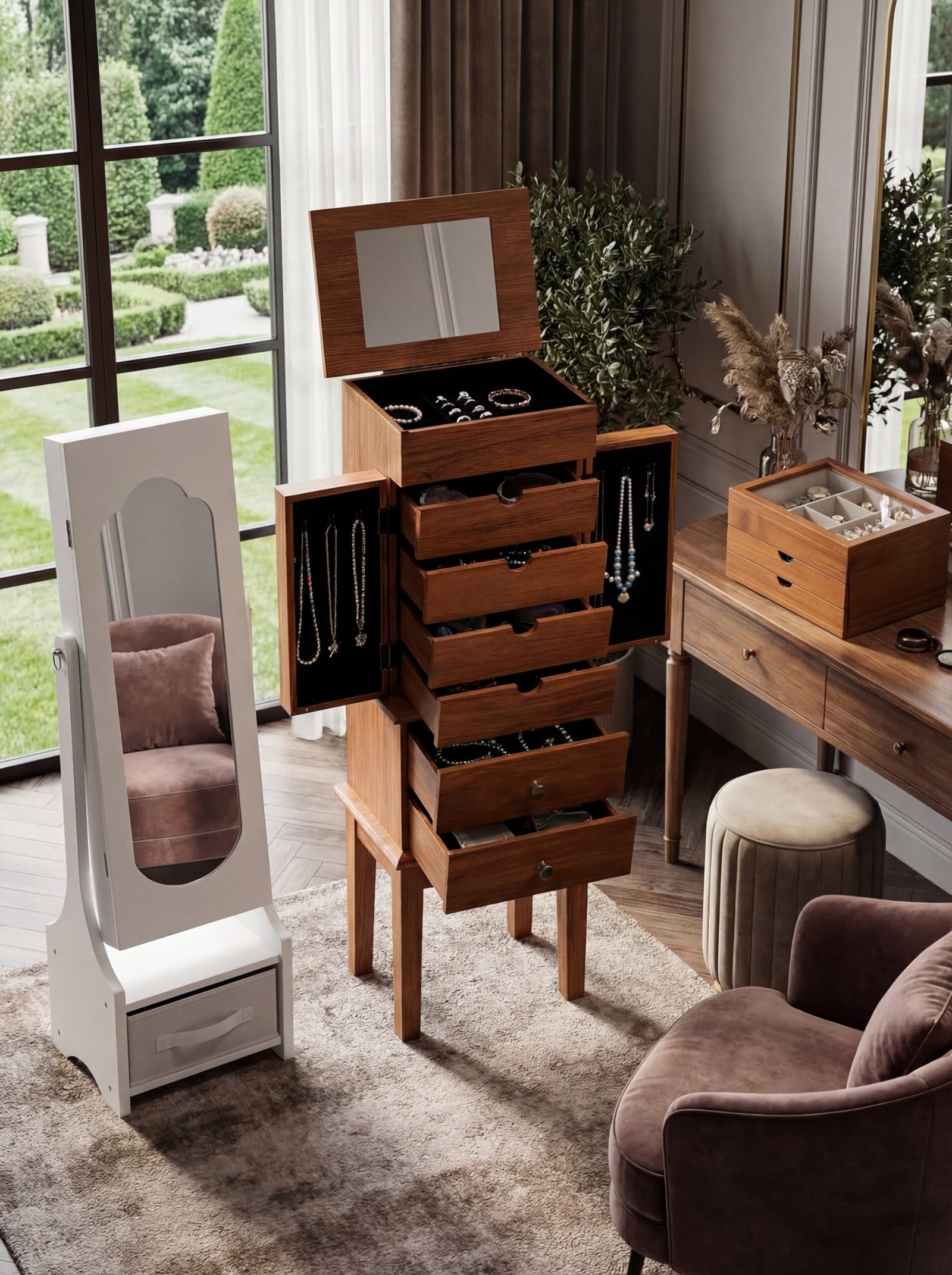
An armoire keeps jewelry separate and visible. When everyone has their own section—grandmother’s pearls in one drawer, a daughter’s earrings in another—there’s less searching and fewer tangles.
Choose pieces with multiple drawer depths. Standing armoires offer vertical storage without taking up floor space. Built-in flannel lining protects metals from scratching, and prevents chains from knotting when drawers close.
Place the armoire where morning light reaches it. Natural illumination makes it easier to distinguish between similar pieces without turning on overhead lights that disturb others.
How often do you actually open that jewelry box, versus how often you wish finding things was easier?
Crystal Doorknobs and Hardware: Period-Authentic Finishing Touches
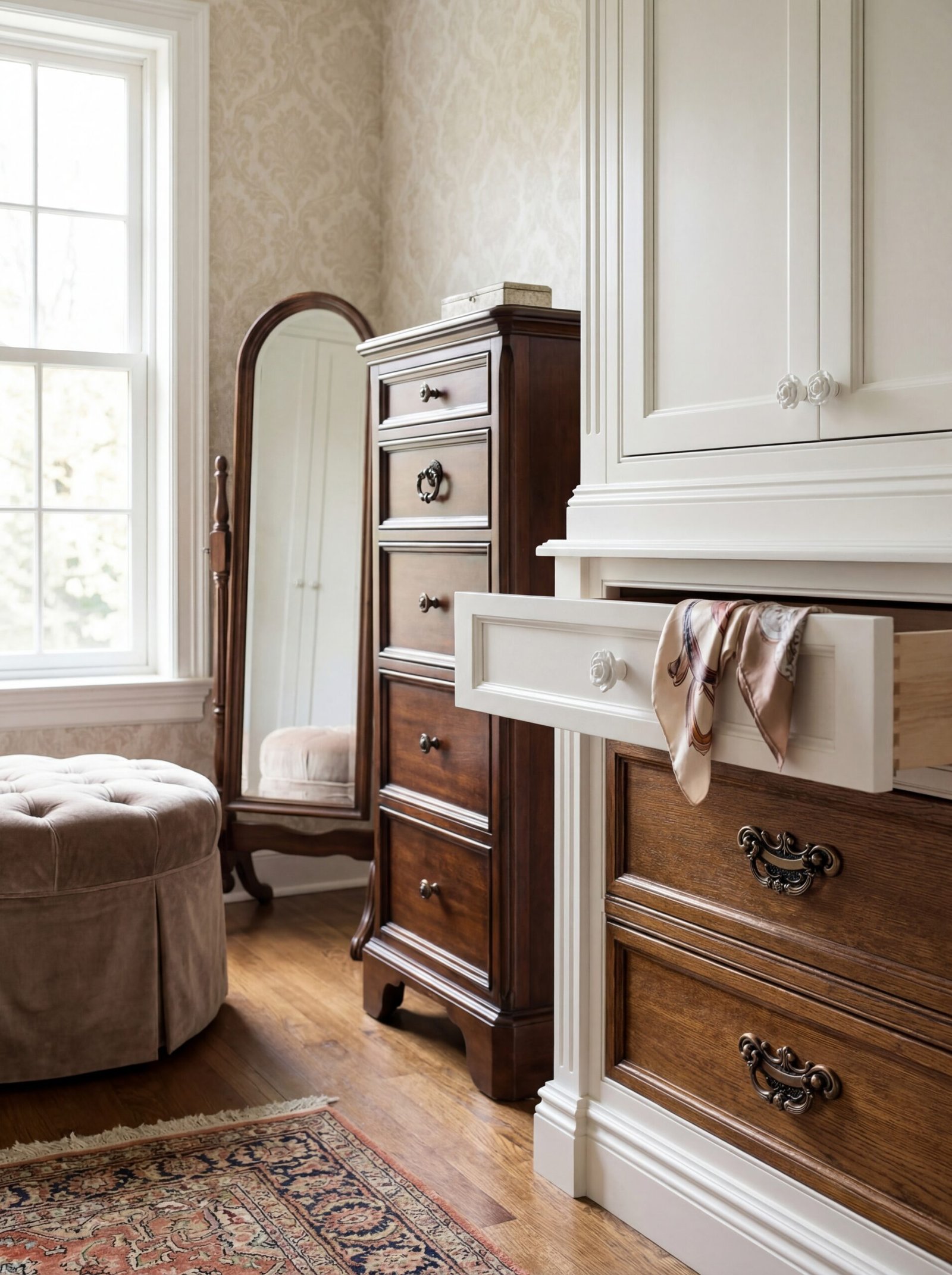
Crystal knobs catch light and feel substantial in hand. They’re easier to grip than smooth metal, especially for fingers that struggle with arthritis or small hands still learning coordination.
Install them on closet doors, dresser drawers, and armoire fronts. Porcelain options offer similar visual appeal with less maintenance. Brass ring pulls work for heavier drawers where a knob might loosen over time.
Standard installation height is 36 inches, but consider adding pulls at varying heights if children use the space. A lower pull on one drawer gives them independence without compromising the room’s design.
Persian Rugs and Floor Coverings That Withstand Daily Family Use
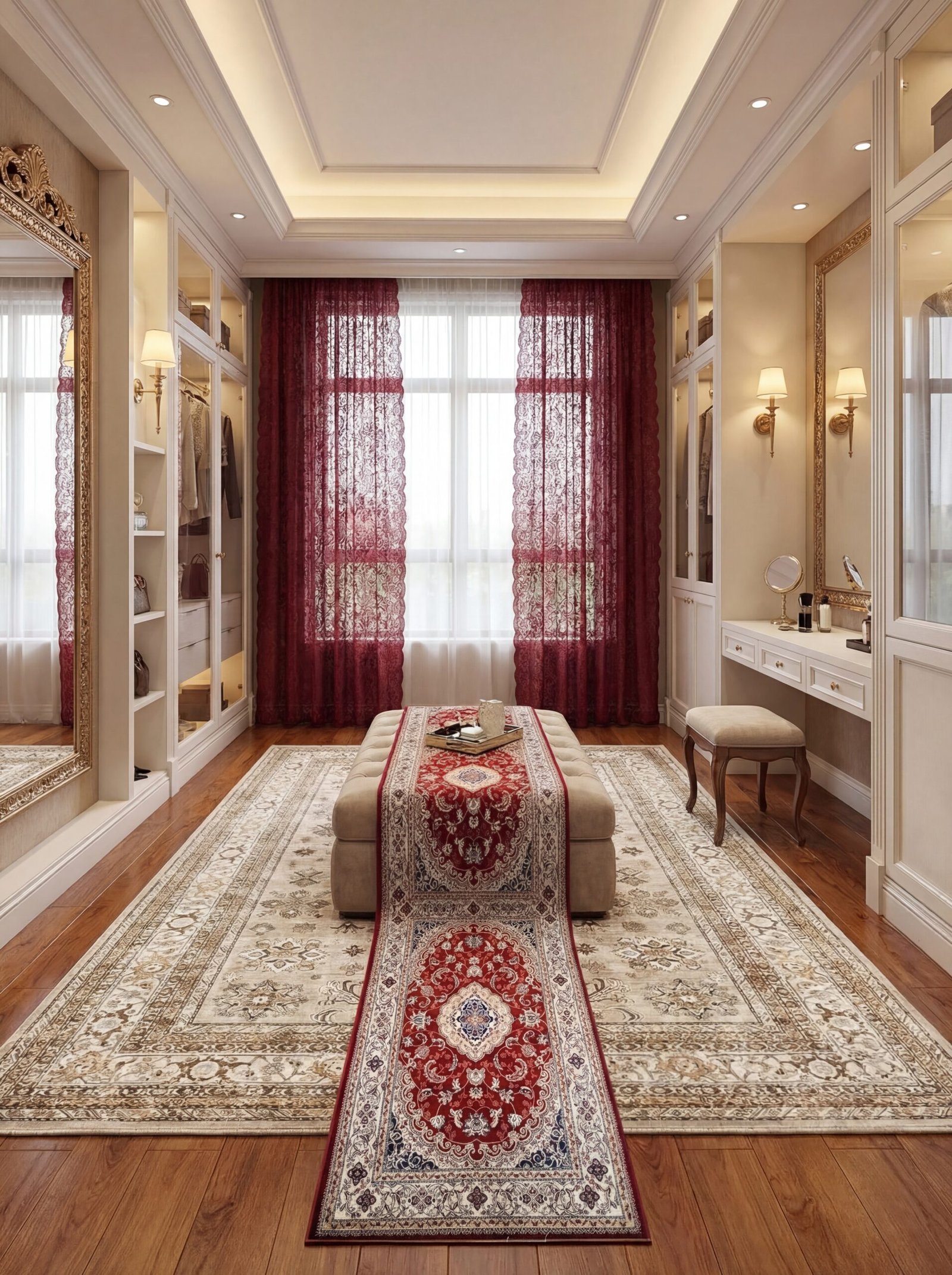
A Persian-style rug softens hard floors and defines the dressing area without walls. The dense weave hides daily wear, and traditional patterns don’t show every stain the way solid colors do.
Choose rugs with low pile for stability. High-pile rugs catch on walker wheels and create tripping hazards. Cotton-backed runners stay flat and clean easily. For larger spaces, a 9×12 washable rug covers more ground and survives spills.
Place rugs where people naturally stand—in front of mirrors, near seating, by closet doors. Avoid positioning them where they might slide underfoot when someone’s in a hurry.
Could the floor covering you have now handle a dropped bottle of nail polish or a muddy shoe?
Adjustable Gas-Style Lighting Fixtures for Universal Accessibility
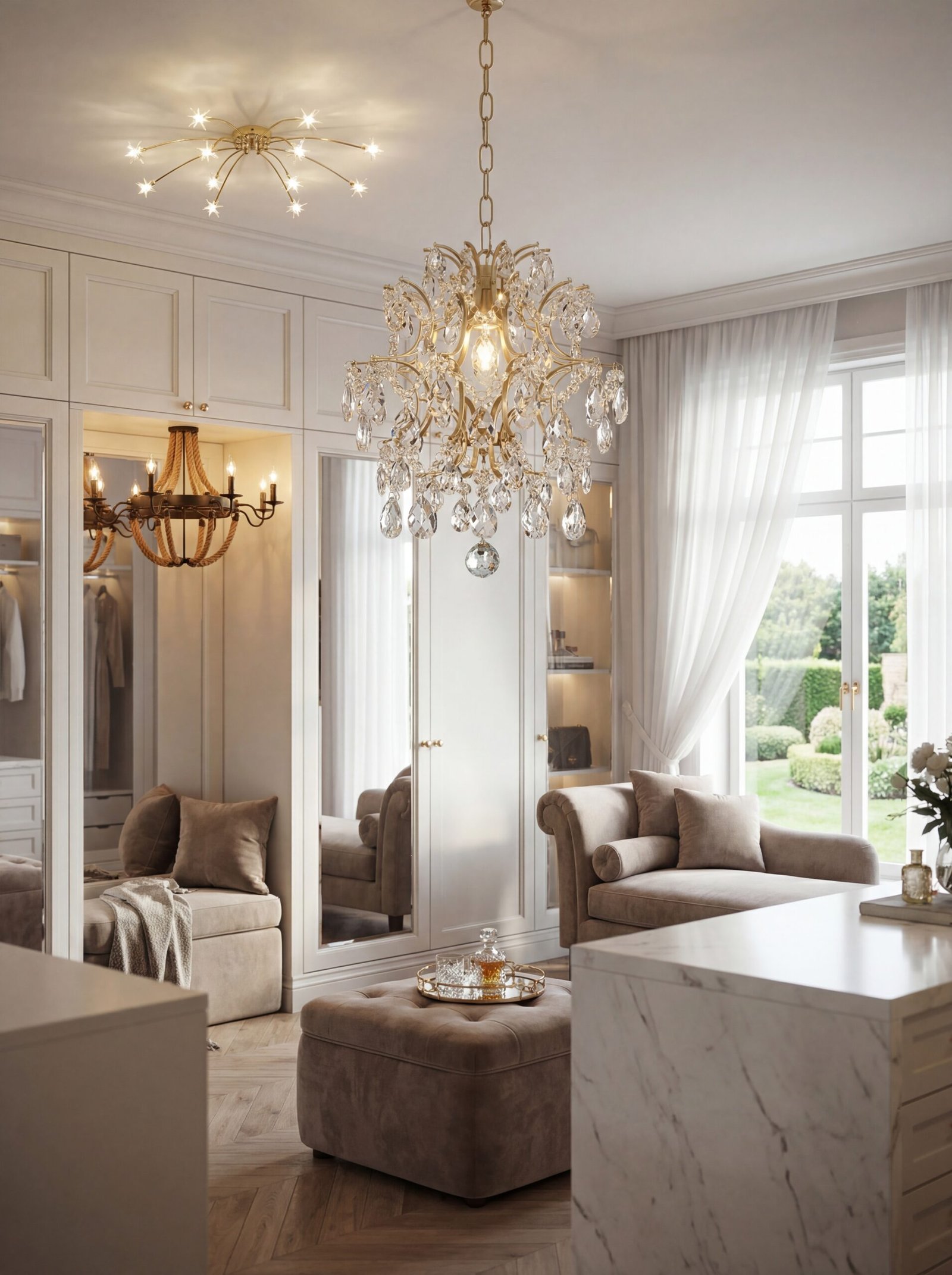
Gas-style fixtures bring Victorian character without sacrificing modern convenience. Adjustable chains let you raise or lower the light source to suit tasks—higher for general illumination, lower for detailed work.
Install fixtures with dimmer compatibility. Morning routines need bright light, but evening prep benefits from softer tones. Crystal chandeliers diffuse light pleasantly, while multi-bulb designs provide even coverage.
Position fixtures centered over the primary activity area. If the dressing room serves multiple purposes, consider two smaller lights instead of one large fixture that creates shadows.
Wallpaper Patterns That Bridge Victorian Elegance and Contemporary Taste
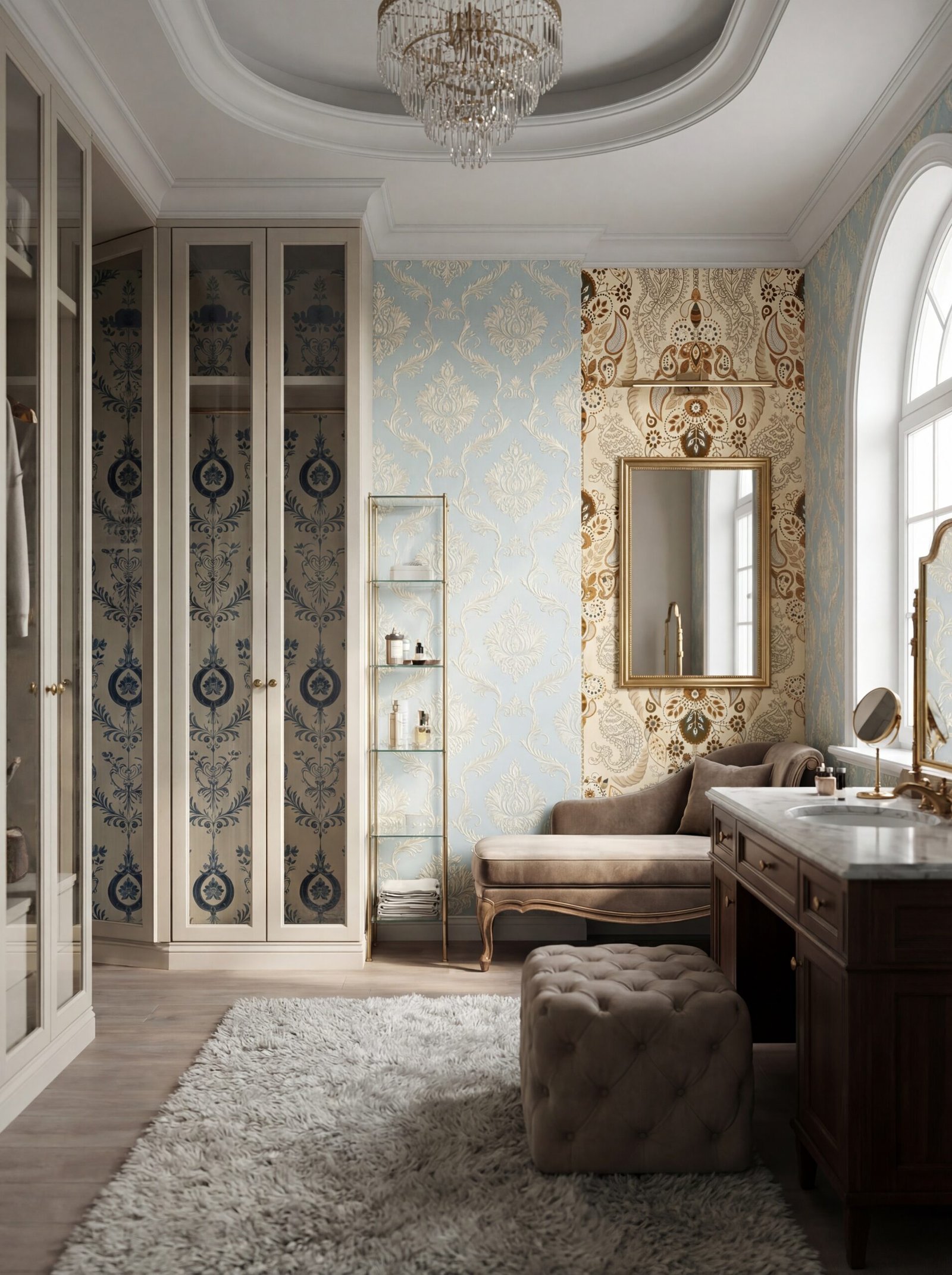
Peel-and-stick wallpaper updates walls without permanent commitment. Victorian damask patterns add formality, but removable application means you can change them when tastes shift or the room needs refreshing.
Start with one accent wall rather than covering the entire room. Cream and blue damask pairs well with natural wood, while embossed patterns add texture without overwhelming small spaces.
Apply wallpaper to the wall behind mirrors or seating to create a focal point. Avoid areas near steam sources or direct sunlight, which can loosen adhesive over time.
Would a pattern on the wall make your space feel more finished, or just more busy?
Porcelain Washbasin Sets: Marrying Function with Decorative Charm
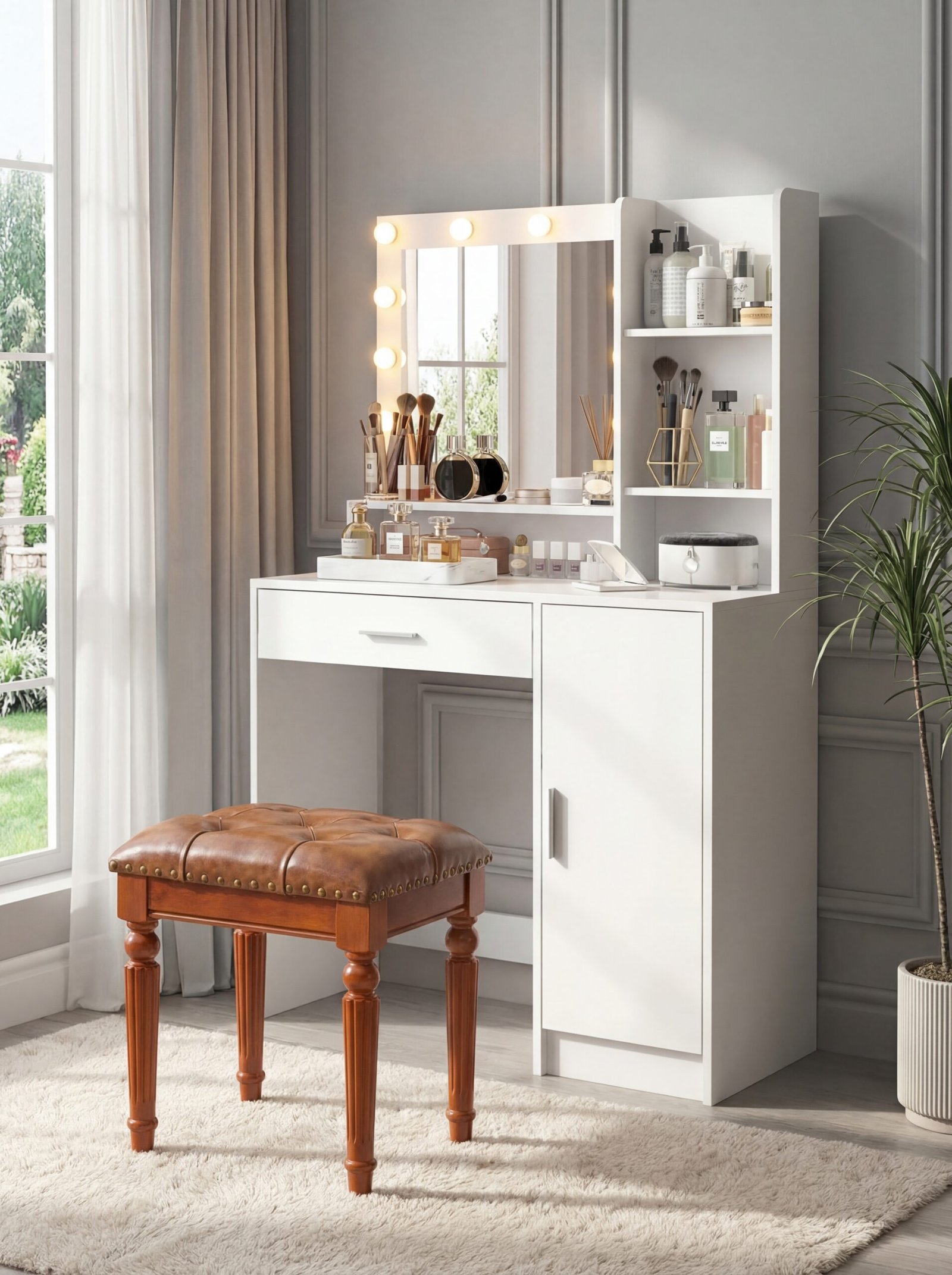
A porcelain tray corrals small items—rings, watches, hairpins—so they don’t scatter across counters. The raised edges prevent things from rolling off, and the smooth surface wipes clean quickly.
Use rectangular ceramic trays near sinks for soap and lotion bottles. Place a second tray on the vanity for daily jewelry. The weight keeps them stable, even when someone bumps the counter.
Choose white or neutral colors that don’t compete with existing décor. Porcelain’s natural finish reflects light and makes small spaces feel less cluttered.
Wooden Folding Privacy Screens for Flexible Space Division
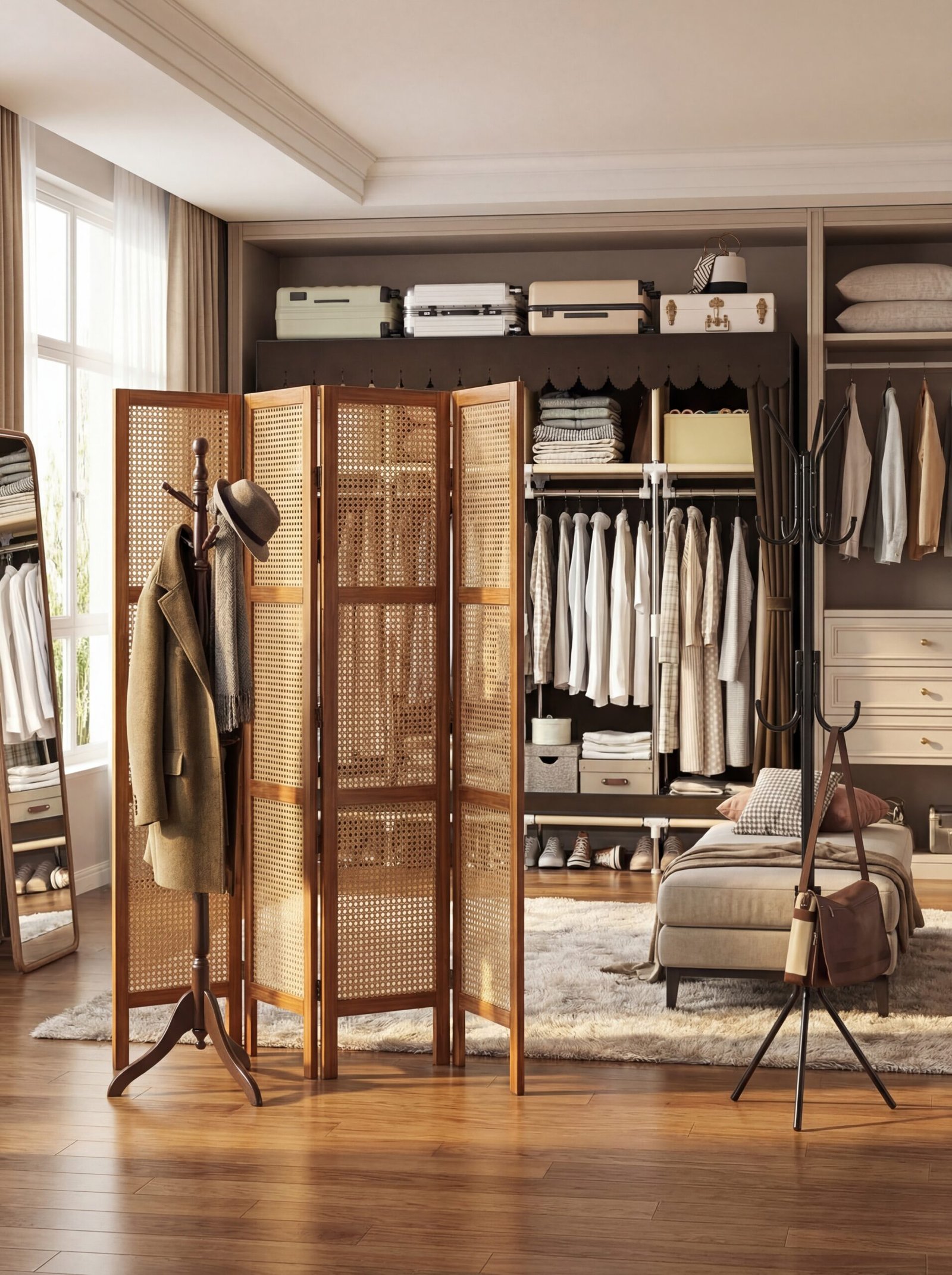
A folding screen creates privacy when someone needs to change, then folds away when the space opens up. This flexibility matters in shared homes where one room serves multiple people and purposes.
Wooden screens with fabric panels offer more coverage than open lattice designs. Three-panel screens fit in corners, while four-panel versions divide larger areas. Hinges should move smoothly without catching or requiring force.
Position screens to block sightlines from doorways without cutting off natural light. Fold them partially to create a dressing nook, or fully extend them when privacy is essential.
Does everyone in your home have a spot where they can change without feeling exposed?
Brass Clothing Hooks and Valet Stands at Varying Heights
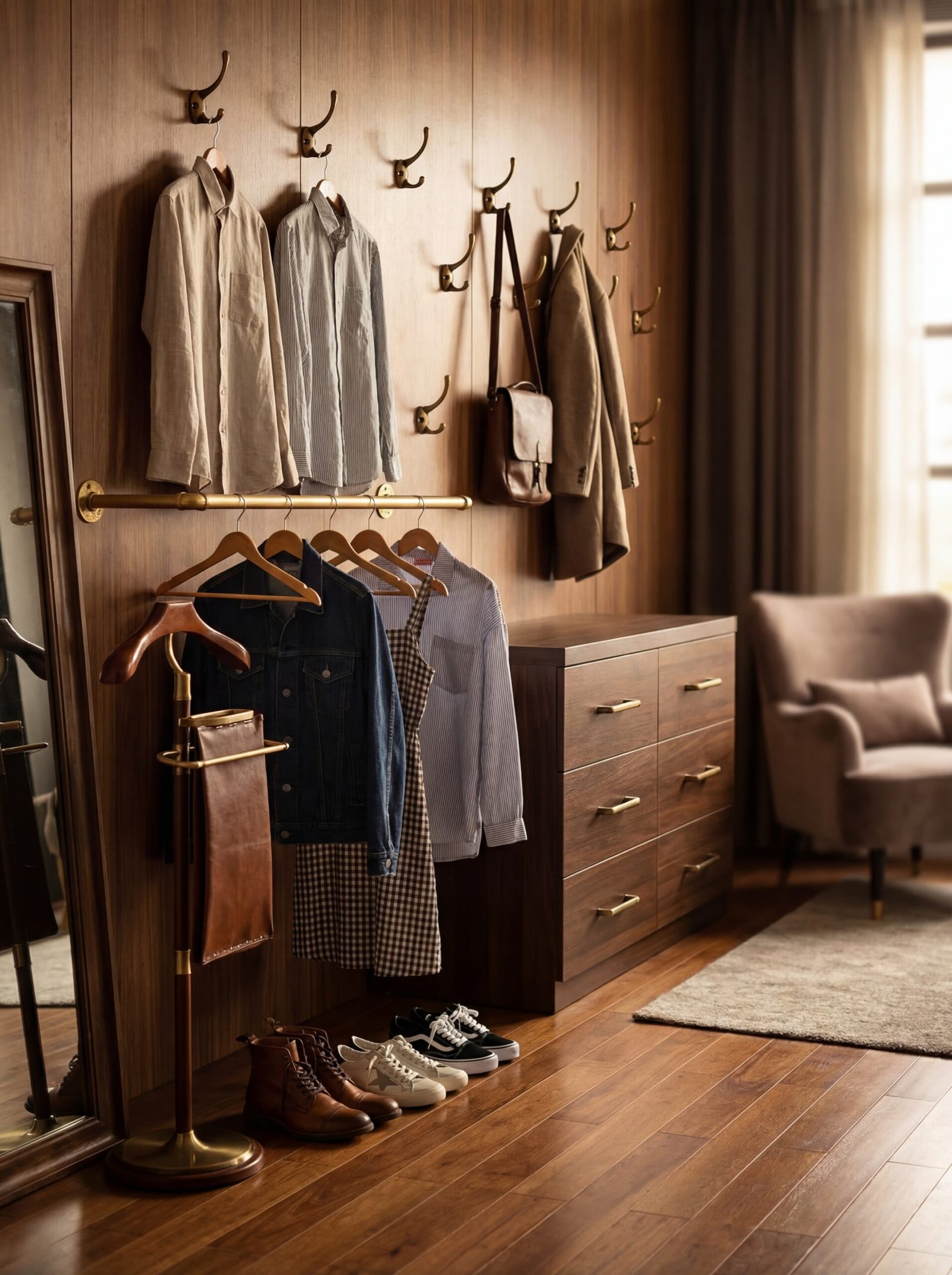
Brass hooks handle daily use better than plastic alternatives. They hold weight without bending, and the warm finish adds Victorian detail without requiring ornate designs.
Install double-prong hooks at 48 inches for adults and 36 inches for children. This arrangement lets everyone hang their own items without help. Wall-mounted racks work in narrow spaces where freestanding furniture won’t fit.
Space hooks 6-8 inches apart to prevent garments from bunching. Mount them into studs or use proper anchors—brass is heavy, and loose hardware fails quickly.
Conclusion
Victorian dressing room accents work in multi-generational homes because they prioritize function alongside appearance. Mirrors everyone can use, seating that supports different needs, storage that keeps pace with daily life—these pieces prove that historical style and modern practicality aren’t opposites.
The items above fit real spaces and real routines. They accommodate walkers, step stools, and the inevitable clutter of shared living. Start with one or two accents that solve an actual problem in your home, not just fill a decorative gap.
Victorian design earned its longevity by being useful first and beautiful second. Your dressing room can honor that legacy while serving the family you have today.
Frequently Asked Questions
Are Victorian dressing room accents suitable for small spaces?
Yes. Choose wall-mounted mirrors, compact ottomans, and vertical storage like armoires. Avoid oversized furniture that blocks movement. A single well-placed accent often works better than multiple pieces crowding a tight room.
How do I maintain brass hardware in a humid dressing room?
Wipe brass weekly with a dry cloth to prevent tarnish. Avoid harsh cleaners. If humidity is high, apply a thin coat of paste wax annually. This creates a barrier without changing the brass’s appearance.
Can Victorian accents work with modern furniture?
They can. Stick to one or two Victorian pieces as focal points, then surround them with simpler modern items. A gilded mirror above a minimalist console creates contrast without clashing.
What’s the best way to introduce Victorian style gradually?
Start with hardware—doorknobs, drawer pulls, hooks. These small changes add character without overwhelming the space or requiring major investment. Add larger pieces like mirrors or seating once you’re sure the style fits your routine.
Are peel-and-stick wallpapers as durable as traditional wallpaper?
They’re durable enough for low-traffic areas like dressing rooms. Avoid placing them where they’ll be touched frequently or exposed to moisture. Properly applied, they last several years and remove without damaging walls.
How do I choose rug size for a dressing room?
Measure the area where people naturally stand—in front of mirrors, near seating. Add 12 inches on each side. If the rug extends under furniture, make sure it clears doorways when fully extended.
What lighting brightness works best for a dressing room?
Aim for 50-75 lumens per square foot. Use warm white bulbs (2700-3000K) for a flattering tone. Install dimmer switches so you can adjust brightness based on time of day and task.
Can I mix different Victorian accent styles in one room?
Yes, but keep finishes consistent. All brass, or all painted wood, or all porcelain. Mixing materials creates visual confusion. Mixing styles within one material family looks intentional.
