There’s something profoundly calming about stepping into a space that whispers rather than shouts. In our hyperconnected, overstimulated world, the bedroom has become more than a place to sleep—it’s a sanctuary, a retreat, a daily reset button. And if you’re seeking that perfect equilibrium between minimalist discipline and cozy warmth, Japandi design offers an answer that feels both timeless and refreshingly modern.
Japandi—the seamless fusion of Japanese minimalism and Scandinavian hygge—isn’t just another design trend. It’s a philosophy that celebrates intentionality, natural materials, and the art of living with less but better. Think clean lines softened by organic textures, muted palettes punctuated by handcrafted details, and spaces that breathe with strategic emptiness. The result? A bedroom that doesn’t just look sophisticated—it genuinely supports rest, clarity, and calm.
In this guide, we’re exploring ten essential Japandi bedroom ideas that will transform your sleep space into a haven of tranquil elegance. Whether you’re starting from scratch or refining an existing aesthetic, these curated approaches will help you strike that delicate balance between Scandinavian coziness and Japanese restraint. Let’s dive into the nuanced details that make Japandi bedrooms so irresistibly serene.
Harmonizing Natural Wood Tones with Neutral Textiles
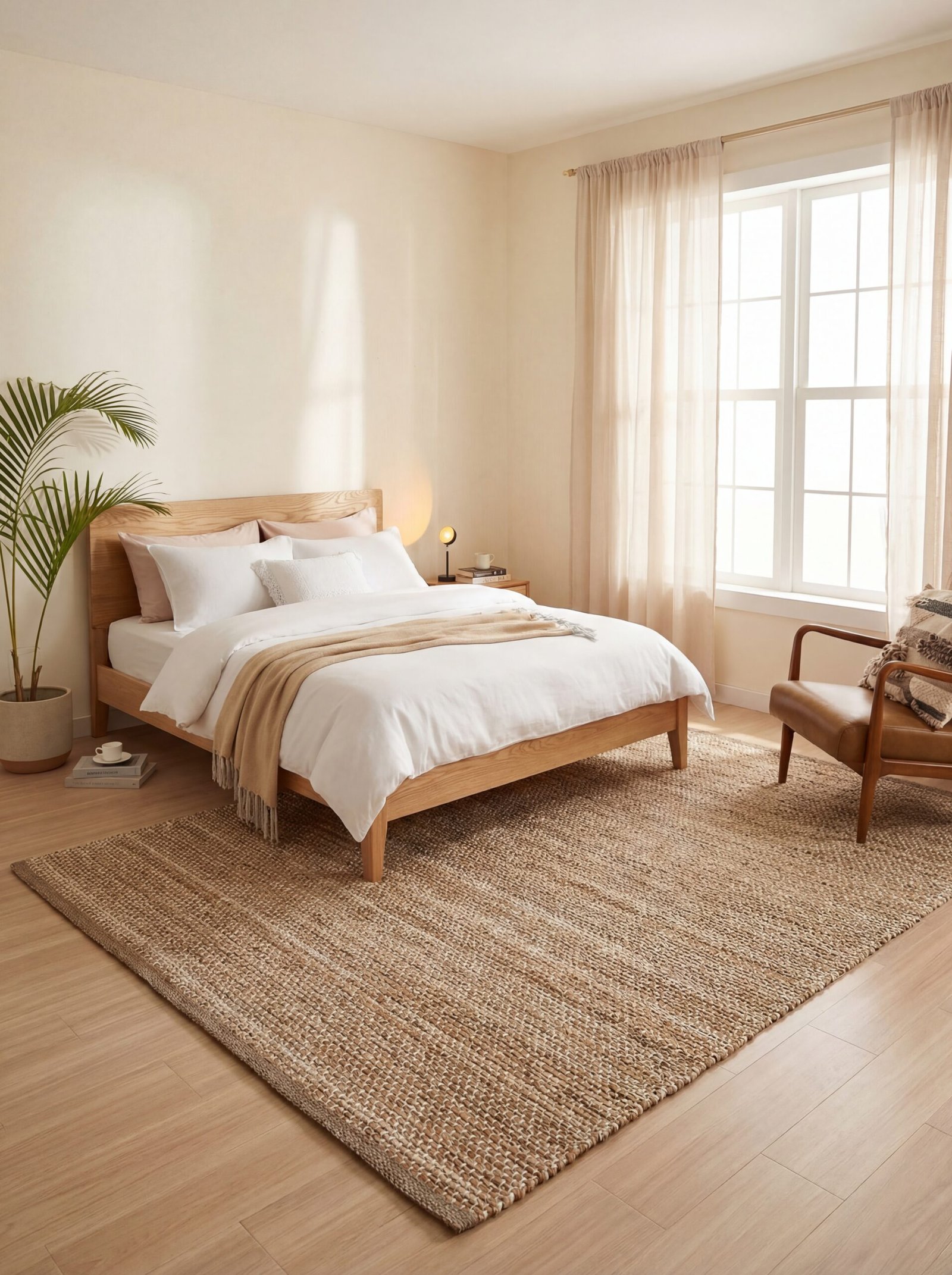
The foundation of any authentic Japandi bedroom lies in the thoughtful interplay between raw wood and soft, undyed textiles. Unlike heavily stained or painted furniture, Japandi celebrates wood in its most honest form—light ash, warm oak, or rich walnut with visible grain patterns that tell a story. This isn’t about perfection; it’s about character.
Pair these natural wood elements with textiles that echo the same unpretentious beauty. A beige microfiber duvet cover in a soft tan hue brings understated warmth without competing for attention. Layer in stone-washed linen pillowcases that offer that perfectly imperfect texture—slightly rumpled, beautifully breathable, and utterly inviting. These fabrics don’t just look good; they feel like a gentle embrace against your skin.
Ground the space with a hand-braided jute area rug that reinforces the natural palette while adding tactile dimension. The key here is restraint—select pieces that complement rather than clash, creating a cohesive visual flow. When wood and textile speak the same tonal language, your bedroom becomes a masterclass in organic harmony.
Low-Profile Furniture: The Foundation of Tranquil Sleep Spaces
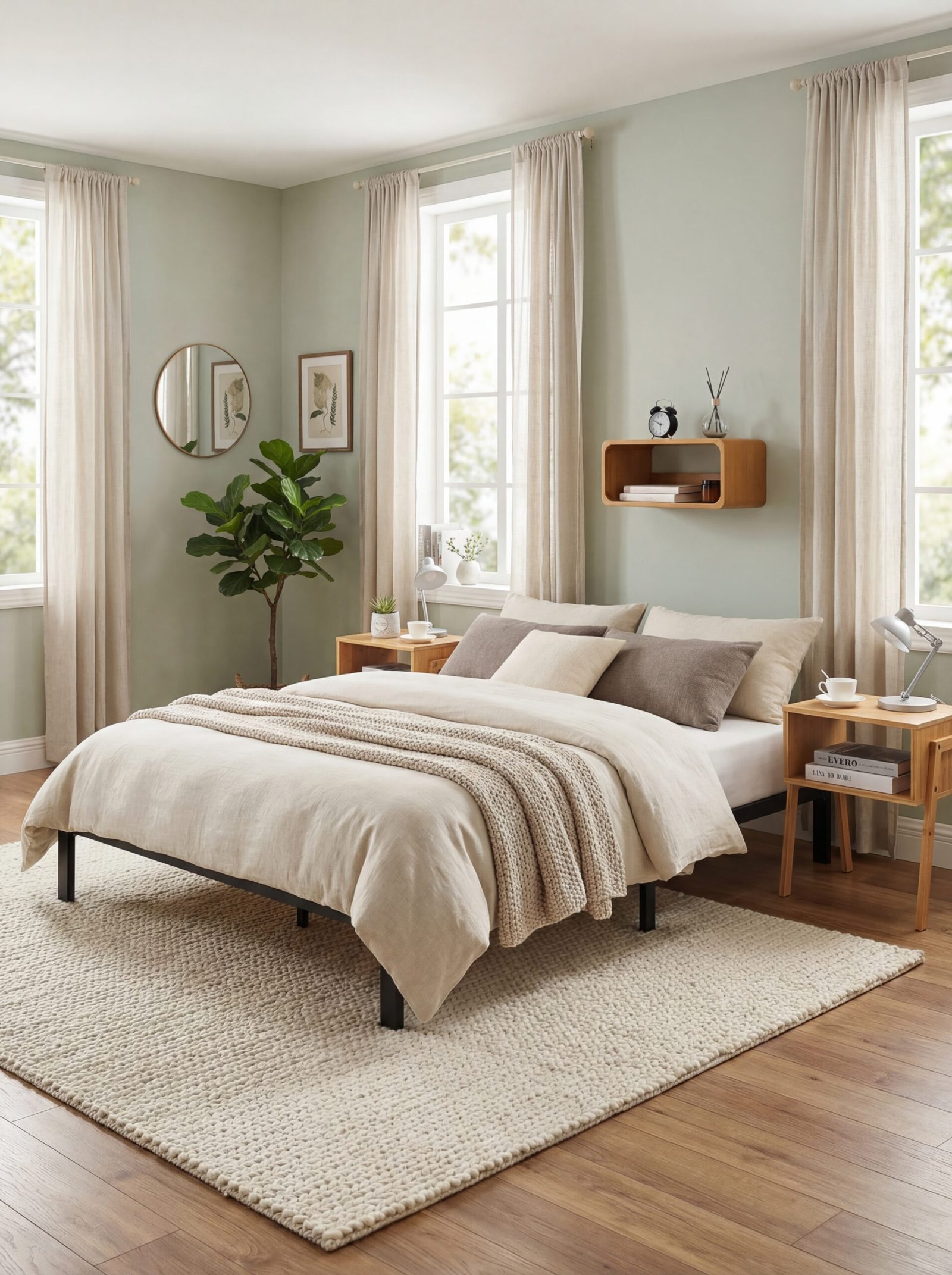
In Japanese design tradition, furniture sits closer to the earth—a practice that creates visual spaciousness and promotes a grounded energy. This principle translates beautifully in Japandi bedrooms, where low-profile pieces become the architectural anchor of the space. A 9-inch low-profile metal platform bed frame eliminates the need for a box spring while maintaining clean, contemporary lines that disappear into the design rather than dominate it.
Flank your bed with equally considered pieces like a bamboo stackable nightstand that sits just 16 inches high. These pieces aren’t trying to make a statement—they’re creating a conversation about space, proportion, and intentional living. For those embracing the full minimalist ethos, consider floating wall-mounted bedside shelves in walnut that seem to levitate, offering function without footprint.
This furniture approach doesn’t just expand visual square footage—it fundamentally changes how you experience your bedroom. With sightlines unobstructed and furniture hugging the floor, the room breathes differently. You’ll notice the ceiling feels higher, the walls seem farther apart, and that precious morning light travels deeper into the space.
Lighting Design That Embraces Soft Illumination and Shadow Play
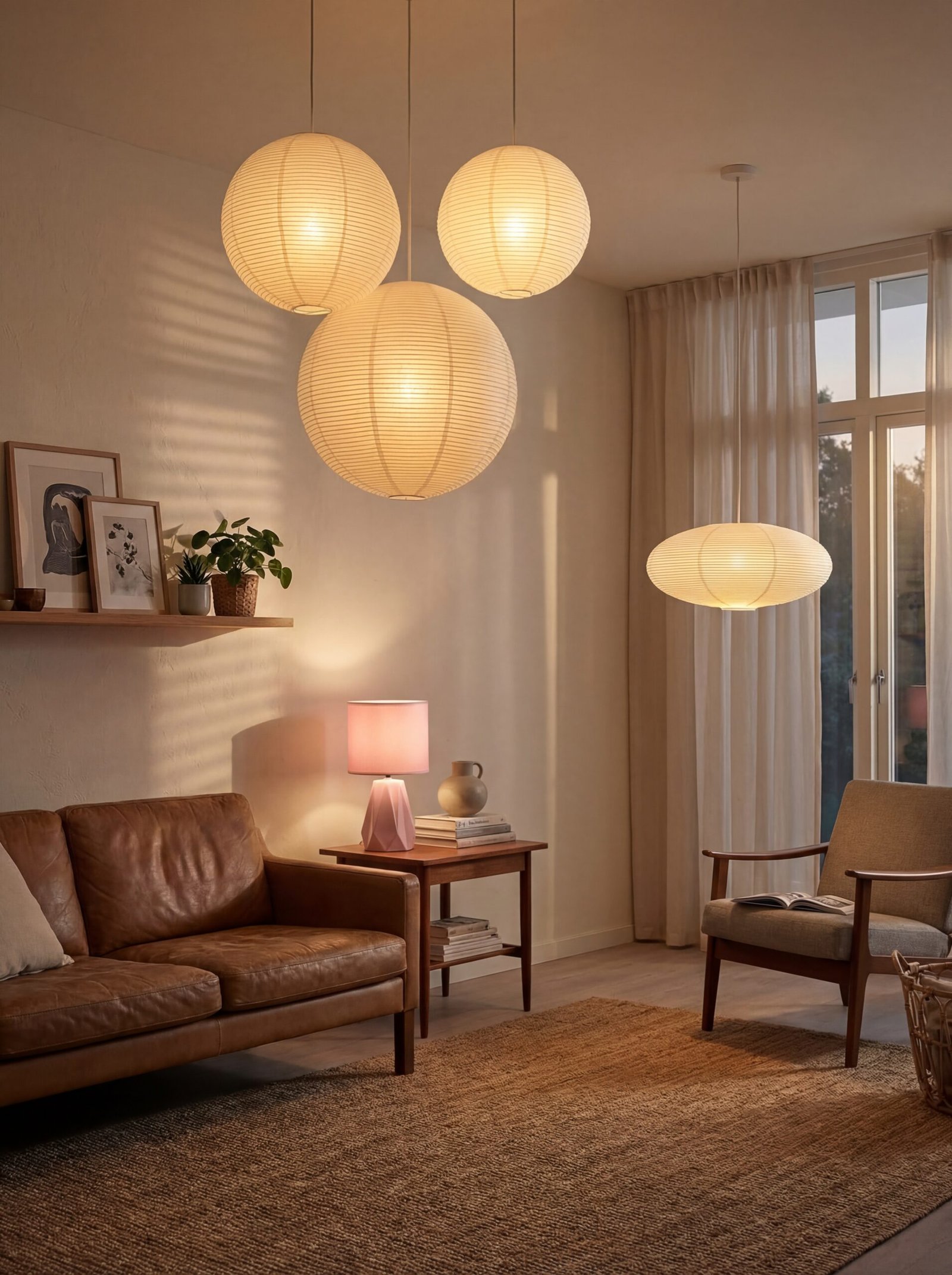
Harsh overhead lighting has no place in a Japandi bedroom. Instead, this aesthetic celebrates the subtle dance between light and shadow—what the Japanese call “in-ei,” the interplay of illumination and darkness that adds depth and poetry to a space. Start with white rice paper lanterns in varying sizes (12″, 14″, and 16″ work beautifully together) suspended at different heights to create visual rhythm without overwhelming the room.
These pendant lights diffuse brightness into a warm, cloud-like glow that flatters skin tones and softens architectural edges. For task lighting, opt for a ceramic bedside lamp with an organic, sculptural form that doubles as décor even when switched off. Add additional rice paper hanging lights in reading nooks or dressing areas to maintain lighting consistency throughout the space.
The magic happens at dusk when these layered light sources create pockets of warmth and zones of gentle shadow. This isn’t about banishing darkness—it’s about celebrating the gradual transition from day to night, honoring natural circadian rhythms, and creating an environment that genuinely supports rest rather than stimulates wakefulness.
Creating Calm Through Strategic Negative Space
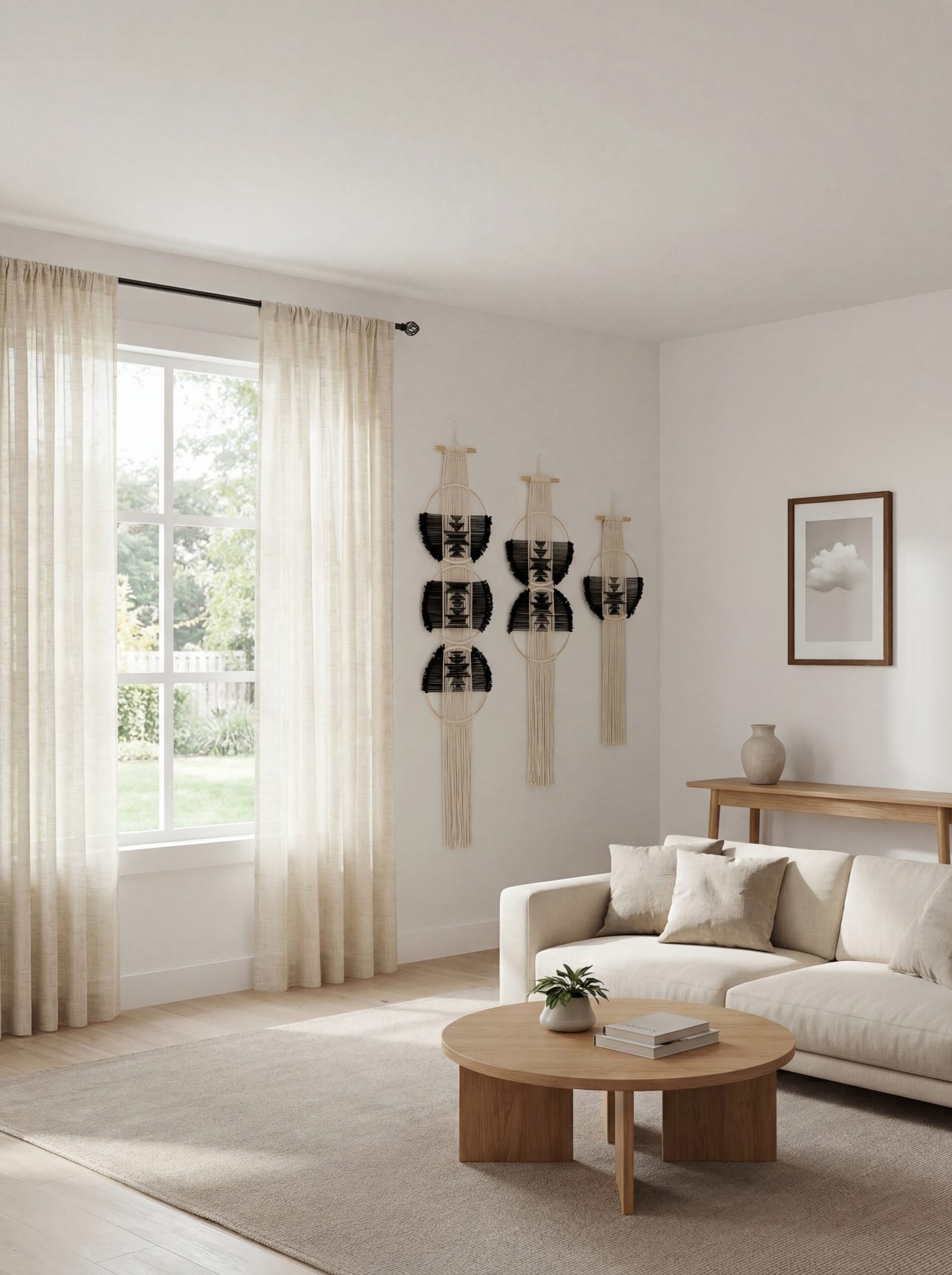
Western design often equates empty wall space with incompleteness—a problem waiting to be solved with more art, more shelving, more stuff. Japandi flips this narrative entirely. Here, negative space isn’t absence; it’s presence. It’s the visual breathing room that allows your mind to settle, your eyes to rest, and your nervous system to downregulate.
Rather than filling every vertical surface, select one or two meaningful pieces like a single solid oak photo frame in walnut displaying a simple botanical print or abstract photograph. Let it stand alone, commanding attention precisely because it isn’t competing with anything else. Soften window treatments with semi-sheer linen curtains in natural beige that filter daylight into a gentle wash rather than blocking it entirely.
If you’re craving a bit more visual interest without sacrificing the minimalist ethic, consider macrame wall hangings in beige and black geometric patterns. These handmade pieces add texture and dimensionality while maintaining the neutral palette. The goal is curation, not accumulation—each element should earn its place by serving both function and beauty.
Handcrafted Ceramics and Artisan Accents for Subtle Character
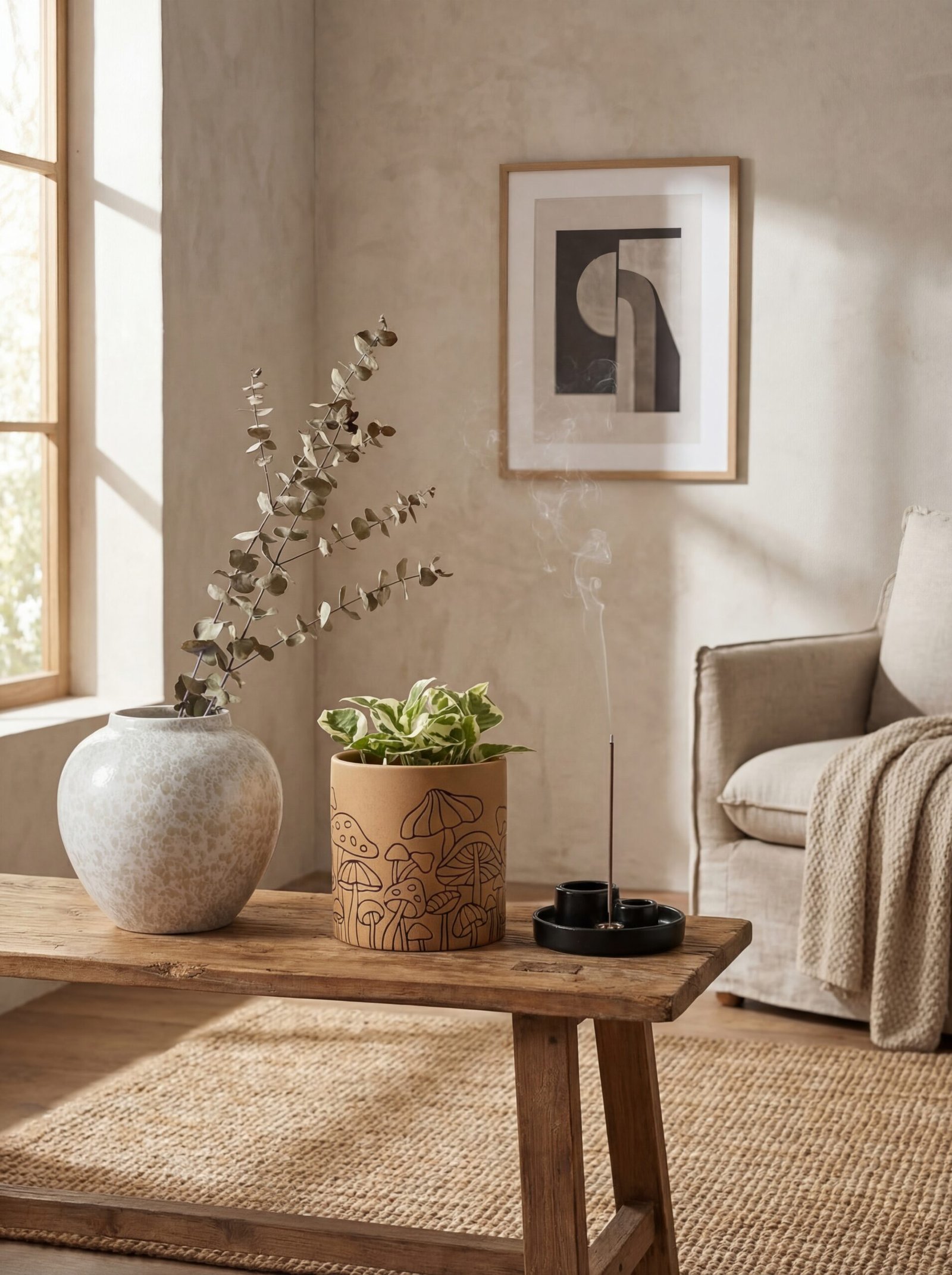
While Japandi favors clean lines and minimal ornamentation, it never veers into cold sterility. The warmth comes from carefully chosen handcrafted elements that bear the marks of human touch—slight asymmetries, glaze variations, and textural irregularities that machine production could never replicate. This is where the Japanese concept of wabi-sabi (finding beauty in imperfection) truly shines.
Display a Jingdezhen ceramic vase with its solid glaze and handmade silhouette holding a single branch of eucalyptus or pampas grass. The beauty lies in its understated form—not perfect, not trying to be, and all the more compelling for it. Add a speckled terracotta planter with vintage mushroom-inspired design to house a low-maintenance pothos or snake plant.
For those who enjoy ritual and mindfulness practices, a ceramic palo santo holder in matte black serves both functional and aesthetic purposes. These artisan pieces don’t scream for attention—they reward closer inspection, revealing their craftsmanship gradually, like friendships that deepen over time.
Platform Beds and Tatami-Inspired Sleeping Arrangements
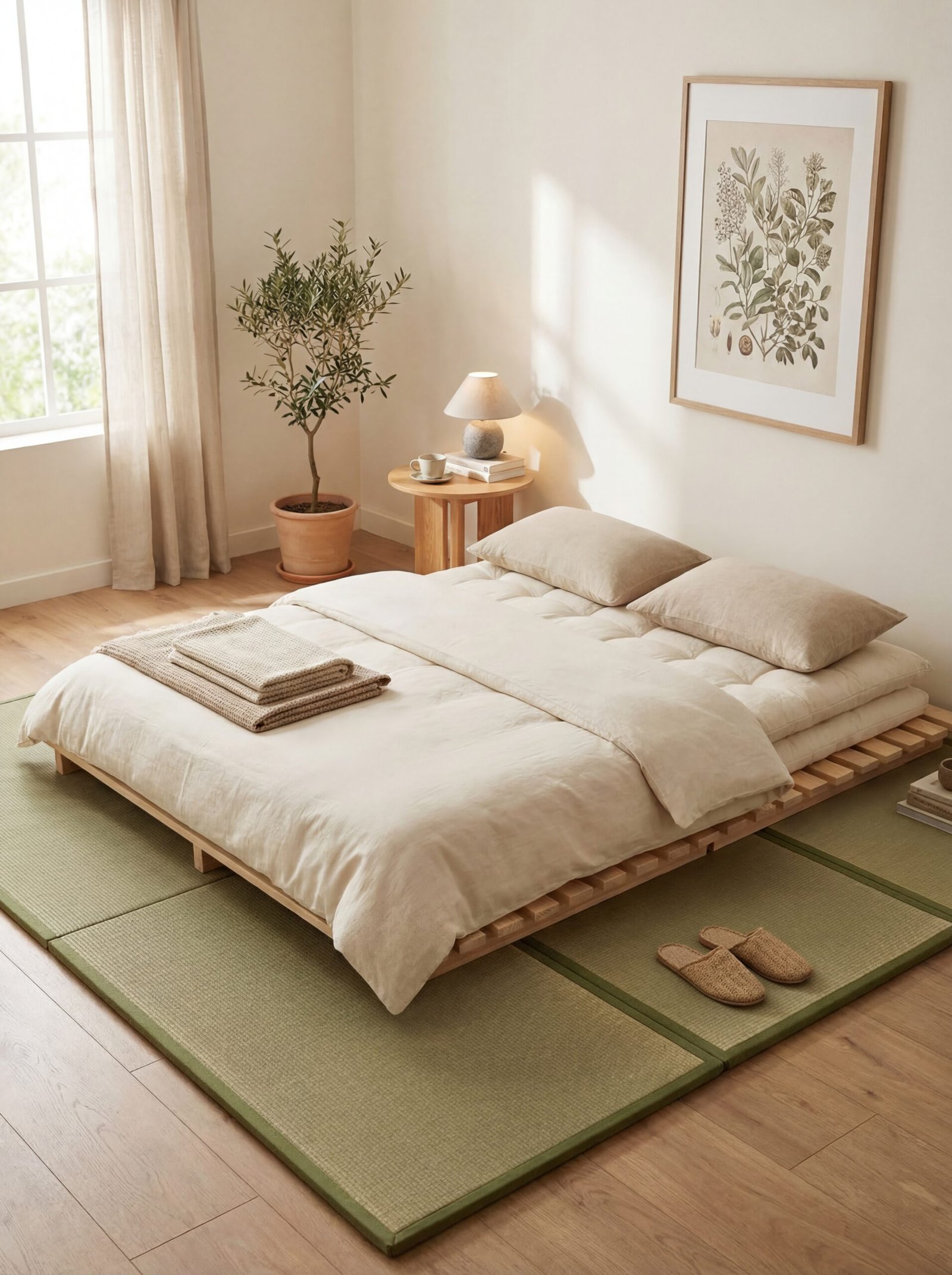
Few furniture choices signal Japandi commitment quite like adopting a platform or tatami-inspired sleeping arrangement. These designs eliminate unnecessary height, elaborate headboards, and ornate details in favor of pure, grounded simplicity. A Japanese floor platform bed made from knot-free wood with slatted construction sits directly on the floor, creating an almost meditative connection between sleeper and earth.
For those seeking modularity and flexibility, pine wood pallet bed sections can be arranged and rearranged to suit changing needs—create a larger sleeping surface for guests or separate them for individual use. This adaptability honors both the Scandinavian emphasis on practical functionality and the Japanese appreciation for multifunctional design.
Complete the experience with a woven rattan tatami mat that provides a traditional Japanese floor covering with contemporary foldable convenience. These arrangements aren’t just aesthetically aligned with Japandi principles—they fundamentally shift your relationship with sleep, creating a ritual of grounding and intentional rest that begins the moment you enter your bedroom.
Balancing Warmth: Layering Textures Without Visual Clutter

The Scandinavian half of Japandi brings essential coziness to the equation—that hygge sensibility that makes a space feel lived-in and welcoming. But here’s the challenge: how do you layer textures for warmth without tipping into visual chaos? The answer lies in disciplined material selection and strict tonal cohesion.
Start with a 100% organic cotton throw blanket in oatmeal khaki—pre-washed, plant-dyed, and finished with subtle fringe detailing. This becomes your primary layering piece, draped casually across the foot of the bed. Add depth with a handwoven pure wool throw featuring a classic herringbone pattern. The slight textural contrast keeps things interesting while the neutral palette maintains visual unity.
Extend this layering philosophy to the floor with a handwoven cotton runner rug in cream and white tones alongside your bed. These pieces create tactile richness—inviting you to run your hands across varied weaves and weights—while the restrained color story prevents the space from feeling busy. It’s warmth with discipline, comfort with intention.
Shoji Screens and Room Dividers for Flexible Bedroom Layouts
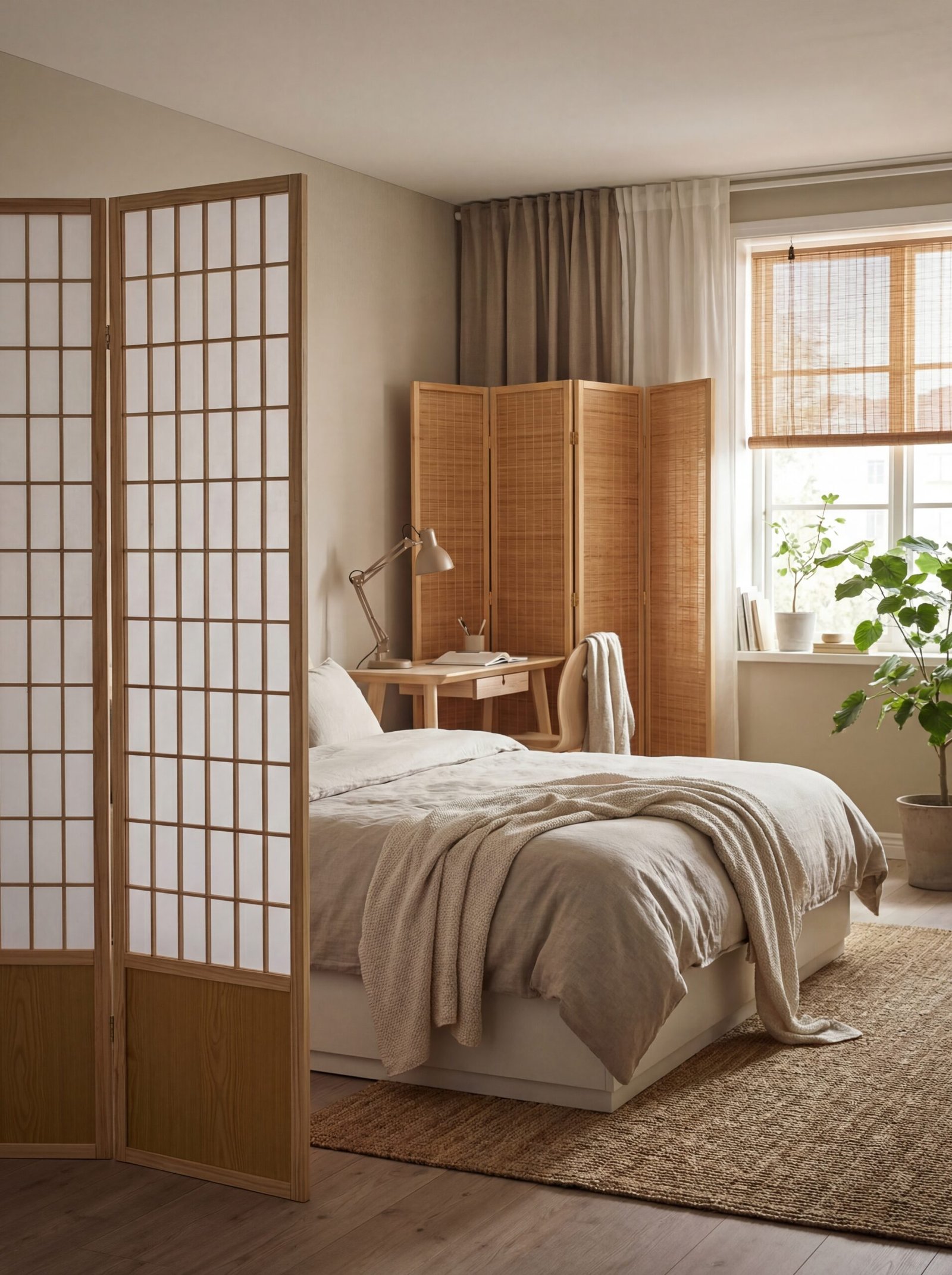
Modern living often demands that single rooms serve multiple functions—bedroom, home office, meditation space, dressing area. Rather than erecting permanent walls that compromise flow and light, Japandi design embraces the traditional Japanese solution: translucent screens that define zones while maintaining spatial continuity.
A wood-framed shoji screen with rice paper panels creates semi-private divisions perfect for separating sleeping quarters from a compact workspace. Available in 3, 4, 5, or 6-panel configurations, these screens adapt to your specific layout needs while maintaining authentic Japanese aesthetic sensibility. The beauty lies in how they filter light rather than block it—creating soft silhouettes and preserving the room’s airy quality.
For a slightly more rustic interpretation, bamboo mesh woven dividers offer portability and folding convenience while adding organic texture. Even window treatments can play into this philosophy—bamboo roller shades with adjustable tension provide privacy and light control without heavy drapery. These elements transform static spaces into dynamic environments that shift with your daily rhythms.
Muted Earth Tones Meet Monochrome: A Modern Color Palette
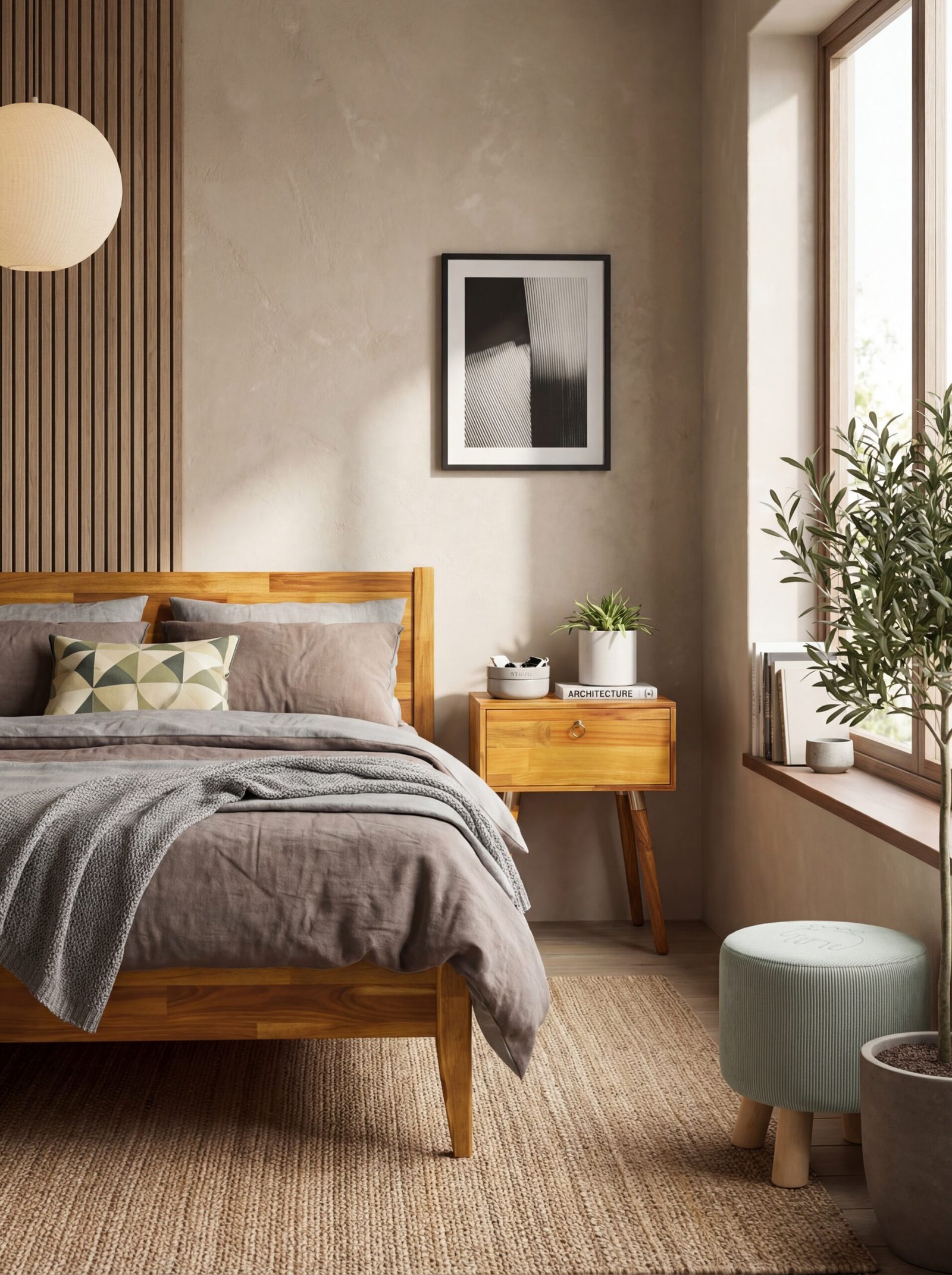
Color in Japandi spaces walks a tightrope between too sterile and too busy. The palette draws from nature’s most restful hues—the soft grays of river stones, the warm beiges of sun-bleached linen, the deep browns of aged timber—with occasional whispers of muted sage, dusty mint, or charcoal black for subtle contrast.
Ground your color story with substantial pieces like a caramel wood bed frame in rich acacia that brings earthy warmth without overpowering the space. Introduce gentle color variation through unexpected accents like a smoke mint corduroy stool that adds a breath of cool-toned freshness. For tabletop styling, select a ceramic bowl in muted sage that serves both functional and decorative purposes.
The sophistication here comes from restraint—resisting the urge to punctuate with bright accent colors or bold pattern clashes. Instead, you’re creating a gradient of natural tones that shift subtly as daylight changes throughout the day. This approach doesn’t bore the eye; it soothes it, creating a backdrop against which the textures and forms you’ve carefully curated can truly shine.
Functional Storage Solutions That Disappear into the Design
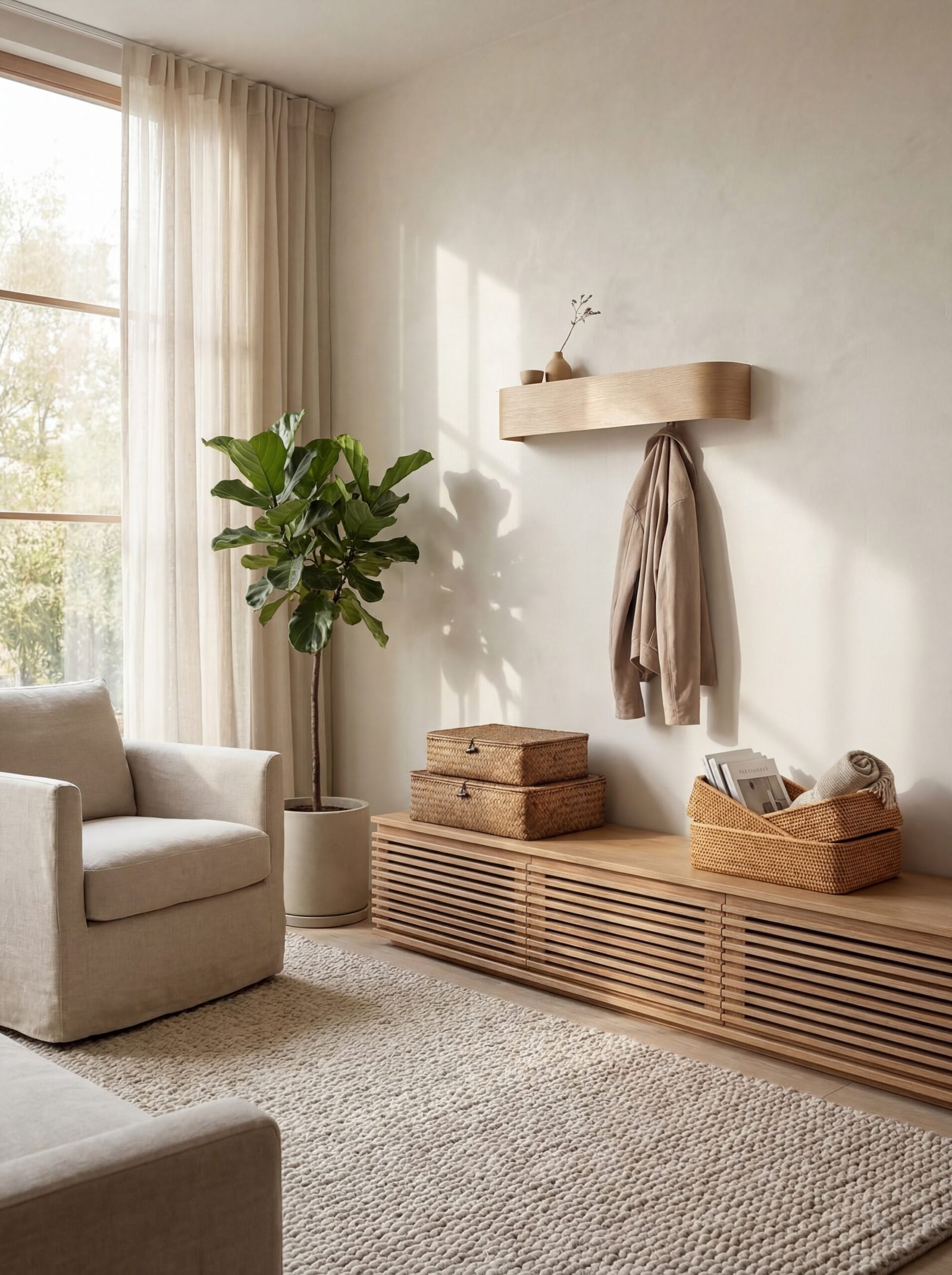
The minimalist bedroom faces a practical paradox: how do you store the necessities of daily life without cluttering the carefully curated serenity? Japandi answers with storage that either becomes part of the aesthetic or vanishes entirely. The goal is accessibility without visibility, function without visual friction.
Incorporate rectangular rattan storage baskets in three nesting sizes that slide under platform beds or stack in closets. Their handwoven texture aligns perfectly with the natural material palette while keeping everyday items contained and out of sight. For open shelving situations, seagrass baskets with lids maintain the organic aesthetic while concealing contents completely.
Wall-mounted solutions offer storage without sacrificing precious floor space. A wall-mounted coat rack in oak with hidden hooks keeps garments accessible while maintaining clean lines when not in use. These pieces aren’t afterthoughts tacked on to solve problems—they’re integral to the design language, proving that practical needs and aesthetic vision can coexist harmoniously when approached with intention.
Practical Tips for Achieving Authentic Japandi Style
Start with Subtraction, Not Addition: Before purchasing anything new, remove what doesn’t serve you. Japandi spaces breathe because they’re not suffocated by excess. Clear surfaces, donate duplicate items, and question every decorative object.
Invest in Quality Over Quantity: A single handcrafted ceramic vase will always outperform three mass-produced ones. Channel budget toward fewer, better pieces that will age beautifully rather than cheap items that need constant replacement.
Embrace Imperfection: Don’t stress about perfect symmetry or matching sets. Wabi-sabi teaches us that slight irregularities—a crack in pottery, grain variation in wood—add soul and authenticity to a space.
Layer Lighting Thoughtfully: Install dimmer switches on all light sources. Japandi spaces should never feel harshly lit—aim for adjustable warmth that can shift from morning clarity to evening amber.
Maintain Tonal Discipline: Stick to a narrow color range within earth tones and naturals. When everything exists in the same tonal family, individual pieces can vary in texture and form without creating visual discord.
Keep Surfaces Clear: Nightstands should hold a lamp, perhaps one book, maybe a small plant or ceramic piece. Resist the urge to collect items on horizontal surfaces—this discipline is what separates true Japandi from “minimalism-adjacent.”
Frequently Asked Questions About Japandi Bedroom Design
Can I incorporate color into a Japandi bedroom?
Absolutely, but exercise restraint. Stick to muted, desaturated tones found in nature—sage green, dusty terracotta, soft charcoal, or smoky blue. Introduce color through textiles or small accent pieces rather than large furniture or wall paint.
How do I make a Japandi bedroom feel warm instead of cold?
Warmth comes from texture and natural materials. Layer soft textiles—linen, cotton, wool—in neutral tones. Choose wood furniture with visible grain. Add handcrafted ceramics and woven elements. The key is tactile richness within a restrained palette.
Is Japandi suitable for small bedrooms?
Japandi is ideal for compact spaces. Low-profile furniture creates visual height, negative space expands perception, and minimal clutter prevents cramped feelings. The philosophy of “less but better” actually makes small rooms feel more spacious and serene.
How often should I update a Japandi bedroom?
The beauty of Japandi is its timelessness. Rather than seasonal updates, focus on gradual evolution—swapping one textile for another, adding a single new artisan piece, or rotating plants. This isn’t fast fashion; it’s slow, intentional living.
Can I mix Japandi with other design styles?
Japandi itself is already a fusion, so it plays well with compatible aesthetics like modern farmhouse, organic modern, or coastal minimalism—as long as you maintain the core principles of natural materials, neutral palettes, and restrained ornamentation.
Conclusion: The Art of Intentional Bedroom Design
Creating a Japandi bedroom isn’t about following a rigid formula or purchasing a predetermined set of items. It’s about cultivating a mindset—one that values quality over quantity, intentionality over impulse, and serenity over stimulation. Every element you’ve explored here, from low-profile platform beds to handcrafted ceramics, serves a dual purpose: functional necessity and aesthetic harmony.
What makes this design philosophy so compelling in our current moment is how it addresses our collective hunger for calm. In an era of constant notifications, endless scrolling, and perpetual productivity pressure, your bedroom becomes radical resistance—a space that actively supports rest, reflection, and restoration. The fusion of Japanese minimalism and Scandinavian warmth creates an environment that feels both sophisticated enough for design enthusiasts and accessible enough for everyday living.
As you begin your own Japandi journey, remember that this transformation doesn’t happen overnight. Start with one section—perhaps harmonizing your textiles with natural wood tones, or rethinking your lighting design for softer illumination. Let each change settle before adding the next. This gradual, mindful approach is itself deeply Japandi, honoring the process as much as the outcome.
Your bedroom should be the most honest reflection of how you want to live—not how Instagram tells you to live, not what’s trending this season, but genuinely, authentically you. If that vision includes more space to breathe, more connection to natural materials, and more moments of quiet beauty in everyday rituals, then Japandi offers a framework worth exploring. The result won’t just be a beautifully designed bedroom; it’ll be a daily practice in intentional living, one peaceful morning at a time.
