Imagine stepping onto a sun-drenched patio where the scent of jasmine mingles with salt air, where weathered stone meets vibrant bougainvillea, and every corner whispers of leisurely afternoons spent under azure skies. This is the essence of Mediterranean outdoor living—a lifestyle that transforms patios into extensions of the soul, where beauty and function dance in perfect harmony.
Mediterranean patio styling ideas aren’t just about aesthetics; they’re about creating sanctuaries that honor centuries-old traditions while embracing modern comfort. From the coastal villages of Santorini to the terraced gardens of Provence, these design principles have stood the test of time because they understand something fundamental: outdoor spaces should feel like home.
In this comprehensive guide, we’ll explore ten transformative approaches to villa patio design that capture the authentic spirit of the Mediterranean. Whether you’re redesigning an existing outdoor area or starting from scratch, these carefully curated ideas will help you create a space that’s both timeless and deeply personal—a retreat where every sunset feels like a celebration and every gathering becomes a cherished memory.
Wrought Iron Furniture and Natural Linen Cushions: The Classic Seating Arrangement
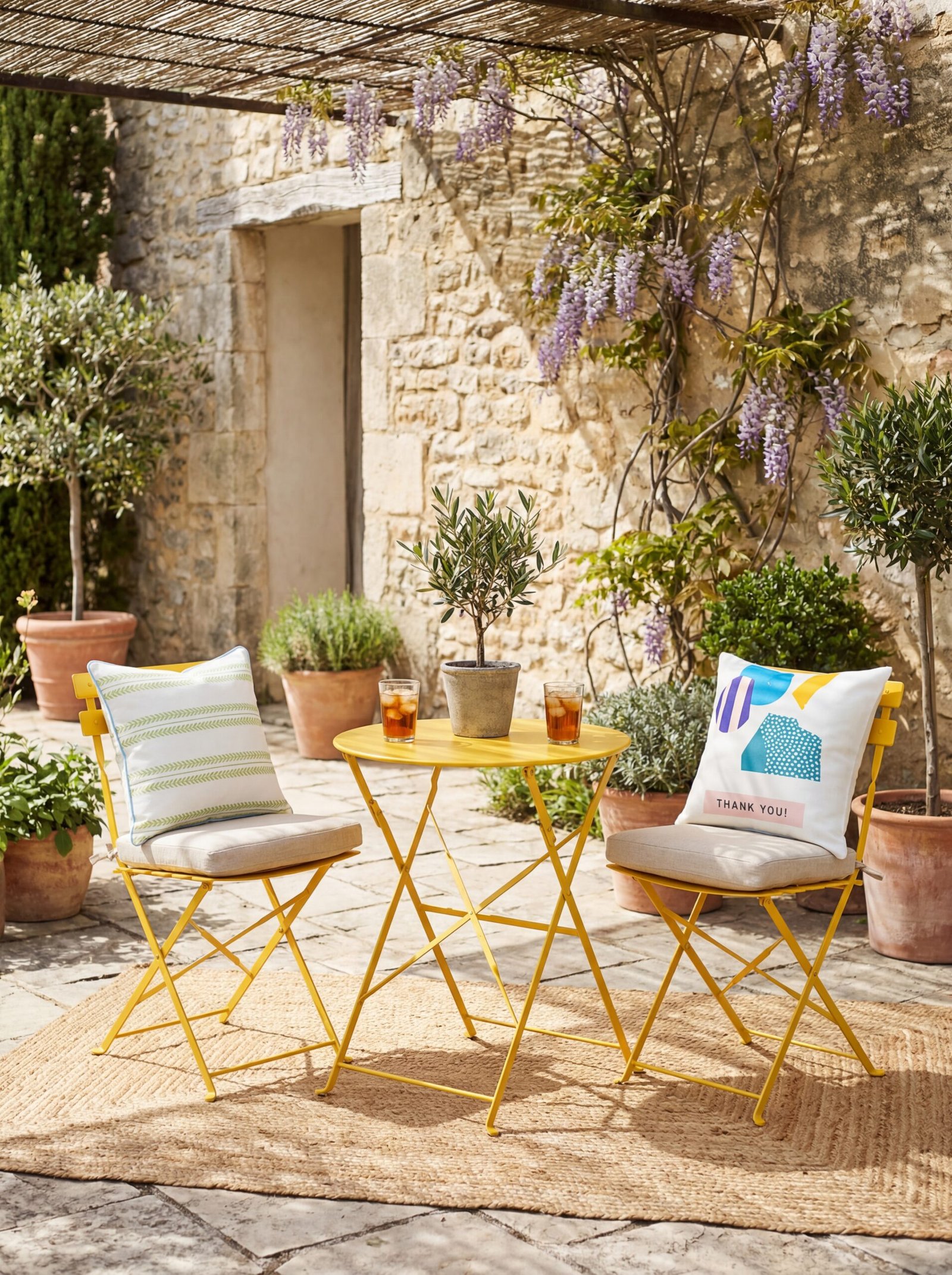
The foundation of any authentic Mediterranean patio lies in its seating arrangement, and nothing captures this aesthetic quite like the marriage of wrought iron furniture with natural linen cushions. This combination isn’t merely decorative—it’s a testament to the region’s mastery of balancing durability with comfort, strength with softness.
Wrought iron furniture brings an architectural quality to outdoor spaces that few materials can match. Its scrollwork and curves echo the ornamental gates found throughout Mediterranean courtyards, while its weight ensures stability against coastal winds. The metal’s inherent strength means these pieces can remain outdoors year-round, developing a patina that only enhances their character over time.
What elevates this classic pairing is the deliberate choice of natural linen for cushions. Unlike synthetic fabrics, linen breathes beautifully in Mediterranean climates, remaining cool to the touch even during peak afternoon heat. The fabric’s natural wrinkles add to its charm rather than detracting from it—a philosophy that perfectly encapsulates the relaxed elegance of villa living.
Consider this three-piece outdoor bistro set featuring powder-coated steel frames that resist rust while maintaining their elegant appearance. The simple, modern design with closed armrests ensures longevity without sacrificing the sophisticated lines that define Mediterranean style.
For cushions, opt for neutral tones—think sand, cream, or the palest blue. These water-repellent throw pillow covers showcase the grandmillennial coastal aesthetic with grass green leaf stripes and baby blue piping, bringing that essential Mediterranean freshness without overwhelming the space.
The key to mastering this seating arrangement lies in restraint. Choose pieces with clean lines that complement rather than compete with the architecture of your villa. Arrange furniture to encourage conversation—circular or U-shaped configurations work beautifully—and always position seating to capture the best views, whether that’s your garden, pool, or the surrounding landscape.
Whitewashed Pergolas and Climbing Bougainvillea: Creating Authentic Shade Structures
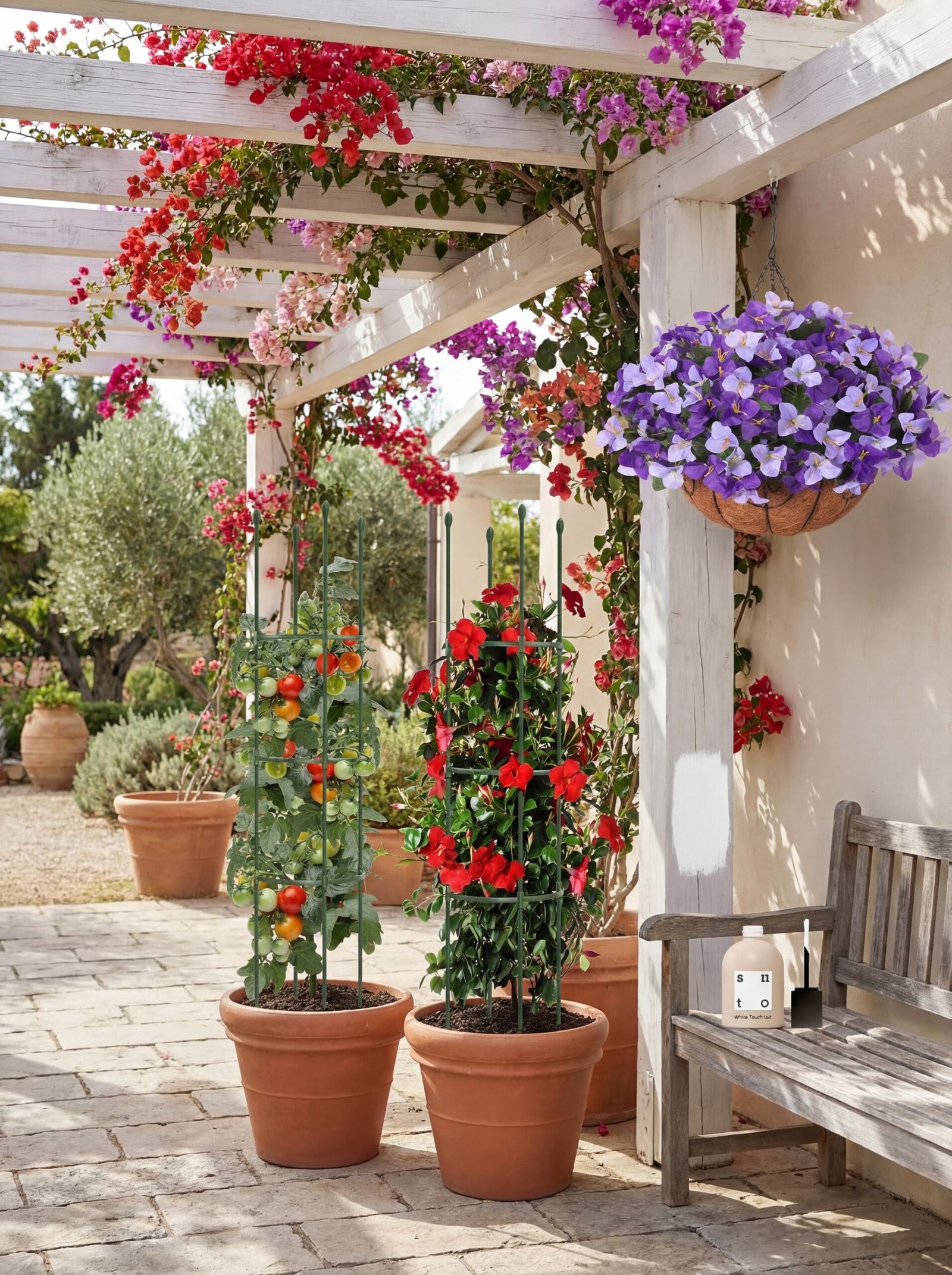
Nothing quite captures the romance of Mediterranean outdoor living like a whitewashed pergola draped in vibrant bougainvillea. This architectural element serves multiple purposes: it provides essential shade during scorching summer months, creates distinct zones within larger patios, and offers a stunning vertical canvas for Mediterranean flora.
The whitewash itself is more than aesthetic—it’s practical brilliance inherited from centuries of Mediterranean building traditions. White surfaces reflect heat rather than absorbing it, keeping the space beneath noticeably cooler. The slightly weathered, chalky finish that develops over time only adds to the authentic villa atmosphere, evoking images of Greek islands and Italian coastlines.
Bougainvillea is the quintessential choice for draping these structures, and for good reason. Its papery bracts—often mistaken for flowers—come in shades of magenta, coral, and purple that pop dramatically against white pergolas. The plant thrives in hot, dry conditions and requires minimal water once established, making it an ideal low-maintenance option for busy villa owners.
To support climbing plants properly, consider these adjustable garden trellises that feature innovative plug-in connections and double-layer metal tube construction. Their 55-inch height provides ample support for vigorous climbers, and the plastic coating prevents rust while allowing excellent heat dissipation.
If you’re seeking immediate impact or live in a climate where bougainvillea struggles, artificial hanging flowers in planters offer a maintenance-free alternative. These UV-resistant silk bougainvillea arrangements look remarkably realistic and bloom year-round without watering or pruning.
For the pergola itself, maintain the white finish with this multi-surface touch-up paint that works on wood, metal, and existing finishes. The matte finish and virtually odorless formula make it perfect for outdoor structures that need refreshing without extensive preparation.
Position your pergola strategically—ideally over a dining area or lounging space where shade is most appreciated during midday. The dappled light filtering through leaves creates an ever-changing pattern that’s both beautiful and functional, providing shelter without completely blocking natural light.
Water Features as Centerpieces: Fountains and Shallow Pools for Villa Courtyards
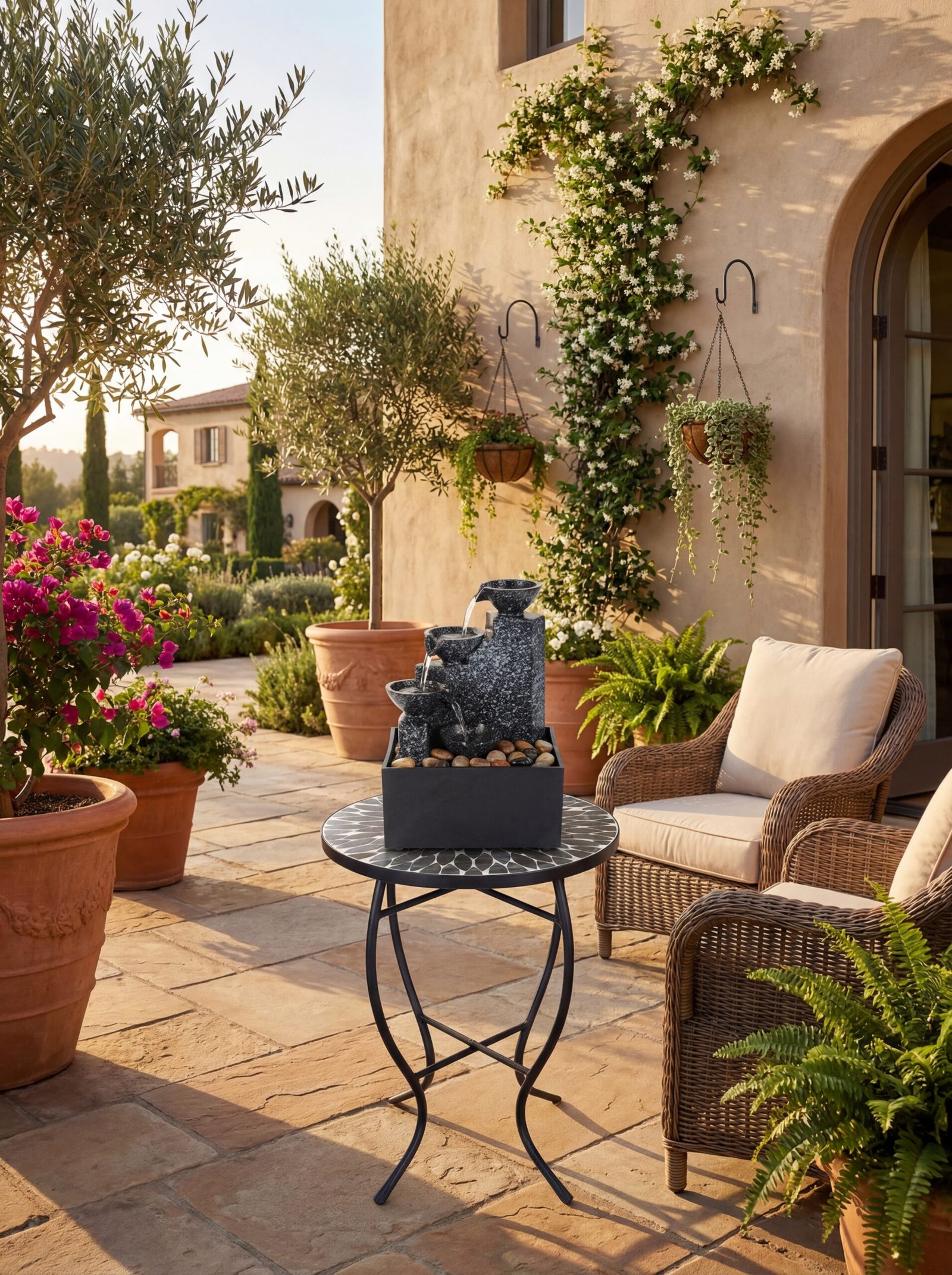
Water has always held a place of honor in Mediterranean design, and for good reason—it cools the air, creates soothing ambient sound, and serves as a reflective focal point that draws the eye. Whether you incorporate a traditional fountain or a shallow reflecting pool, water features instantly elevate a patio from pleasant to extraordinary.
In authentic Mediterranean courtyards, fountains typically occupy center stage. They’re often crafted from stone or ceramic, featuring simple geometric forms that emphasize function over ostentation. The gentle trickle of water provides natural white noise that masks urban sounds while creating an atmosphere of tranquility.
For smaller patios, consider a tabletop fountain that brings water’s soothing presence without requiring extensive installation. These compact pieces can be solar-powered or battery-operated, offering flexibility in placement and eliminating concerns about electrical wiring in outdoor spaces.
Shallow pools—often called reflecting pools—offer a different aesthetic entirely. These still water features mirror the sky and surrounding architecture, creating a sense of expanded space while maintaining the minimalist elegance characteristic of Mediterranean design. They work particularly well in formal courtyard settings where symmetry is emphasized.
To complement water features, surround them with appropriate surfaces. Mosaic outdoor side tables with ceramic tops echo the decorative tile work often found around Mediterranean fountains, tying the design elements together cohesively. The 14-inch round size is perfect for flanking seating areas near your water feature.
Installation considerations matter greatly with water features. Ensure adequate drainage for fountains to prevent overflow during heavy rain, and position them where water sounds can be enjoyed from primary seating areas. For pools, gentle lighting beneath the surface creates magical reflections during evening hours.
Maintenance need not be burdensome. Install heavy-duty S-hooks to suspend cleaning tools or decorative elements around your water feature. These rust-resistant hooks support up to 20 pounds and feature rubber caps that protect surfaces from scratches.
Terracotta and Mosaic Tile Patterns That Define Mediterranean Flooring
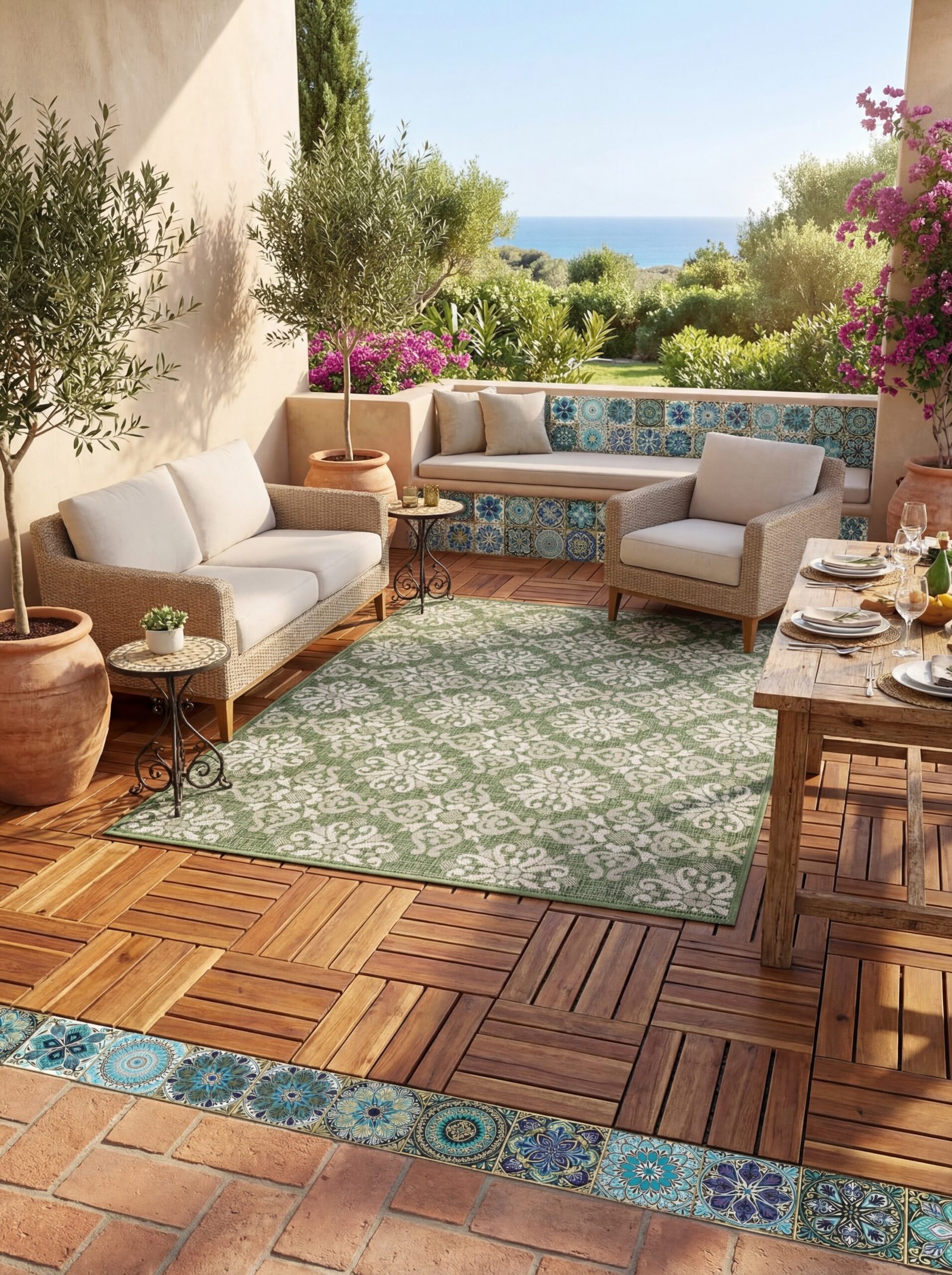
The foundation of any Mediterranean patio—quite literally—is its flooring. Unlike contemporary outdoor spaces that often favor uniform materials, authentic Mediterranean patios celebrate the artistry of pattern, texture, and warm earth tones that have defined the region’s architecture for millennia.
Terracotta tiles remain the gold standard for Mediterranean flooring. Their warm, burnt-orange hue is achieved through firing natural clay at high temperatures, resulting in a material that’s both beautiful and remarkably durable. The slight variations in color between tiles add visual interest that perfectly complements the organic nature of outdoor living.
Mosaic patterns represent the decorative soul of Mediterranean flooring. These intricate designs—whether geometric, floral, or abstract—transform functional surfaces into works of art. Traditional mosaics use small pieces of ceramic, stone, or glass arranged into complex patterns that catch and reflect light throughout the day.
For those seeking to add Mediterranean character without extensive renovation, interlocking deck tiles offer an accessible solution. These acacia wood tiles snap together easily, creating the warm, natural look of traditional Mediterranean flooring while remaining removable for renters or those preferring flexibility.
Rugs provide another avenue for introducing Mediterranean patterns. This traditional area rug features Spanish-Moroccan ornate ceramic patterns in shades of green and cream. Its flat-woven, polypropylene construction withstands outdoor conditions while adding authentic Mediterranean flair to covered patio areas.
For permanent installations seeking that signature mosaic look, self-adhesive tile stickers offer a surprisingly effective alternative. These waterproof, scratch-resistant patterns can transform plain tiles into Moroccan-inspired masterpieces without the expense and commitment of actual mosaic work.
When planning Mediterranean flooring, consider how different areas of your patio might feature varying patterns or materials. A mosaic border around the perimeter with terracotta filling the center creates visual interest while honoring traditional design principles. Transition zones between indoor and outdoor spaces benefit from complementary patterns that blur the boundaries between the two.
Herb Gardens in Glazed Ceramic Pots: Bringing Culinary Scents to Your Patio
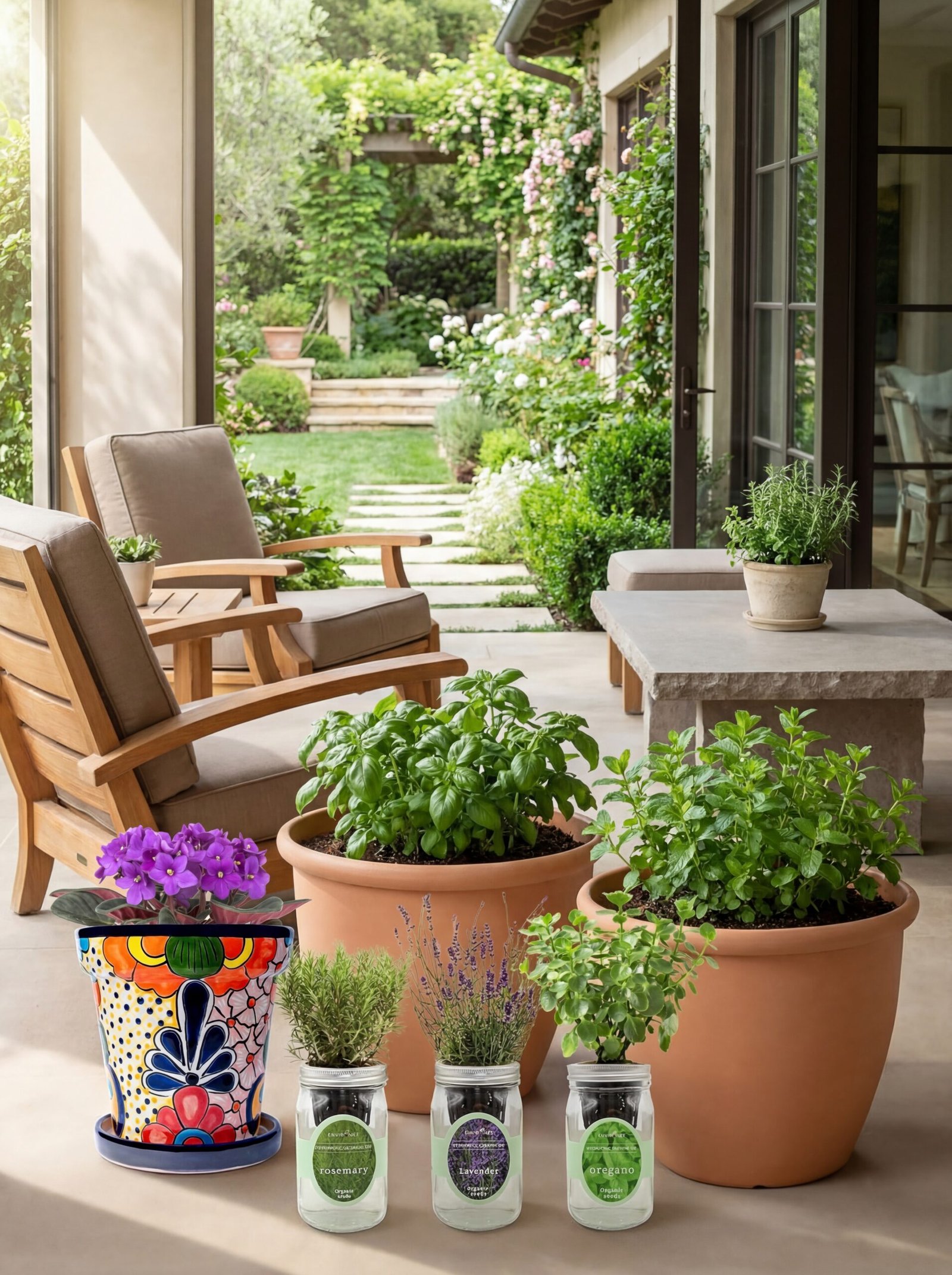
The Mediterranean lifestyle has always embraced the seamless integration of cooking and living spaces, and nothing embodies this philosophy more beautifully than herb gardens situated directly on the patio. These aromatic plantings serve triple duty: they’re decorative, functional, and engage our senses in ways that purely ornamental plants cannot.
Glazed ceramic pots are the traditional vessel choice for Mediterranean herb gardens, and their enduring popularity stems from both practical and aesthetic considerations. The glazed surface prevents excessive moisture loss while adding luminous color that complements the herbs’ green foliage. Traditional Mediterranean palettes favor cobalt blues, sunny yellows, and crisp whites—colors that remain vibrant even under intense sunlight.
Classic Mediterranean herbs—rosemary, oregano, thyme, basil, and lavender—thrive in the hot, dry conditions these patios naturally provide. Their silvery-green foliage and compact growth habits make them ideal for container culture, while their culinary applications ensure they’re both beautiful and practical additions to outdoor living spaces.
For authentic Mediterranean pottery, consider these hand-painted Mexican ceramic planters that showcase traditional Talavera craftsmanship. The cobalt blue designs against terracotta clay capture the essence of Mediterranean aesthetics while offering excellent drainage and weather resistance.
If you’re new to herb gardening or seeking a foolproof approach, hydroponic herb growing kits in mason jars offer a modern solution with traditional appeal. These self-watering systems include organic seeds for rosemary, lavender, and oregano—quintessential Mediterranean herbs that will thrive on your sunny patio.
For those seeking larger statement pieces, 15-inch round planters in classic terracotta color provide ample space for establishing mature herb plants. The lightweight plastic construction offers easy repositioning while the drainage system ensures healthy root development.
Arrange herb pots at varying heights to create visual interest—low-growing thyme and oregano near the front, with taller rosemary and lavender behind. Group pots in odd numbers (three, five, or seven) for the most pleasing aesthetic effect. Position them near outdoor dining areas where their fragrance can be enjoyed and their leaves easily harvested for cooking.
The sensory experience of brushing past rosemary while setting an outdoor table, or crushing lavender flowers between your fingers during an evening gathering, connects you to centuries of Mediterranean tradition. These aren’t just decorations—they’re living links to a culinary heritage that celebrates fresh, aromatic ingredients picked at the moment of use.
Azure Blue Accents Against Sun-Bleached Neutrals: The Coastal Color Palette
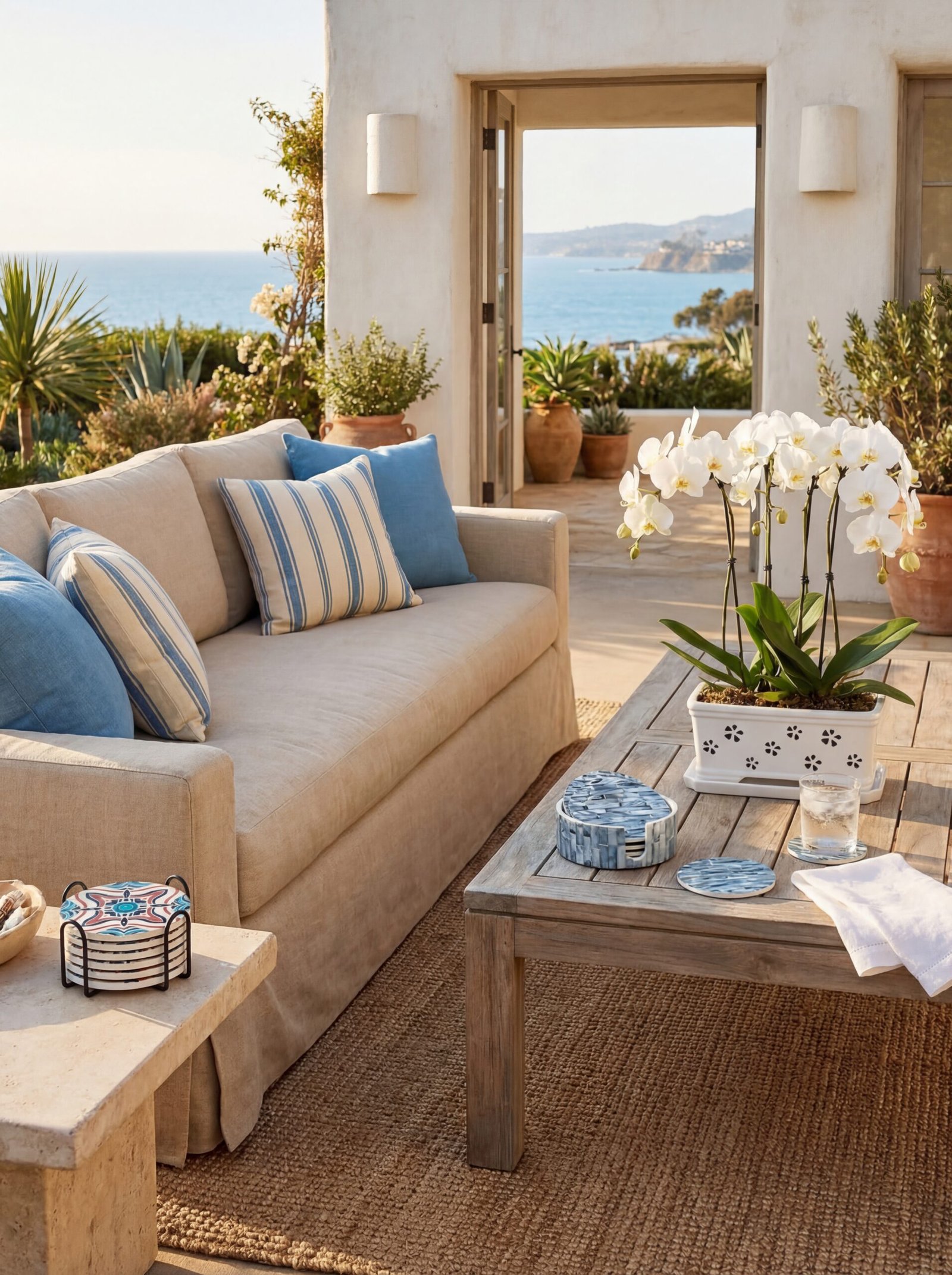
The Mediterranean color palette is perhaps the most immediately recognizable aspect of this design aesthetic, and for good reason—it captures the essence of the region’s landscape in a way that feels both authentic and timeless. The strategic use of azure blue against sun-bleached neutrals doesn’t simply decorate a space; it tells the story of brilliant seas meeting whitewashed villages.
Sun-bleached neutrals form the essential foundation of this palette. Think of the soft grays of weathered driftwood, the warm ivories of sun-baked limestone, and the gentle beiges of ancient plaster walls. These tones provide a sophisticated canvas that prevents the space from feeling overwhelming while allowing accent colors to truly shine.
Azure blue—that perfect shade between sky and sea—serves as the signature accent color. It appears in carefully chosen elements: cushions, pottery, table accessories, or architectural details. The key is restraint; too much blue overwhelms, while too little fails to make an impact. Aim for approximately 20-30% blue accents within the overall color scheme.
Small decorative objects offer the perfect opportunity to introduce this coastal color story. Round Mediterranean coasters featuring blue brick patterns with mother of pearl on wood bases capture this aesthetic beautifully. The natural iridescence creates a luminous quality that mirrors light dancing on water.
For larger accent pieces, Spanish-Moroccan patterned coasters with holder bring authentic Mediterranean ceramic patterns in precisely the right color combinations. These functional accessories add visual interest to outdoor coffee tables while protecting surfaces—beauty and practicality in perfect balance.
Consider incorporating blue through planters as well. White ceramic orchid pots with drainage holes provide a clean backdrop that allows plants to pop while maintaining the sun-bleached neutral foundation essential to this aesthetic. Their rectangular shape offers a modern interpretation of traditional forms.
The magic of this color palette lies in its ability to evoke specific emotions and memories. Blue accents cool the visual temperature of a space, creating psychological comfort even on the hottest days. Meanwhile, neutral tones ground the design, preventing it from feeling thematic or overly decorative.
Natural materials reinforce this palette beautifully. Raw linen fabrics in ecru or oatmeal, unfinished wood with visible grain, and stone surfaces all contribute to the sun-bleached quality that makes Mediterranean design feel authentic rather than contrived. These materials age gracefully, developing character that enhances rather than detracts from their appearance.
Lanterns and String Lights: Layering Illumination for Twilight Gatherings

As the Mediterranean sun dips toward the horizon, transforming the sky into gradients of pink and gold, your patio’s lighting becomes the defining element of ambiance. Unlike harsh overhead fixtures that flatten spaces, layered illumination through lanterns and string lights creates depth, warmth, and the magical quality that makes Mediterranean evenings legendary.
The philosophy behind Mediterranean lighting differs fundamentally from conventional outdoor illumination. Rather than attempting to replicate daylight, it embraces the mystery and romance of twilight—providing enough light for comfort and safety while preserving the intimate atmosphere that makes outdoor gatherings memorable.
Lanterns represent the traditional approach to Mediterranean outdoor lighting. Whether hung from pergolas, placed on tables, or positioned along pathways, they offer focal points of warm light that draw people together. Their glass or metal enclosures protect flames—whether real candles or LED alternatives—from evening breezes while casting decorative shadows through perforated patterns.
For a charming take on traditional lanterns, solar Mason jar lights combine rustic appeal with modern convenience. This 8-pack includes standard 16-ounce jars with solar-powered lid lights featuring 30 LEDs each. They charge during the day and automatically illuminate at dusk, providing up to 8 hours of gentle, warm light.
String lights have become synonymous with Mediterranean outdoor living, and for good reason—they create overhead canopies of light that define spaces while maintaining an airy, open feel. These solar-powered outdoor string lights feature commercial-grade construction with shatterproof bulbs and WeatherTite technology that withstands winds up to 50 mph. The vintage Edison bulb style adds authentic bistro charm.
Wall-mounted fixtures provide supplementary lighting while adding architectural interest. Solar wall lights with dusk-to-dawn sensors eliminate the need for wiring while automatically adjusting to ambient light levels. Their retro lantern shape complements Mediterranean aesthetics beautifully, and the patterned glass creates attractive light patterns on surrounding surfaces.
The art of layering these different light sources creates the most compelling results. Begin with string lights overhead to establish the overall glow, add lanterns on tables and strategic surfaces for intimate pools of light, then supplement with wall-mounted fixtures near architectural features or gathering areas. This multi-level approach mimics the way light naturally occurs in nature—softer overhead, brighter at focal points.
Color temperature matters significantly in Mediterranean lighting. Aim for warm white (2700K-3000K) rather than cool white or daylight tones. This warmer spectrum enhances the natural tones of terracotta, wood, and stone while creating the inviting glow associated with candlelight and sunset.
Stone Walls and Rustic Archways: Architectural Elements That Frame Outdoor Spaces
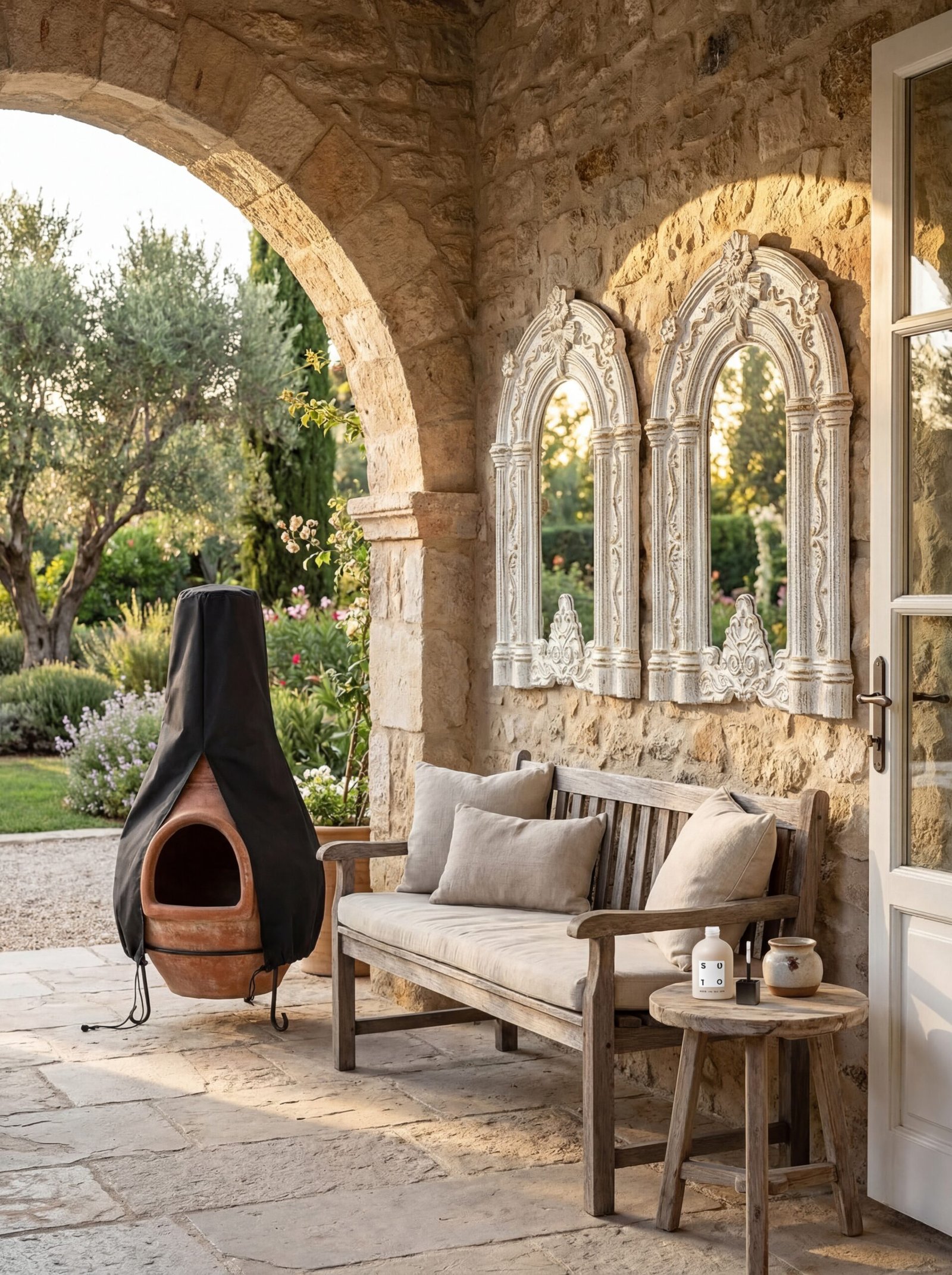
The most compelling Mediterranean patios aren’t merely decorated—they’re architecturally defined by stone walls and rustic archways that create a sense of enclosure and intimacy within the larger landscape. These structural elements serve as the bones of outdoor design, establishing boundaries while maintaining visual connection to surroundings.
Stone walls in Mediterranean design rarely present smooth, uniform surfaces. Instead, they celebrate the natural variation of their materials—irregular shapes, visible mortar joints, and weathered textures that speak to age and authenticity. These walls don’t simply divide spaces; they create microclimates, provide windbreaks, and offer thermal mass that moderates temperature swings.
Archways function as transitional elements that frame views and create deliberate moments of passage. Walking through an arch instinctively feels significant—it marks the threshold between one space and another, between outside and sanctuary. In villa courtyards, multiple archways often create rhythmic visual sequences that draw the eye deeper into the landscape.
While constructing actual stone walls may exceed most budgets or rental situations, decorative elements can evoke their presence effectively. Arched window wall mirrors with rustic wooden frames bring architectural interest to existing walls. Their carved details and whitewashed finish reference traditional Mediterranean archways while adding depth through reflection.
For maintaining white or light-colored architectural elements, keep multi-surface touch-up paint on hand. This satin-finish formula works on virtually all surfaces—from plaster to wood to metal—allowing you to maintain that crisp, sun-bleached appearance that defines Mediterranean architecture.
Consider how architectural elements create zones within your patio. A partial wall might separate dining from lounging areas without completely dividing the space. An archway could frame the entrance to a garden path or highlight a particularly beautiful view. These structural divisions add sophistication while maintaining the open, flowing quality essential to outdoor living.
The texture of stone surfaces contributes enormously to their appeal. Rough-hewn finishes catch light differently throughout the day, creating ever-changing shadow patterns that add visual interest without additional decoration. Smooth plaster sections provide contrast, their uniform surfaces serving as resting places for the eye amid more textured surroundings.
Weathering and patina should be embraced rather than fought. The soft erosion at arch corners, the moss growing in mortar joints, the lime deposits left by rain—these imperfections tell stories of time and weather that no new construction can replicate. They connect your space to the ancient Mediterranean tradition of buildings that age gracefully alongside their inhabitants.
Sail Shades and Canvas Canopies: Modern Alternatives to Traditional Awnings
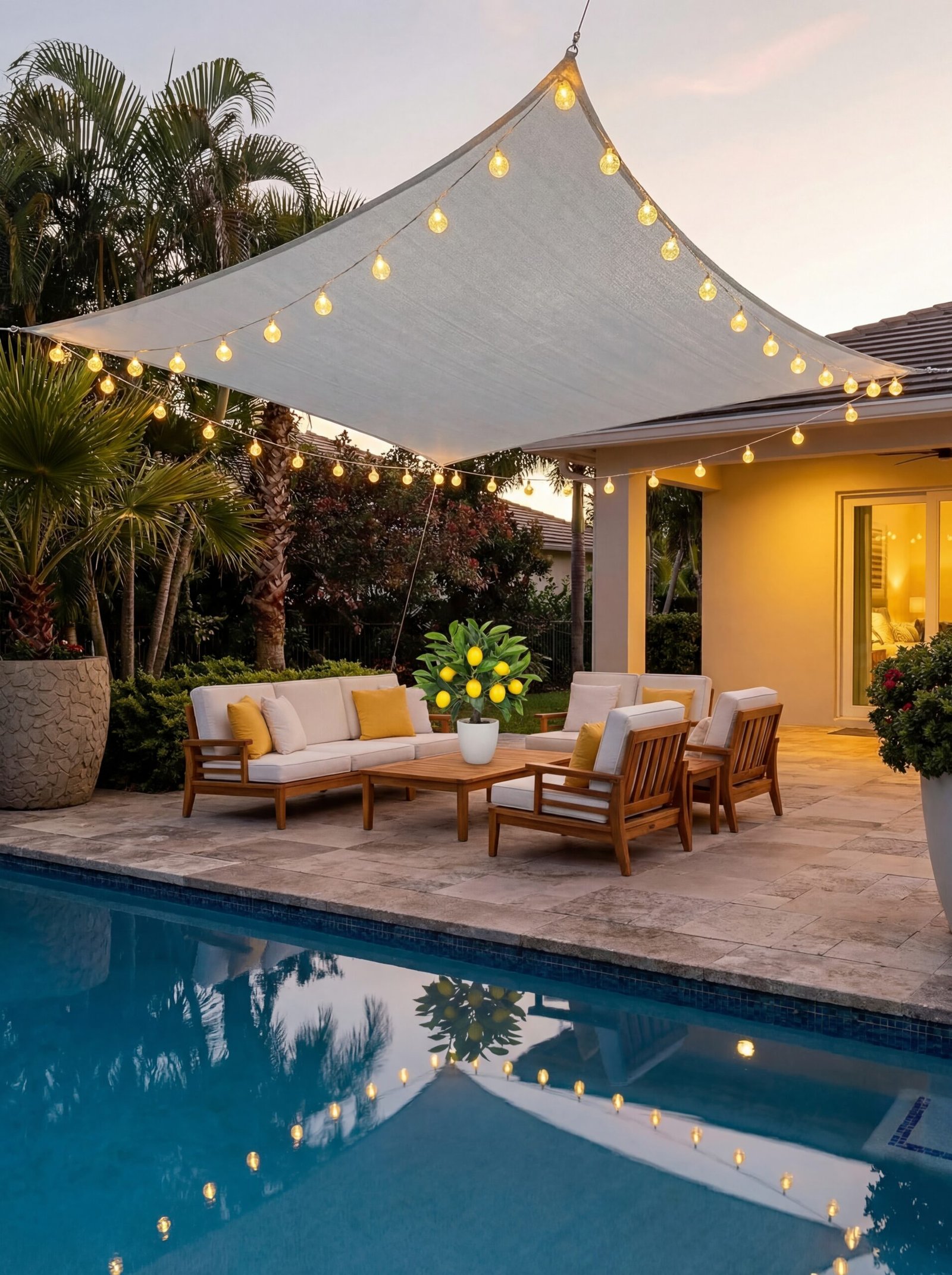
While traditional pergolas and fixed awnings have their place in Mediterranean design, sail shades and canvas canopies offer flexible, contemporary alternatives that maintain the aesthetic while providing superior functionality. These tensioned fabric structures capture the essence of Mediterranean coastal life—think billowing sails on azure waters—while solving practical challenges of sun protection.
Sail shades have revolutionized outdoor shade solutions by combining engineering with aesthetics. Their triangular or rectangular forms, suspended at angles between mounting points, create sculptural overhead elements that change the visual dynamic of patios. Unlike flat awnings, their three-dimensional forms add architectural interest while allowing heat to escape rather than collecting beneath them.
The fabric selection for these structures matters tremendously. High-density polyethylene (HDPE) mesh provides the ideal balance between shade and breathability. It blocks 85-88% of harmful UV rays while allowing air circulation that prevents the stuffy feeling associated with solid coverings. This breathability also prevents wind from catching and stressing mounting points.
For those seeking quality shade solutions, these rectangle sun shade sails feature commercial-grade construction with well-stitched seams and stainless steel D-rings. The 12’x16′ size covers substantial areas, and the curved edges prevent water pooling while adding visual elegance. The light grey color complements traditional Mediterranean neutrals perfectly.
Installation requires careful planning to achieve the proper tension and angle. Sail shades work best when angled at 20-40 degrees from horizontal, which allows heat to rise and escape while providing maximum coverage during peak sun hours. Consider the sun’s path across your patio throughout the day when determining orientation.
Lighting under canopies transforms these structures for evening use. Battery-operated globe string lights with remote control and multiple modes create flexible illumination options. Their IP65 waterproof rating ensures reliable performance, while the crystal ball design adds a touch of elegance to casual gatherings.
For smaller accent areas or supplementary shade, consider portable options. Artificial potted plants like this 15.7-inch lemon tree in a white pot add Mediterranean charm while requiring zero maintenance. Place several near the edges of shaded areas to soften transitions and reinforce the garden-to-patio connection.
The beauty of sail shades lies in their adaptability. They can be removed during winter months when shade isn’t needed, repositioned as your needs change, or combined in multiple layers for complex coverage patterns. This flexibility makes them ideal for renters or those who like refreshing their outdoor spaces periodically.
Color selection should honor Mediterranean restraint—neutrals like sand, cream, terra cotta, or soft grey work universally well. While bolder shades can be tempting, they risk overwhelming spaces and clashing with seasonal plantings or furniture changes. Neutral canopies serve as blank canvases that allow other design elements to shine.
Outdoor Dining Zones with Wooden Tables and Vintage Tableware
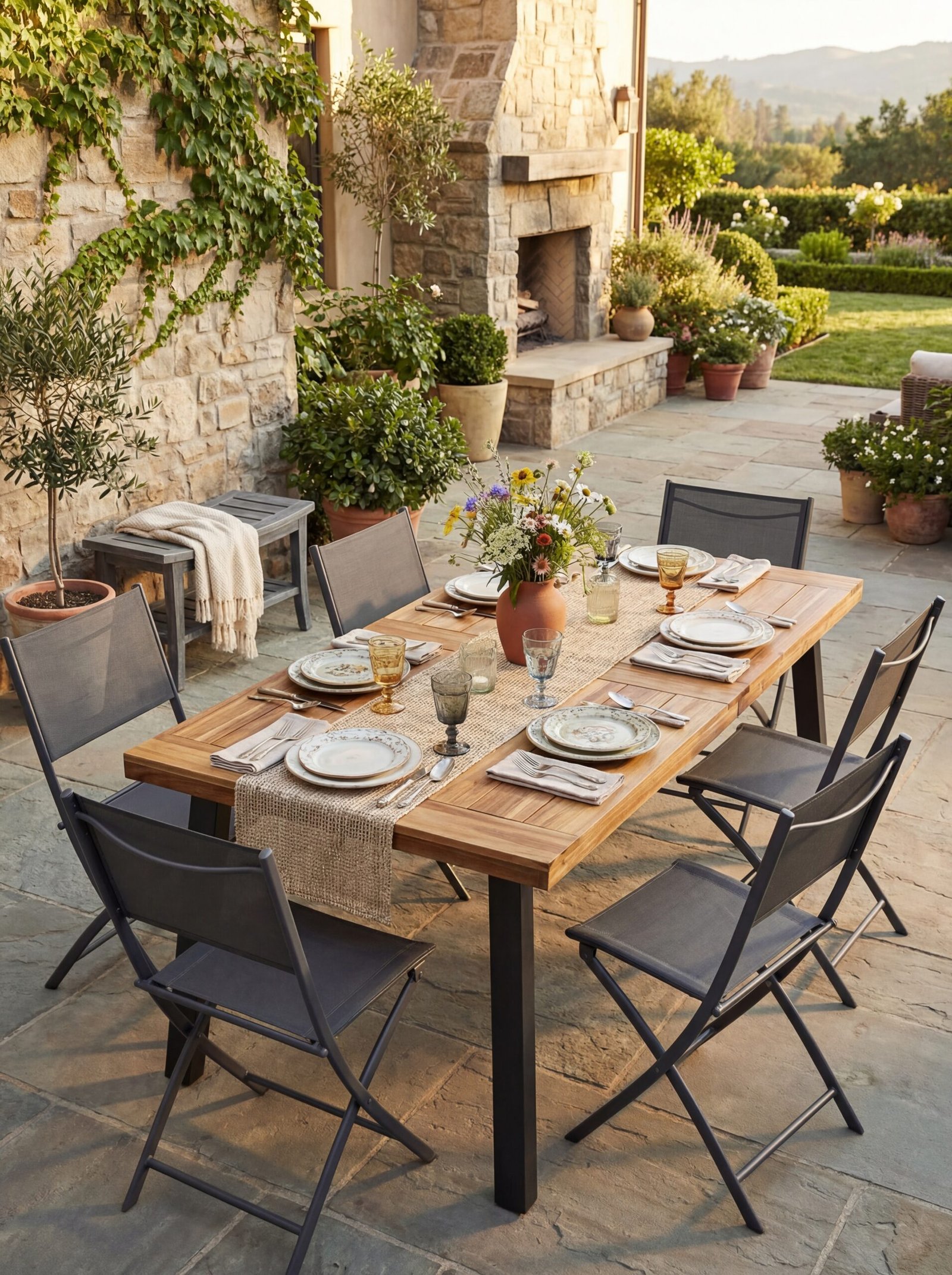
The Mediterranean lifestyle revolves around the shared meal, and creating a dedicated outdoor dining zone transforms casual patio space into a venue for memorable gatherings. Unlike indoor dining rooms with their formal constraints, outdoor dining areas invite longer meals, leisurely conversations, and the kind of spontaneous celebrations that define Mediterranean culture.
The dining table serves as this zone’s anchor—both literally and symbolically. Mediterranean tradition favors substantial wooden tables that suggest permanence and welcome. Natural wood grain, visible knots, and slight imperfections add character that feels earned rather than manufactured. These aren’t showpieces; they’re working surfaces meant to accumulate the patina of countless meals shared with loved ones.
Acacia wood has emerged as an ideal material for outdoor dining tables in Mediterranean settings. Its natural oil content provides inherent water resistance, while its hardness ensures durability against daily use. This 6-
